
Statin Myopathy: What It Is, How It Happens, and What to Do
When you take a statin, a class of drugs used to lower LDL cholesterol and reduce heart attack risk. Also known as HMG-CoA reductase inhibitors, they’re among the most prescribed medications in the world—yet they come with a risk many don’t talk about: statin myopathy, muscle damage caused by statin drugs that ranges from mild soreness to dangerous breakdown.
Statin myopathy isn’t just "feeling sore after the gym." It’s a biological reaction where the drug interferes with energy production in muscle cells, leading to pain, weakness, or cramps that don’t go away. In rare cases, it can trigger rhabdomyolysis, a life-threatening condition where muscle tissue breaks down and floods the bloodstream with toxins. The risk is higher in older adults, people with kidney or liver issues, those taking multiple meds, or anyone on high doses. It’s not common—about 5-10% of users report muscle symptoms—but for those affected, it’s real and disruptive.
What makes this tricky is that not all muscle pain from statins shows up in blood tests. Doctors often check CPK levels, but normal numbers don’t always mean you’re safe. Some people feel terrible even with normal results. That’s why tracking symptoms matters more than just numbers. If you start feeling unexplained aches, especially in your thighs, shoulders, or back, don’t brush it off. Talk to your doctor. You might need a lower dose, a different statin, or a non-statin alternative like ezetimibe or PCSK9 inhibitors. And if you’re on other meds—like fibrates or certain antibiotics—that can raise your risk, your pharmacist should flag it.
There’s also a psychological layer here. Many people stop statins because they assume the pain is just aging or overexertion. But untreated high cholesterol is a silent threat. The goal isn’t to avoid statins entirely—it’s to find the version and dose that works for your body. Some people tolerate rosuvastatin fine but react to atorvastatin. Others do better on lower doses paired with lifestyle changes. It’s not one-size-fits-all.
Below, you’ll find real stories and practical advice from people who’ve dealt with statin myopathy, along with guides on how to talk to your doctor, what blood tests to ask for, how to manage symptoms without quitting your meds, and what alternatives actually work. This isn’t theory. It’s what people are using right now to stay healthy without sacrificing their quality of life.
Baseline CK Testing for Statins: When It’s Really Needed
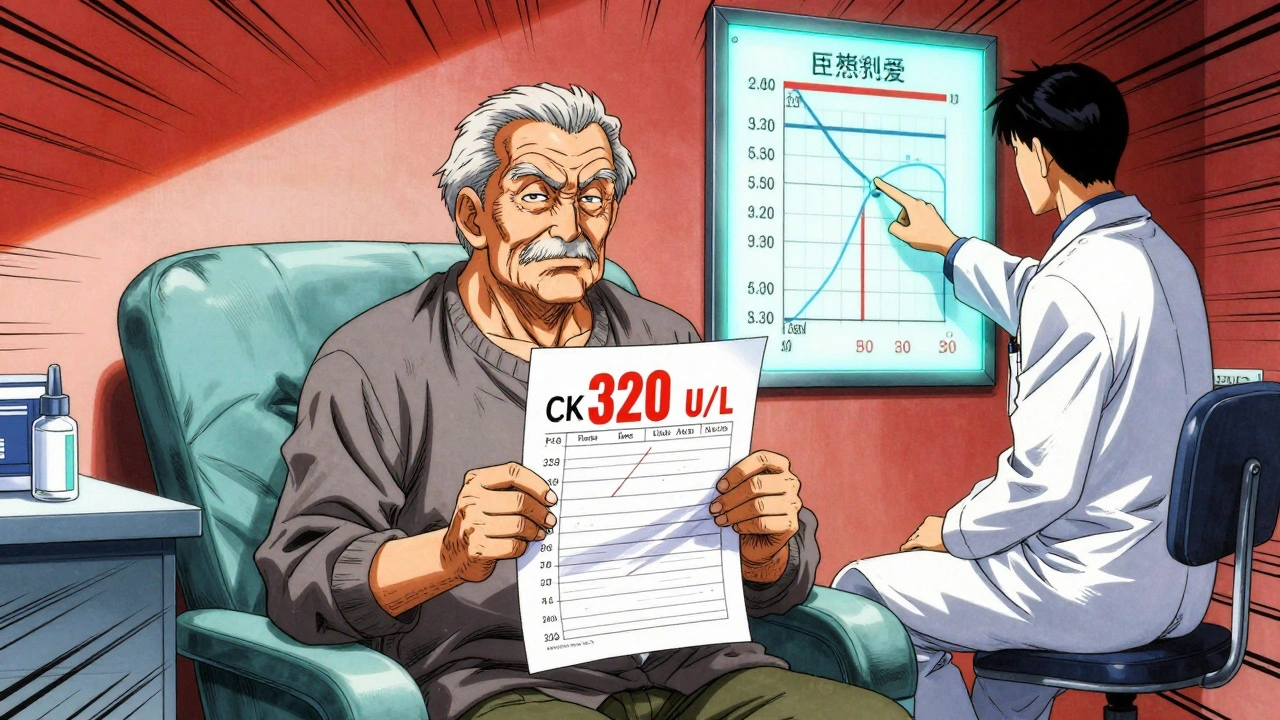
Baseline CK testing before starting statins isn't needed for everyone-but it’s critical for high-risk patients. Learn who should get tested, what the numbers mean, and why skipping it can lead to unnecessary drug stops.