
Inactive Ingredients in Pills: What’s Really in Your Medication?
When you swallow a pill, the active ingredient is what treats your condition—but the rest? That’s the inactive ingredients in pills, non-medical substances added to help form, stabilize, or deliver the drug. Also known as excipients, these include fillers, dyes, preservatives, and binders that make the pill work physically, even though they don’t treat your illness. Most people assume these are harmless, but that’s not always true. For example, lactose is a common filler, and if you’re lactose intolerant, even a small amount can cause bloating or pain. Same goes for gluten, dyes like FD&C Red 40, or even peanut oil in some liquid meds. The FDA doesn’t require listing every single inactive ingredient on the label, so you might not even know what you’re getting unless you dig deeper.
These ingredients aren’t random. They’re chosen for specific reasons: some help the pill dissolve at the right time, others keep it from crumbling in the bottle, and a few even control how fast the drug gets into your bloodstream. But here’s the catch—generic medications, FDA-approved copies of brand-name drugs with the same active ingredient can have completely different inactive ingredients than the original. That’s why some people tolerate one brand just fine but react to the generic version. It’s not the drug that changed—it’s the filler. And if you’ve ever had an unexpected reaction after switching pills, this might be why.
Then there’s the issue of pill fillers, substances like microcrystalline cellulose or starch that give pills their shape and size. They’re cheap, stable, and widely used—but they’re not always safe for everyone. People with celiac disease, corn allergies, or sensitivities to artificial colors can end up with rashes, stomach issues, or worse. Even something as simple as a red dye can trigger migraines in sensitive individuals. The truth? Your medication’s safety isn’t just about the active ingredient. It’s about the whole package. And if you’ve been told "it’s just a filler," you’re being misled. Fillers can be the hidden cause of side effects you didn’t know you had.
That’s why the posts below dive into what you won’t find on the bottle: how to spot dangerous fillers, why generic drugs might be safer—or riskier—than brand names, and how to ask your pharmacist the right questions to avoid hidden triggers. You’ll learn how the FDA approves these ingredients, what to look for on a drug label, and how to protect yourself if you’ve had unexplained reactions. This isn’t about fear. It’s about control. Because knowing what’s in your pill might be the difference between feeling better… and feeling worse.
Brand vs Generic Medications: Excipients and Side Effect Intolerances
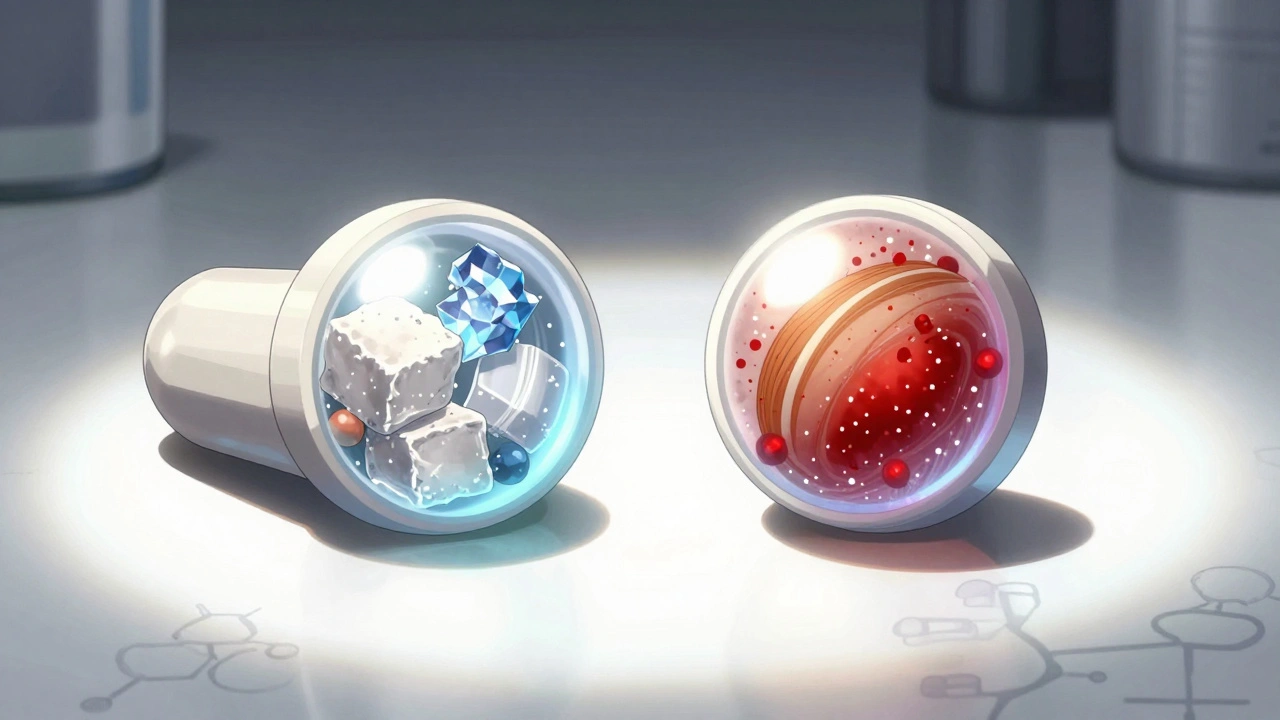
Brand and generic medications contain the same active ingredient, but differences in inactive ingredients (excipients) can trigger side effects or reduce effectiveness-especially for those with allergies or narrow therapeutic index drugs. Learn how to spot and manage these risks.