
Excipients in Medications: What They Are and Why They Matter
When you take a pill, the active ingredient is what treats your condition—but it’s not what makes up most of the tablet. Excipients in medications, inactive substances added to drugs to help with manufacturing, stability, or absorption. Also known as inactive ingredients, they’re the glue, the filler, the coating, and sometimes even the flavor that makes your medicine swallowable. You might not think about them, but without excipients, most pills would crumble, dissolve too fast, or taste awful. And in rare cases, they can even cause reactions—especially if you’re allergic to lactose, gluten, or certain dyes.
These ingredients aren’t random. They’re carefully chosen based on how the drug needs to behave. For example, some excipients help the pill break down slowly so the medicine releases over hours. Others keep it from sticking to machinery during production. A few even help your body absorb the active drug better. But here’s the catch: drug formulation, the science of combining active ingredients with excipients to create a safe, effective product isn’t always transparent. Generic versions might use different fillers than brand-name drugs, and that can matter if you have sensitivities. A pill labeled "lactose-free" might still contain corn starch or talc, which aren’t always listed clearly on the label.
It’s not just about allergies. Some excipients affect how fast your body processes the drug. A coating designed to delay release can change when the medicine kicks in. If you’re on multiple meds, a filler in one pill might interact with another—like how certain binders can reduce absorption of thyroid medication. That’s why pharmacists sometimes warn you not to crush pills or take them with certain foods. It’s not just about the active ingredient—it’s the whole package.
And then there’s the issue of quality. Not all manufacturers follow the same standards. In places with weak oversight, cheap fillers might be used that don’t meet safety rules. That’s why counterfeit pills often have strange textures, odd colors, or dissolve too quickly—they’re made with the wrong excipients. The FDA doesn’t require excipients to be tested for effectiveness like active drugs, but they do require them to be safe. Still, if you’ve ever had an unexplained reaction after switching generics, the culprit might not be the drug itself—it could be the filler.
What you’ll find below are real stories and facts about what’s really in your pills. From why some people can’t take certain generics to how a tiny amount of dye caused a rash in a patient, these posts cut through the noise. You’ll learn how to read labels better, ask the right questions at the pharmacy, and spot when an excipient might be causing more harm than help. This isn’t about chemistry class—it’s about making sure what’s inside your medicine doesn’t accidentally hurt you.
Brand vs Generic Medications: Excipients and Side Effect Intolerances
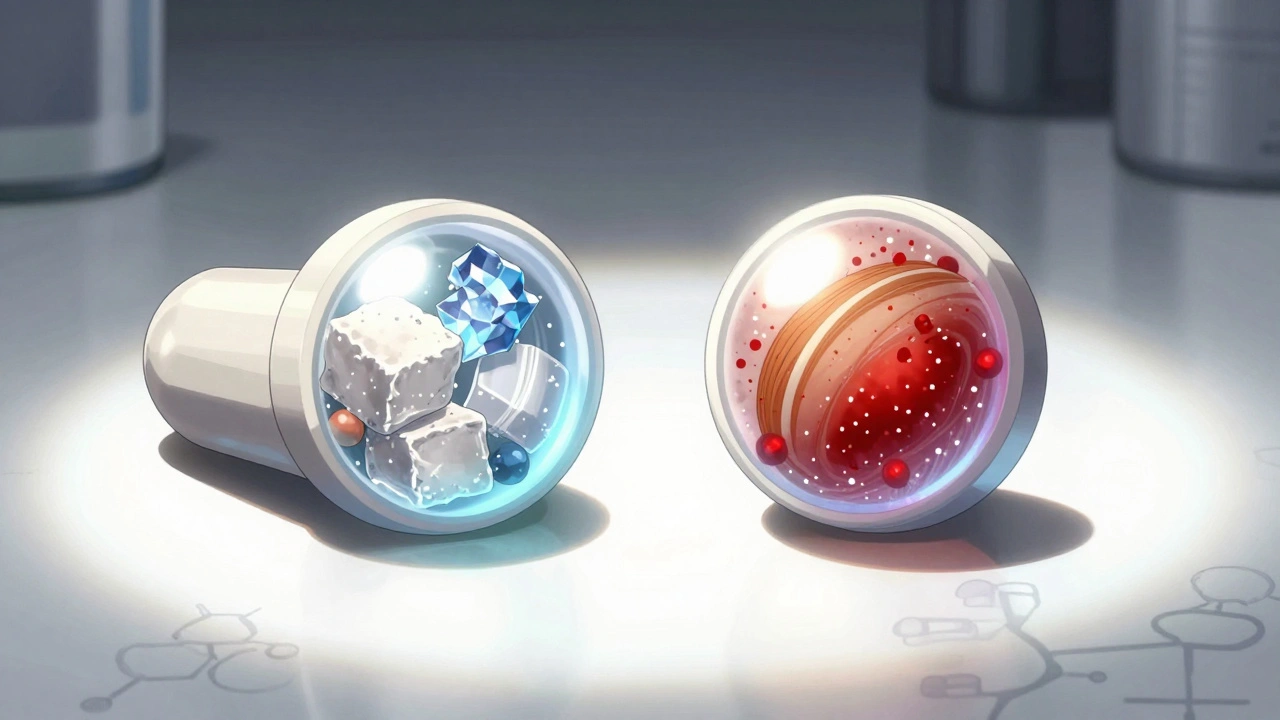
Brand and generic medications contain the same active ingredient, but differences in inactive ingredients (excipients) can trigger side effects or reduce effectiveness-especially for those with allergies or narrow therapeutic index drugs. Learn how to spot and manage these risks.