
DBS for Parkinson's: Deep Brain Stimulation Explained
When DBS for Parkinson's, a surgical treatment that uses implanted electrodes to regulate abnormal brain signals in Parkinson’s disease. Also known as deep brain stimulation, it’s one of the most effective options for people whose symptoms no longer respond well to medication alone. Unlike drugs that try to replace lost dopamine, DBS directly targets the faulty brain circuits causing tremors, rigidity, and slow movement. It doesn’t cure Parkinson’s, but it can give people back hours of usable time each day—time to walk, tie shoes, or hold a cup without shaking.
DBS works by placing thin wires into specific areas of the brain—usually the subthalamic nucleus or globus pallidus—connected to a battery-powered pulse generator implanted near the chest. Think of it like a pacemaker for your brain. The device sends small electrical pulses that interrupt the chaotic signals causing movement problems. The settings can be adjusted non-invasively, so as symptoms change over time, the treatment adapts. It’s not for everyone. Doctors typically recommend it for patients who’ve had Parkinson’s for at least four years, still respond to levodopa, but suffer from severe side effects like dyskinesia or unpredictable "on-off" swings.
People often confuse DBS with other treatments like focused ultrasound or lesioning surgery. But DBS is reversible and adjustable, making it the gold standard for advanced cases. It’s also used in combination with medication—not as a replacement. Many patients reduce their drug doses after surgery, which lowers side effects like nausea, hallucinations, or impulse control issues. What’s more, studies show DBS can improve quality of life more than medication alone over five years or longer. It’s not a magic fix—some people still struggle with balance, speech, or cognitive changes—but for thousands, it’s the difference between being stuck at home and getting back to life.
Behind every successful DBS outcome is a team: a neurologist who fine-tunes the device, a neurosurgeon who places the electrodes, and a patient who’s willing to stick with follow-ups. The procedure itself is safe for most, but risks include infection, bleeding, or hardware issues. Still, serious complications happen in fewer than 3% of cases. If you or someone you know is considering DBS, look for centers that do at least 50 procedures a year. Experience matters—more than the brand of device.
What you’ll find below are real, practical guides on how DBS fits into the bigger picture of Parkinson’s care. From comparing it to other surgical options, to understanding what to expect before and after surgery, to managing life with the device long-term—these posts cut through the noise. You’ll see how it stacks up against meds, what patients actually report after recovery, and how to spot red flags that mean it’s time to call your doctor. No fluff. Just what works.
Parkinson’s DBS: How Deep Brain Stimulation Works and Who Makes a Good Candidate
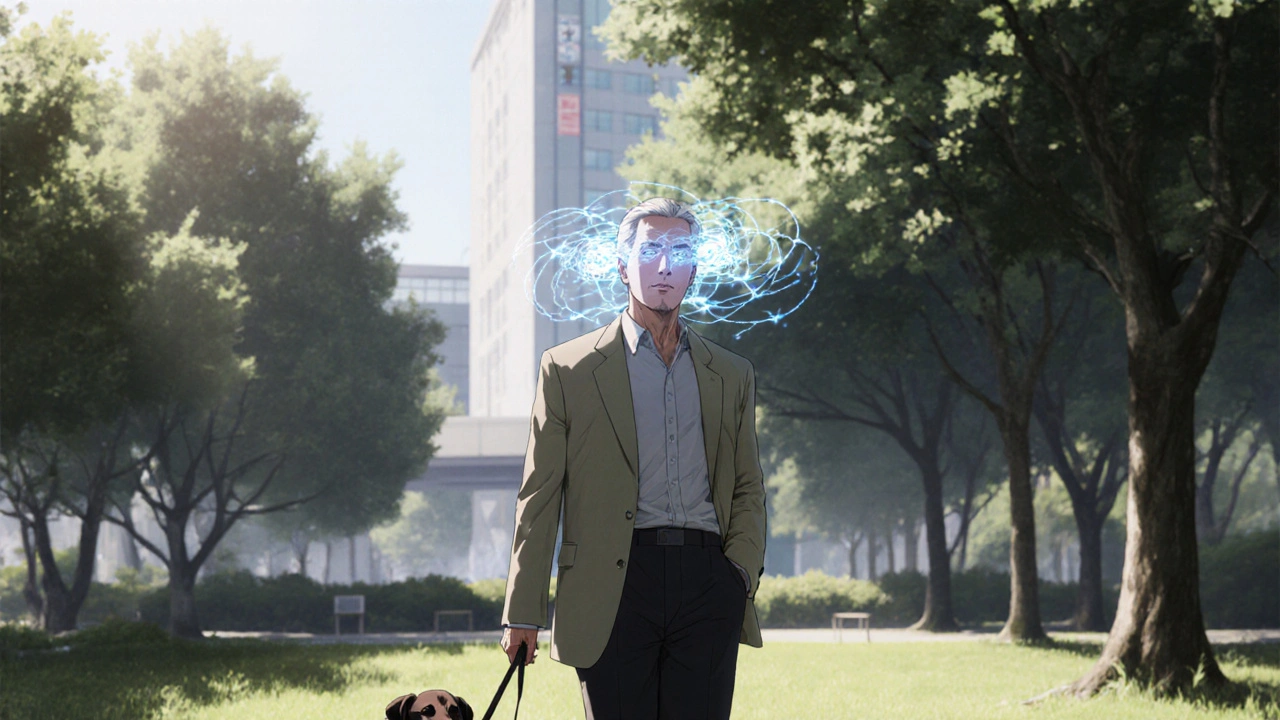
Deep Brain Stimulation (DBS) can dramatically improve motor symptoms in Parkinson’s disease-but only for the right candidates. Learn who benefits, how it works, and what to expect before and after surgery.