
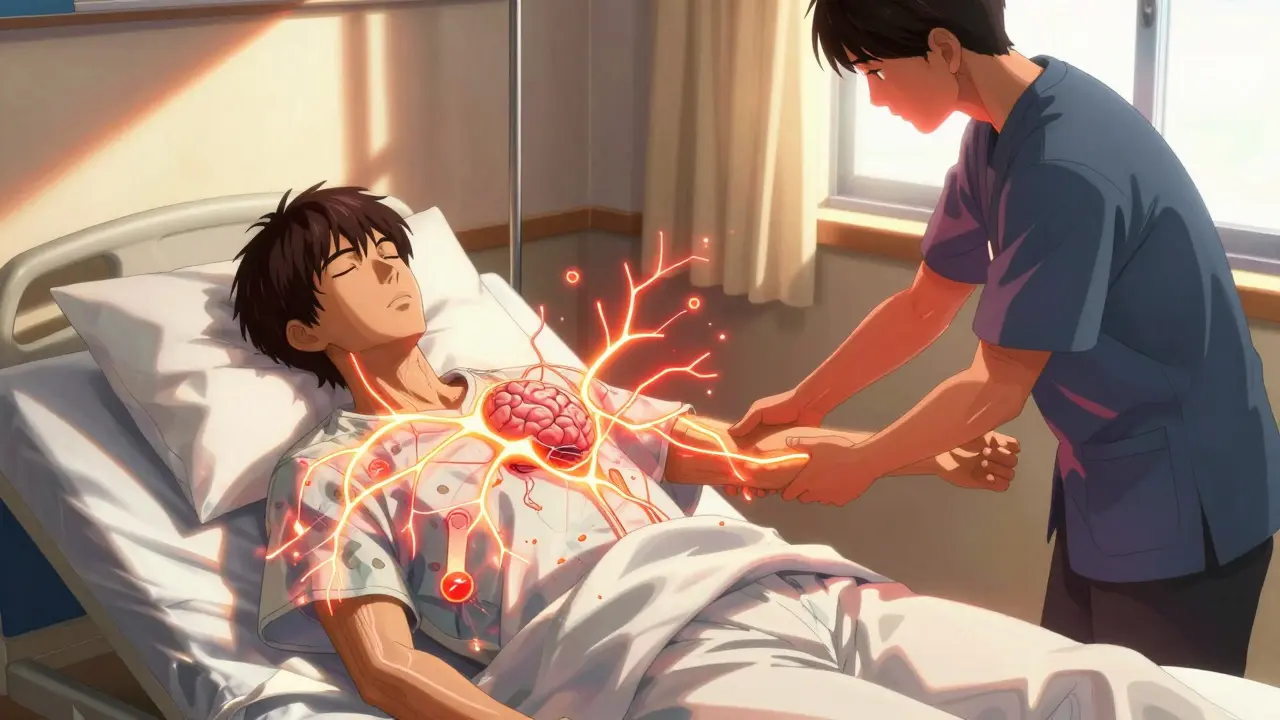
When a stroke happens, the brain doesn’t just stop working - it starts trying to heal. But healing doesn’t happen on its own. Recovery after a stroke isn’t about waiting for things to get better. It’s about rehabilitation - a structured, science-backed process that helps the brain rewire itself and regain what was lost. And the sooner it starts, the better the outcome.
Why Timing Matters More Than You Think
Many people believe recovery takes months or even years, so they wait. But research shows the first 24 to 72 hours after a stroke are the most critical. A study from the Chartered Society of Physiotherapy found that patients who began high-intensity therapy within 24 hours of their stroke improved their mobility and strength by 35% compared to those who waited. That’s not a small gain - it’s the difference between needing full-time help and walking again with a cane. Why does early action make such a difference? It’s all about neuroplasticity. This is the brain’s natural ability to reorganize itself by forming new neural connections. When a stroke damages part of the brain, nearby areas can take over the lost functions - but only if they’re trained. Think of it like a road detour: if you don’t clear the detour path quickly, it gets overgrown and unusable. Therapy is the bulldozer that keeps that path open.The Three Stages of Recovery
Recovery doesn’t happen in one big leap. It follows three clear phases, each with its own goals and methods.- Recovery/Natural Healing (Days to Weeks): Right after the stroke, swelling in the brain goes down. Some movement may return on its own - a finger twitch, a leg that lifts slightly. But this is fragile. Without proper positioning and gentle movement, muscles can tighten, joints can stiffen, and pressure sores can form. Therapists focus on preventing these complications. Passive exercises - where a therapist moves the patient’s limbs - are done 2-3 times a day to keep joints flexible and blood flowing.
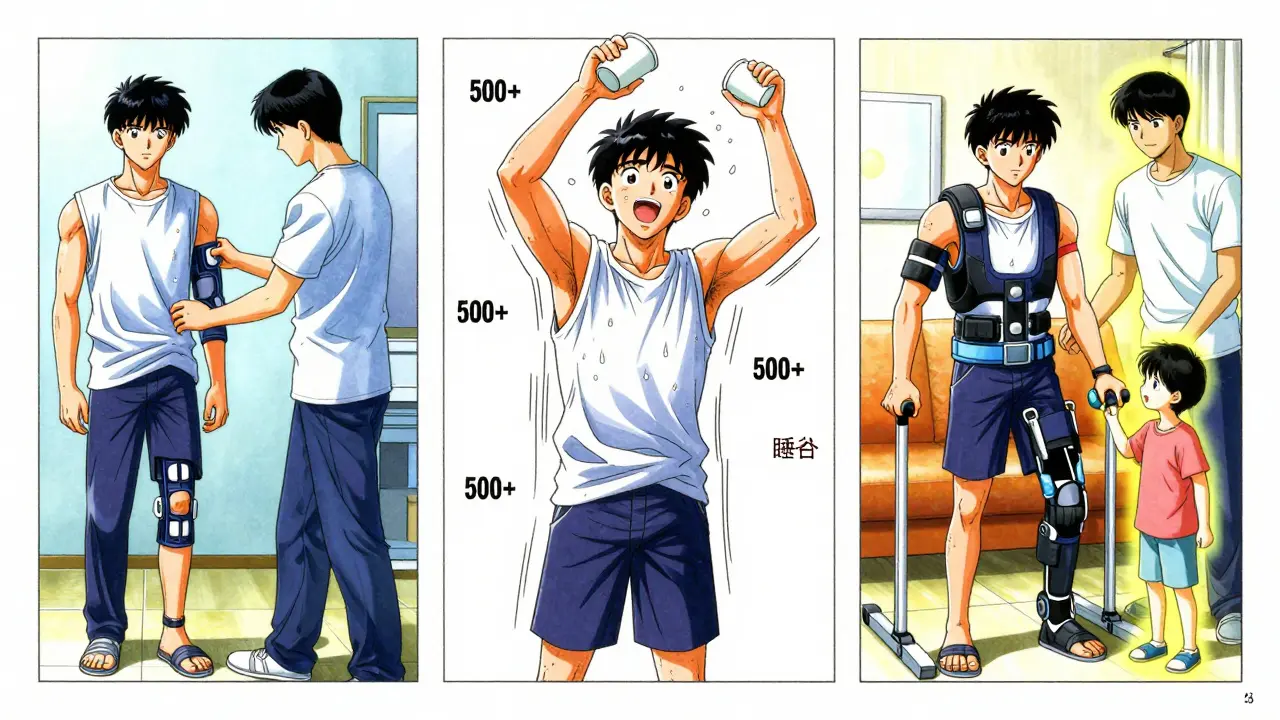
- Retraining (Weeks to Months): This is where the real work begins. Patients start doing tasks over and over: lifting a cup, standing from a chair, stepping forward with the affected leg. Repetition is key. Studies show that doing 500-600 repetitions of a movement in a single session leads to measurable brain changes. Techniques like constraint-induced therapy - where the unaffected arm is strapped down so the patient must use the weaker one - have been shown to improve motor function by 30% more than standard therapy. Visual cues, like pointing to a wheelchair brake before transferring, help the brain relearn how to move safely.
- Adaptation (Months to Years): Not everything comes back. Some people will always have weakness, trouble speaking, or balance issues. The goal here isn’t to fix the past - it’s to build a new normal. This means adapting the home: installing grab bars in the bathroom, raising kitchen counters, using voice-activated devices. It also means learning new ways to do things - like using one hand to button a shirt or memorizing word substitutes when speech fails. Psychological support is just as important as physical therapy. Depression affects 30-35% of stroke survivors. Without addressing it, progress stalls.
The Team Behind the Recovery
No single therapist can do it all. Stroke recovery needs a team. The American Stroke Association’s 2016 guidelines say the best outcomes happen when doctors, nurses, physical therapists, occupational therapists, speech pathologists, psychologists, and social workers all work together - and talk to each other.- Physical therapists focus on movement: walking, balance, strength. They use tools like robotic exoskeletons (like the Lokomat) that guide leg motion during treadmill training. Patients using these devices see a 50% greater improvement in walking speed than those who don’t.
- Occupational therapists help with daily life: dressing, eating, bathing. They might recommend adaptive tools - a weighted spoon for shaky hands, a long-handled brush for reaching feet. They also train the brain to use the unaffected side more efficiently.
- Speech-language pathologists tackle communication and swallowing. Up to 40% of stroke survivors have trouble swallowing, which can lead to pneumonia. Therapy includes exercises to strengthen throat muscles and techniques to change head position while eating.
- Psychologists help with emotional recovery. Grief, frustration, and anxiety are common. They don’t just talk - they teach coping strategies, set realistic goals, and involve family members to reduce isolation.
Tech That Helps the Brain Heal
Technology isn’t just for hospitals anymore. It’s now a core part of everyday rehab.- Functional electrical stimulation sends tiny pulses to weak muscles, helping them contract. For hand and wrist function, this leads to 25-45% strength gains in 12 weeks.
- Virtual reality lets patients practice real-life tasks in safe, engaging environments. One study showed a 28% improvement in arm movement after using VR systems that simulate pouring water or reaching for objects.
- Robotic devices like the Lokomat or ArmeoSpring provide consistent, repeatable motion. They’re especially useful for patients who can’t move on their own - the robot moves the limb, but the brain still has to try to control it.
- Wireless activity monitors track daily steps and movement. Patients who wore them increased their daily steps by 32% - not because the device did anything, but because seeing the numbers motivated them to move more.
- Transcranial magnetic stimulation (TMS) uses magnetic pulses to stimulate brain areas near the stroke damage. When combined with therapy, it boosts motor recovery by 15-20%.
What Really Drives Success?
You can have the best therapy, the latest tech, and a perfect team - but if the patient isn’t motivated, progress slows. Research shows motivation accounts for up to 40% of recovery outcomes. It’s not about being positive all the time. It’s about having a reason to keep going. The Merck Manuals list nine key factors that predict recovery success:- General medical condition
- Range of motion
- Muscle strength
- Bowel and bladder control
- Pre-stroke level of independence
- Social support
- Learning ability
- Motivation
- Coping skills
What Happens After the Hospital?
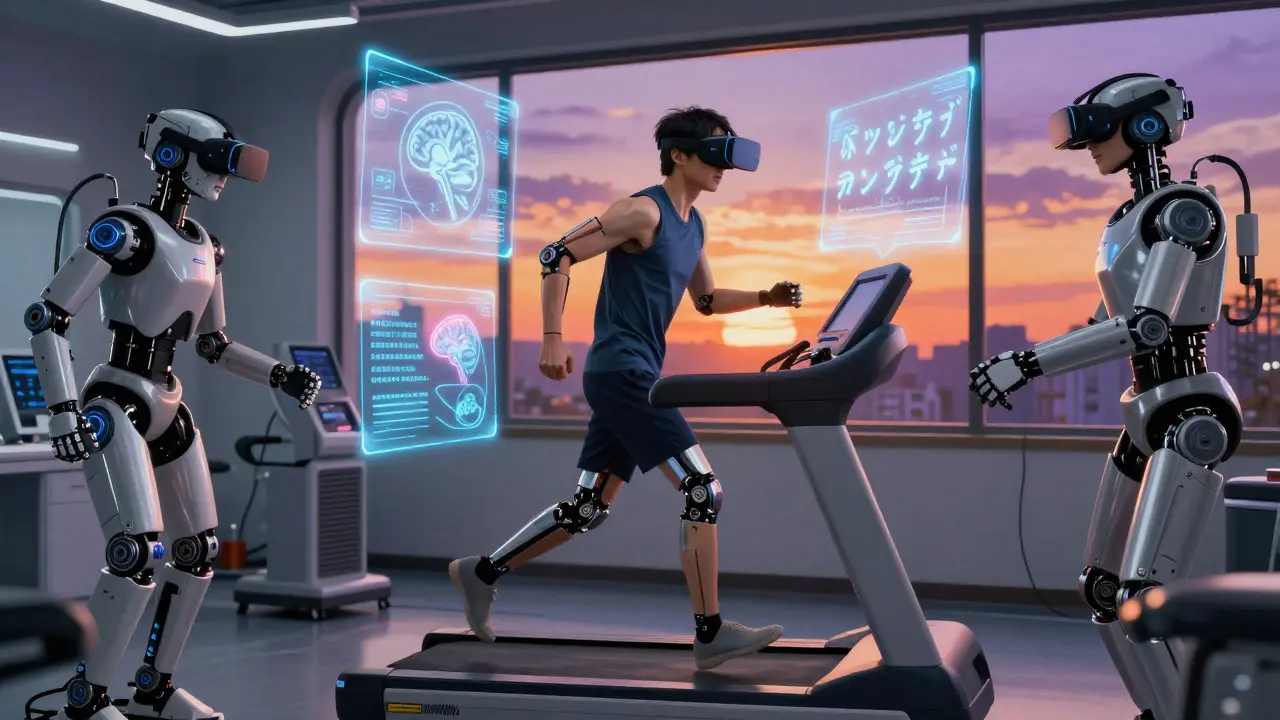
Most stroke survivors leave the hospital before they’re fully recovered. That’s where community-based rehab comes in. The American Heart Association now recommends ongoing therapy for 70% of patients after discharge. Telerehabilitation - therapy done over video - has been shown to be 85% as effective as in-person sessions for tasks like balance training, strength exercises, and speech practice. This means recovery doesn’t end when you walk out of the clinic. It continues at home, in parks, in gyms, and online. Daily movement, social interaction, and mental stimulation are just as important as formal therapy.The Balance Between Rest and Effort
Recovery isn’t about pushing harder every day. It’s about finding the right rhythm. Too much activity leads to fatigue, which slows healing. Too little leads to stiffness and depression. Experts recommend a daily balance:- 40-50%: Therapeutic exercise
- 30-40%: Rest and sleep
- 20-30%: Social interaction
What’s Next?
New research is pushing boundaries. Scientists are testing drugs that boost brain-derived neurotrophic factor (BDNF), a protein that helps neurons grow. Others are combining rehabilitation with cranioplasty (skull repair surgery) in traumatic brain injury cases - and seeing 25% greater cognitive gains. AI is being used to create personalized rehab plans based on brain scans and movement patterns. But none of this matters if the basics are ignored. The most powerful tool in stroke recovery isn’t a machine or a drug - it’s consistent, daily effort guided by science, supported by people, and driven by the patient’s own will to get better.How soon after a stroke should rehabilitation begin?
Rehabilitation should begin as soon as the patient is medically stable - often within 24 hours. Early intervention prevents complications like muscle stiffness and depression, and significantly improves long-term outcomes. Studies show that starting therapy within 24 hours improves functional recovery by 35% compared to delayed starts.
Can the brain really recover after a stroke?
Yes. While brain cells that die don’t come back, the brain can rewire itself through neuroplasticity. Nearby areas can take over lost functions. This is why repetitive, task-specific therapy works - it trains the brain to form new pathways. Imaging studies show measurable changes in brain activity within 2-4 weeks of starting therapy.
What’s the difference between physical therapy and occupational therapy after a stroke?
Physical therapy focuses on movement: walking, balance, standing, and strength. Occupational therapy focuses on daily tasks: dressing, eating, bathing, and using tools. A physical therapist helps you move your body; an occupational therapist helps you use your body to live.
How much therapy is enough each week?
The American Stroke Association recommends at least three hours of therapy, five days a week, for patients who are medically stable and able to participate. This level of intensity has been shown to produce the best outcomes in mobility, strength, and independence.
Is telerehabilitation effective after a stroke?
Yes. Recent studies show telerehabilitation - therapy done via video calls - is 85% as effective as in-person sessions for many tasks, including balance training, strength exercises, and speech therapy. It’s especially helpful for long-term recovery after leaving the hospital.
Why is motivation so important in stroke recovery?
Motivation drives consistency. Recovery requires thousands of repetitions over weeks and months. Without motivation, patients skip sessions, don’t do home exercises, and give up. Research shows motivation accounts for up to 40% of recovery outcomes - more than the type of therapy used.
Can stroke recovery continue years after the event?
Yes. While the fastest gains happen in the first 3-6 months, improvement can continue for years. The brain remains adaptable. Ongoing therapy, daily activity, and mental engagement can lead to further gains in strength, speech, and independence even 2-5 years after a stroke.
Justin Ransburg
February 26, 2026 AT 19:26Just wanted to say how inspiring this breakdown is. I’ve seen too many families give up too soon, thinking recovery is a lost cause. But the science here is clear: early, intense rehab changes lives. I work in hospital admin, and I’ve watched patients go from bedridden to walking with a cane-all because they started therapy within 24 hours. It’s not magic. It’s mechanics. The brain is resilient if you give it the right stimulus.
Keep pushing the message. More people need to know this.
- Justin
Vikas Meshram
February 26, 2026 AT 20:32Actually, the claim that therapy within 24 hours improves mobility by 35% is misleading. The Chartered Society of Physiotherapy study you cite had a sample size of 47, with no control for pre-stroke fitness levels. Also, ‘mobility’ isn’t defined-does that mean standing? Walking 5 meters? Using a walker? Vague metrics undermine credibility. And you mention ‘neuroplasticity’ like it’s a law of physics. It’s a phenomenon, not a guarantee. Many patients never regain function, regardless of timing. Don’t oversell.
- Vikas
Ben Estella
February 28, 2026 AT 01:02Look, I get it-science is great. But let’s be real. In this country, most people don’t even get to the hospital in 24 hours, let alone start rehab. Insurance denies it. Hospitals discharge you the next day. You think a guy in Ohio with no family and no money is getting robotic exoskeletons? Nah. They get a pamphlet and a prayer. This whole thing reads like a brochure from a fancy rehab center in Boston. Meanwhile, real people are stuck in nursing homes because the system doesn’t care. Stop pretending this is about progress. It’s about privilege.
- Ben
Jimmy Quilty
March 1, 2026 AT 11:26Have you considered that the entire stroke rehab industry is a scam designed by Big Pharma and equipment manufacturers? The ‘neuroplasticity’ narrative? That’s just a distraction. The real breakthroughs are happening in underground biohacking circles-people using low-dose lithium, pulsed electromagnetic fields, and infrared sauna protocols. But you won’t hear about it because the FDA and AMA don’t want you to. I know a guy in Vermont who reversed his stroke symptoms in 3 weeks with nothing but cold showers and intermittent fasting. No therapists. No robots. Just discipline. Why isn’t this on the news? Because they’re scared.
- Jimmy
Gigi Valdez
March 2, 2026 AT 06:31Thank you for the thorough, evidence-based overview. The breakdown into three stages is particularly helpful-it gives structure to what often feels like chaotic, overwhelming recovery. I’ve worked with stroke survivors in palliative care, and I’ve seen how the emotional weight of adaptation is rarely addressed with the same rigor as physical therapy. The inclusion of psychological support as a core pillar, not an afterthought, is vital. This should be required reading for caregivers and clinicians alike.
- Gigi
Sneha Mahapatra
March 2, 2026 AT 08:09It’s quiet here, but I’m holding space for everyone reading this who’s been through this. The grief of losing a part of yourself, the frustration of not being able to hold a spoon, the loneliness of being told ‘you’re lucky to be alive’-it’s real. And yet, the quiet moments of progress-the first time you button your shirt alone, the first laugh after months of silence-they matter more than any statistic. I’ve sat with people who didn’t walk again, but who learned to paint with their mouths. That’s not recovery. That’s rebirth.
💖
- Sneha
Full Scale Webmaster
March 3, 2026 AT 00:56Okay, let’s unpack this. You’ve got a 35% improvement claim based on one study, then you cite ‘studies show’ 500-600 repetitions, then 28% with VR, then 25-45% with FES-none of these are from the same population, same time frame, same severity. You’re cherry-picking numbers like a marketing guy for a rehab startup. And don’t get me started on the ‘team’ model. Who pays for this? Medicare? Medicaid? Private insurance? No one. The average patient gets 15 minutes of PT per week after discharge. The rest is just aspirational fluff. And don’t even mention ‘motivation’ like it’s a personal failing. Of course someone’s unmotivated-they’ve been told for months they’re a burden. The system breaks people before the brain even has a chance. This whole thing reads like a TED Talk written by someone who’s never held a stroke patient’s hand while they cried because they couldn’t say ‘water’.
- Full Scale
Brandie Bradshaw
March 3, 2026 AT 14:09There’s a critical omission here: the role of sleep architecture in neuroplasticity. Deep slow-wave sleep is when synaptic consolidation occurs-specifically, the pruning of inefficient neural pathways and strengthening of new ones. But you mention sleep as a ‘30-40%’ component, as if it’s just another activity. It’s not. It’s the engine. Without adequate deep sleep (measured via EEG, not self-report), even 1,000 repetitions per day are ineffective. And yet, sleep apnea-affecting over 60% of stroke survivors-is routinely undiagnosed. Continuous positive airway pressure (CPAP) therapy, when initiated within 72 hours, has been shown to double motor recovery rates. Why isn’t this in the guidelines? Because sleep labs aren’t profitable. This isn’t an oversight. It’s negligence.
- Brandie
Justin Ransburg
March 3, 2026 AT 19:18@Brandie Bradshaw-You’re absolutely right. Sleep is the silent hero. I’ve seen patients on CPAP make more progress in two weeks than others did in six. We’ve started screening every stroke patient for sleep apnea at our center. It’s not glamorous, but it’s the difference between recovery and stagnation. Thanks for calling this out.
- Justin