

Most people think if something is natural, it’s safe. That’s a dangerous myth. Medication risks and dietary supplement dangers are real, often hidden, and sometimes deadly. You might be taking a multivitamin, fish oil, or herbal tea thinking it’s harmless. But those pills can clash with your blood pressure medicine, make your chemotherapy less effective, or cause internal bleeding without warning. The truth? Every pill you swallow-whether prescribed or bought online-has the potential to hurt you if you don’t understand how it works with your body.
Why Supplements Aren’t Safe Just Because They’re Natural
Dietary supplements are not drugs. That’s not a loophole-it’s the law. Under the Dietary Supplement Health and Education Act of 1994, companies can sell vitamins, herbs, and amino acids without proving they’re safe or even effective. The FDA can’t stop a product unless it’s proven to cause harm after people get sick. That means dangerous supplements can sit on shelves for months, even years, before anyone acts. In 2022, the FDA received over 5,000 reports of adverse events linked to supplements. Real numbers are likely 10 times higher, since most people never report side effects.
Take green tea extract. It’s sold as a weight-loss aid and antioxidant. But in 2023, the NIH’s LiverTox database found it caused 22% of all supplement-related liver injuries reported in the U.S. One woman in Adelaide took it daily for three months to lose weight. She ended up in the hospital with acute hepatitis. Her doctor said it was the supplement. No one warned her.
The Hidden Danger: Drug-Supplement Interactions
The biggest risk isn’t just taking too much. It’s mixing supplements with your medications. These interactions don’t always show up on labels. They don’t come with warning stickers. They happen quietly, inside your body.
St. John’s wort, often taken for low mood, cuts the effectiveness of birth control pills by 13-15%. That means unexpected pregnancy. It also drops levels of cyclosporine (used after organ transplants) by half. One patient in Sydney lost her kidney transplant because she didn’t tell her doctor she was taking it.
Asian ginseng speeds up how your liver breaks down drugs. That means calcium channel blockers, statins, and even chemotherapy drugs get cleared too fast. Their effect fades. Your blood pressure spikes. Your cancer treatment fails.
And then there’s vitamin K. It’s in leafy greens and supplements. If you’re on warfarin, vitamin K can undo the whole point of the drug. A single high-dose supplement can reduce warfarin’s effect by 40-50%. That’s not a small bump-it’s a life-threatening jump in clotting risk.
High-Risk Supplements You Should Avoid
Some supplements are consistently linked to serious harm. Here are the top offenders:
- St. John’s wort: Interferes with antidepressants, birth control, HIV meds, and transplant drugs. Can trigger serotonin syndrome-a rare but fatal condition.
- Ginkgo biloba: Increases bleeding risk. When taken with aspirin or warfarin, it can cause brain bleeds or uncontrolled bleeding after surgery.
- Garlic and fish oil: Both thin the blood. A 2022 FDA report documented a 68-year-old woman hospitalized after combining them with daily aspirin. She bled internally.
- Vitamin A: More than 10,000 IU per day over time causes liver damage, vision loss, and bone pain. Some “anti-aging” formulas contain 25,000 IU.
- Vitamin D: High doses (over 300,000 IU monthly) increase fall and fracture risk in older adults by 15-20% due to calcium overload.
- Vitamin E: Doses above 400 IU daily raise hemorrhagic stroke risk by 10%. Also interferes with radiation therapy.
- Bitter orange: Contains synephrine, a stimulant similar to ephedra. Raises blood pressure by 10-15 mmHg and can trigger heart rhythm problems.
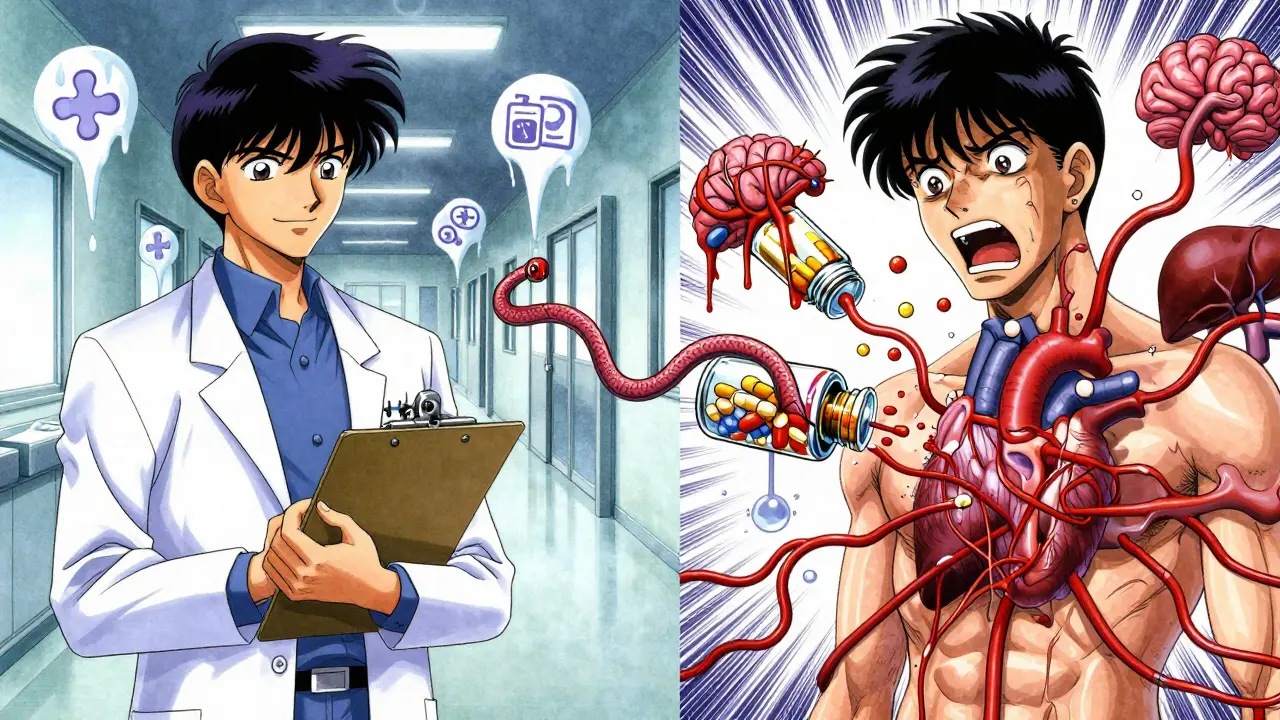
What Happens When You Take Supplements During Cancer Treatment
If you’re undergoing chemotherapy or radiation, supplements aren’t just risky-they can be sabotaging your treatment.
Antioxidants like vitamins C and E are marketed as “protective.” But in cancer care, they can shield tumor cells from the damage radiation and chemo are meant to cause. Studies show they reduce treatment effectiveness by 25-30% in certain regimens. One patient in Melbourne stopped all supplements after her oncologist noticed her tumor wasn’t shrinking. She’d been taking high-dose vitamin E daily, thinking it helped her recover. Instead, it was protecting the cancer.
Dr. Ryan T. Lee, a radiation oncologist at Memorial Sloan Kettering, says skin reactions from supplements during radiation can delay treatment for weeks. Patients who take vitamin E, green tea extract, or turmeric often develop severe rashes or burns. Recovery takes time. Treatment gets pushed back. Survival chances drop.
Real Stories Behind the Numbers
Behind every statistic is a person.
A 45-year-old man in Brisbane started taking St. John’s wort for anxiety. He was also on sertraline for depression. Two weeks later, he was rushed to the ER with fever, confusion, and muscle rigidity. He had serotonin syndrome. His doctors said it was the combination.
A woman in Adelaide took ashwagandha for stress. She was also on blood pressure medication. Within days, she had heart palpitations and insomnia. She posted about it on Reddit: “I thought it was calming. Turns out it made my heart race.”
These aren’t rare. The FDA’s MedWatch system recorded over 18,000 supplement-related reports in 2022. Real-world data suggests only 1% of incidents are reported. That means hundreds of thousands of people are experiencing side effects every year-and most don’t know why.
Why You’re Not Telling Your Doctor
Here’s the most dangerous part: 50% of American adults take supplements. Only 33% tell their doctor. In Australia, the number is probably similar. Why? Because doctors don’t ask. And patients don’t think it matters.
But here’s the truth: your doctor needs to know everything. Not just your prescriptions. Not just your vitamins. Everything. Herbal teas. Protein powders. CBD gummies. Turmeric capsules. Even if you think it’s “just a little.”
One study found 67% of dangerous interactions happen because patients didn’t disclose supplement use. That’s not negligence-it’s a system failure. Doctors assume you’ll tell them. You assume they’ll ask. Neither happens.
How to Protect Yourself
You don’t have to give up supplements. But you need to take control.
- Make a full list. Write down every pill, powder, and drop you take-even if it’s “natural.” Include brand names and doses.
- Bring it to every appointment. Show it to your GP, specialist, pharmacist. Don’t assume they’ll remember. Hand them the list.
- Use the NIH’s tool. The Office of Dietary Supplements offers a free “My Dietary Supplement and Medicine Record” form. Over 1,200 clinics in the U.S. use it. You can download it online.
- Ask this question: “Could this interact with anything I’m taking?” Don’t say “Is this safe?” Say “Could this make my meds less effective-or more dangerous?”
- Stop immediately if you feel weird. New rash? Heart racing? Trouble breathing? Diarrhea that won’t quit? Stop the supplement. Call your doctor. Report it to the FDA via MedWatch Online.
The Bigger Problem: Online Sales and Poor Regulation
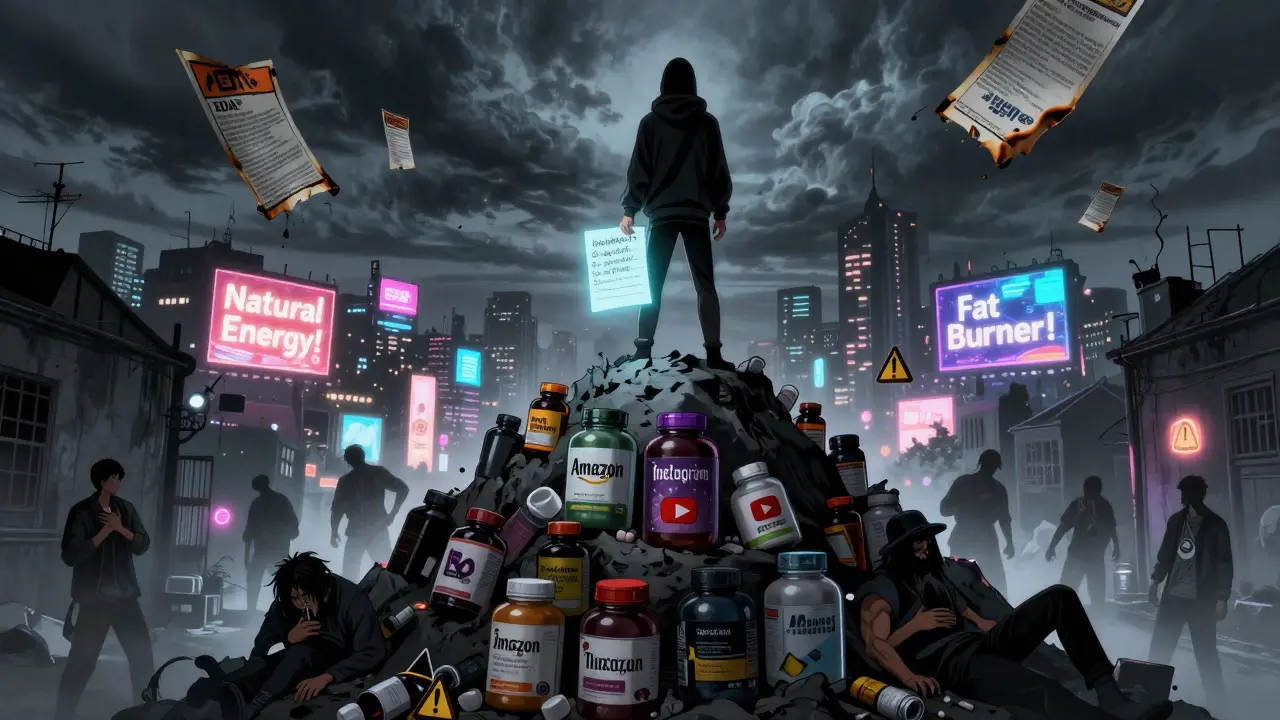
Over 45% of supplement-related adverse events come from products bought online. Amazon, eBay, Instagram ads, YouTube influencers-they sell supplements with no quality control. Labels lie. Ingredients are missing. Contaminants are common.
In 2023, the FDA added 12 new ingredients to its high-risk list: yohimbe, DMAA, and others found in “energy” and “weight-loss” products. Many are banned in Australia and Europe but still sold online to Australians. A 2022 study found 38% of supplements bought online contained undeclared pharmaceuticals-like sildenafil (Viagra) or steroids.
The Dietary Supplement Listing Act of 2022 was a step forward. It would require manufacturers to notify the FDA before selling new products. But it’s still not law. Until then, you’re the last line of defense.
What’s Next? Better Systems Are Coming
The FDA is testing AI to scan social media for early signs of supplement harm. In a pilot, it flagged dangerous patterns from 1.2 million posts with 87% accuracy. That’s promising. But it’s not a fix. It’s a bandage.
The National Academy of Medicine says current rules are “inadequate to protect consumers.” They’re pushing for mandatory pre-market safety reviews for new supplements. That’s the only real solution.
Until then, treat every supplement like a drug. Because it acts like one. And it can hurt you like one.
Are dietary supplements regulated like prescription drugs?
No. Unlike prescription drugs, dietary supplements don’t need FDA approval before being sold. Manufacturers are responsible for safety, but they don’t have to prove effectiveness. The FDA can only act after harm occurs, which often takes months or years.
Can supplements cause liver damage?
Yes. Green tea extract, weight-loss supplements, and some herbal products like kava and comfrey have been linked to liver injury. The NIH’s LiverTox database lists 45 supplement ingredients tied to liver damage. Green tea extract alone accounts for 22% of reported cases.
Is it safe to take supplements during cancer treatment?
Generally, no. Antioxidants like vitamins C and E can interfere with chemotherapy and radiation by protecting cancer cells. The American Cancer Society advises cancer patients to avoid all supplements unless approved by their oncology team. Even “natural” products can reduce treatment effectiveness by up to 30%.
What supplements are most likely to interact with medications?
St. John’s wort, ginkgo biloba, garlic, fish oil, vitamin K, and bitter orange are top offenders. St. John’s wort reduces effectiveness of birth control, antidepressants, and transplant drugs. Ginkgo and garlic increase bleeding risk with blood thinners. Vitamin K weakens warfarin. Bitter orange raises blood pressure and heart rate.
How can I report a bad reaction to a supplement?
Report it to the FDA through MedWatch Online. You can file a report even if you’re not a healthcare provider. Include the product name, dose, symptoms, and when they started. The FDA uses these reports to identify dangerous products. Over 18,000 reports were filed in 2022 alone.
Should I stop taking supplements before surgery?
Yes. Supplements like ginkgo, garlic, fish oil, and vitamin E can increase bleeding risk during surgery. Many surgeons require patients to stop all supplements at least two weeks before an operation. Always tell your anesthesiologist and surgeon about everything you take-even if you think it’s harmless.
Kristen Russell
January 2, 2026 AT 04:22Just stopped my fish oil after reading this. Had no idea it could mess with my blood pressure med. Thanks for the wake-up call.
Bryan Anderson
January 2, 2026 AT 09:28This is an exceptionally well-researched and necessary piece. The data on supplement-related liver injuries, particularly from green tea extract, is alarming. I’ve shared this with my entire family, especially my mother who takes six different supplements daily. The lack of pre-market regulation is a systemic failure that demands urgent reform.
Matthew Hekmatniaz
January 2, 2026 AT 13:09As someone who grew up in a culture where herbal remedies are part of daily life, I get why people trust ‘natural’ products. But this post hit home-just because something’s been used for centuries doesn’t mean it’s safe with modern meds. My uncle took turmeric with his chemo and ended up in the ER. We didn’t know. Now I carry a printed list of everything I take to every doctor’s visit.
Liam George
January 4, 2026 AT 05:33Let’s be real-the FDA is a puppet of Big Pharma. Supplements are banned because they can’t be patented. That’s why they’re not regulated like drugs. They don’t want you to heal naturally. They want you dependent on pills that cost $500 a month. The real danger isn’t the supplement-it’s the corporate control over your health. Wake up. The truth is hidden in plain sight.
sharad vyas
January 5, 2026 AT 17:10In my country, we use herbs every day. But we also know when to stop. A good elder teaches balance. Not everything natural is good. Not everything synthetic is bad. Listen to your body. And always talk to your doctor. Simple.
Richard Thomas
January 6, 2026 AT 20:48I’ve spent years studying the pharmacology of botanical compounds, and this article, while broadly accurate, misses a critical nuance. The real issue isn’t just drug-supplement interactions-it’s the pharmacokinetic variability across individuals. CYP450 enzyme polymorphisms mean that one person’s ‘safe’ dose of St. John’s wort is another’s life-threatening cocktail. Add in gut microbiome differences, epigenetic expression, and age-related hepatic decline, and you’ve got a perfect storm of unpredictable outcomes. We’re treating supplements like they’re cookies, when they’re actually complex biochemical modulators with half-lives, bioavailability curves, and receptor affinities. The regulatory framework isn’t just inadequate-it’s fundamentally misaligned with biological reality. Until we move from a one-size-fits-all model to personalized phyto-pharmacology, we’re just playing Russian roulette with our physiology.
Paul Ong
January 8, 2026 AT 05:08My dad took ginkgo before his knee surgery and bled for days. No one asked him about it. I’m telling everyone now. Stop taking random pills. Talk to your doctor. That’s it.
Andy Heinlein
January 9, 2026 AT 21:59just started taking vitamin d again after reading this… but only 1000iu now and i told my doc. also stopped the green tea extract. felt kinda weird lately anyway. thanks for the nudge
Ann Romine
January 11, 2026 AT 20:08I’ve been taking ashwagandha for anxiety since last year. I didn’t think it could interfere with my thyroid med. I’m going to stop it tomorrow and bring my list to my appointment. This post scared me, but in a good way.