
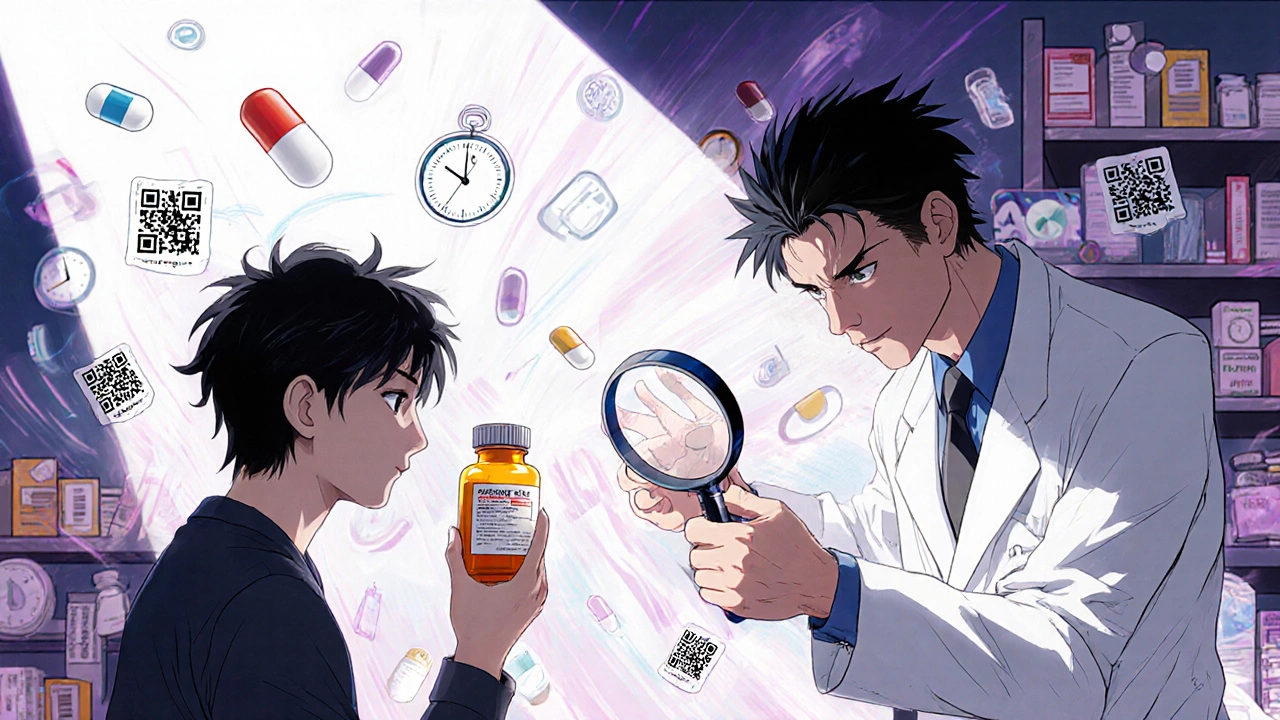
Every time you pick up a prescription, you’re holding a document that could save your life-or hurt you if you miss something important. Prescription labels aren’t just small pieces of paper with writing on them. They’re legal, medical, and safety documents. And yet, most people grab them, glance at the name and dose, and walk out. That’s risky. According to the FDA, over 1.3 million medication errors happen in the U.S. every year. About 22% of those come from people misunderstanding their prescription labels. You don’t need to be a doctor to catch these mistakes. You just need to ask the right questions.
Is this really my medication?
The first thing you should check is whether the name on the label matches the name your doctor gave you. Sounds simple, right? But brand names and generic names are often mixed up. Your doctor might have prescribed metformin, but the label says Glucophage. That’s the same drug-just different names. But if you’re used to hearing one and see the other, you might think it’s wrong. Always ask: "Is this the generic version?" or "What’s the brand name?" If your doctor told you to take "the blue pill," but the pill looks different, ask why. Pills can change color, shape, or size depending on the manufacturer. That’s normal. But you should know why.What’s the correct dose and timing?
Dosage instructions are written in shorthand. "Take one by mouth twice daily" sounds clear. But what does "twice daily" mean? Every 12 hours? Or just morning and night? If your label says "QID," that means four times a day. Not everyone knows medical abbreviations. Ask the pharmacist to explain any abbreviation you don’t understand. Also, check the strength. Is it 5 mg or 50 mg? A mistake here can be dangerous. One patient in Alabama took a 50 mg blood pressure pill thinking it was 5 mg. She ended up in the ER. The label said 50 mg. She missed the "0." That’s why you should always read the label out loud to the pharmacist. If they don’t correct you, they’ll know you’re paying attention.When does this expire?
Expiration dates aren’t suggestions. They’re legal requirements. The FDA says medications must stay effective and safe until that date-if stored properly. But many people don’t check. Some keep pills in the bathroom, where heat and moisture ruin them. Others forget to throw out old meds. If your label doesn’t have an expiration date, ask for it. Some states require it. Others don’t. But every pharmacy should be able to tell you. And if the pill looks discolored, smells odd, or crumbles when you touch it, don’t take it. Even if it’s before the expiration date.How should I store this?
Not all medicines stay good at room temperature. About 15% of prescriptions need refrigeration. That includes insulin, some antibiotics, and certain biologics. If your label says "Store in the refrigerator," don’t just put it on the top shelf. Put it in the main part, not the door. Temperature swings there can weaken the drug. Some meds need to stay dry. Others can’t be frozen. If you’re unsure, ask. One woman in Texas kept her insulin in the car for two weeks because the label was too small to read. It stopped working. She didn’t know until her blood sugar spiked. The label had a tiny snowflake icon. She missed it.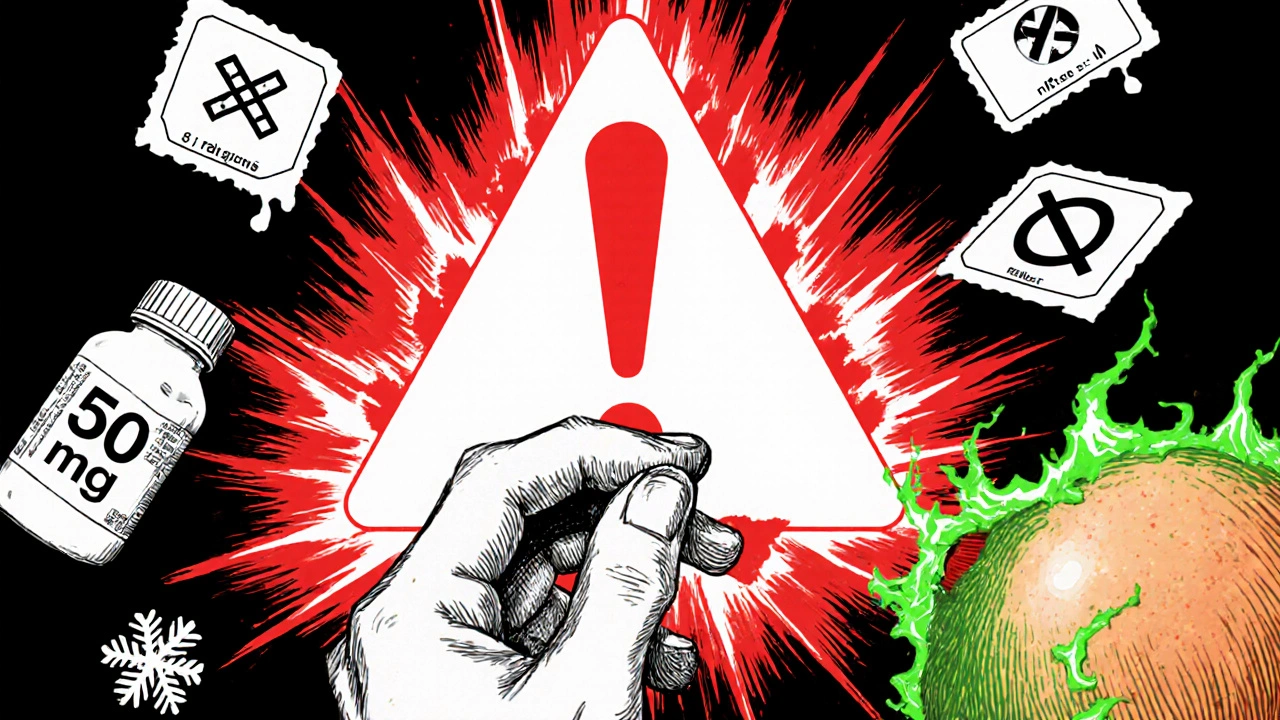
What should I avoid while taking this?
Some drugs interact with food, alcohol, or other meds. For example, taking statins with grapefruit juice can cause dangerous muscle damage. Antibiotics like doxycycline lose effectiveness if taken with dairy. Blood thinners like warfarin react badly with leafy greens. Your label might not say this clearly. Even if it does, you might not connect the dots. Ask: "Is there anything I should not eat, drink, or take with this?" Don’t assume the pharmacist knows your full list of meds. Bring a list of everything you take-even vitamins and supplements. That’s how they catch hidden interactions.What are the side effects I should watch for?
Side effects are listed on the label, but they’re often buried in tiny text. You might see "dizziness, nausea, headache"-but what does that mean for you? Ask: "Which side effects mean I need to call my doctor right away?" For example, if you’re on an opioid and feel like you can’t breathe, that’s an emergency. If you get a mild rash, it might not be. Ask for the red flag symptoms. Also, ask if there’s a Medication Guide. For high-risk drugs like opioids, blood thinners, or isotretinoin, the FDA requires a separate printed guide. If you didn’t get one, ask for it. It’s not optional.Can I refill this? How many times?
The refill number is on the label. But what if it says "Refills: 0"? Did your doctor forget to authorize more? Or is this a controlled substance with strict limits? Some states limit refills for pain meds to three months. Others allow six. If you’re not sure, ask. Also, check the date. Some refills expire after a year. You might think you can still get it, but the system blocks it. And if you’re on Medicare Part D, your plan might have changed your coverage. You could be paying full price now. Ask: "Is this covered under my plan?" Don’t assume it is.
Can you explain this in simpler terms?
About 80 million American adults struggle to understand medical instructions. That’s not about intelligence. It’s about how complex the language is. If you’re not a native English speaker, have vision problems, or just find medical terms confusing, you’re not alone. Ask: "Can you explain this in plain language?" Or: "Can you write this down for me?" Most pharmacies offer large-print labels. Some even provide audio versions. If you’re over 65, ask about the FDA’s free "Medication Check-Up" program. It’s available at over 8,400 pharmacies. They’ll sit with you, go over your labels, and answer questions. No cost. No appointment needed.Can I get a QR code or video guide?
This is new-but getting common. Over half of U.S. pharmacies now offer QR codes on labels. Scan it with your phone, and you’ll get a short video showing how to take the medicine, what to avoid, and what side effects to watch for. It’s especially helpful for people who read slowly or have trouble with small print. Ask: "Do you have a video for this medication?" If they say no, ask if they plan to offer it. The FDA is pushing for all high-risk drugs to have scannable labels by 2026. The sooner you use these tools, the safer you’ll be.What if I’m still confused?
You don’t have to leave the pharmacy feeling unsure. If something doesn’t feel right, say so. Ask to speak with the pharmacist again. Or ask if you can call later with more questions. Most pharmacies have a direct line. Write down your questions before you go. Bring a friend or family member if you can. They might catch something you miss. And if you still feel uneasy, call your doctor. They can confirm the prescription. You’re not being difficult. You’re being smart. Studies show patients who ask these kinds of questions reduce their risk of adverse drug events by up to 47%.Prescription labels are designed to protect you. But they’re only as good as the person reading them. Don’t just take the pill. Take control. Ask. Verify. Repeat. Your health depends on it.
What should I do if the prescription label looks wrong?
If the label doesn’t match what your doctor told you-whether it’s the name, dose, color, or instructions-don’t take the medication. Ask the pharmacist to double-check the prescription with your doctor’s office. Most pharmacies will call the prescriber on the spot to confirm. Never guess. A mismatched label could mean a dispensing error, which happens more often than you think.
Why do different pharmacies have different labels for the same drug?
Each pharmacy uses its own software and printing system, and state rules vary. Some states require generic names; others allow brand names. Some print extra warnings; others don’t. The core info-name, dose, instructions-is always there, but layout, font size, and extra notes differ. That’s why it’s important to verify each time you refill, even if you’ve taken the same drug before.
Can I request a larger print label?
Yes. Nearly all U.S. pharmacies offer large-print labels for free. Just ask. You don’t need a doctor’s note. If the staff says no, ask to speak with the pharmacist. This is a standard accommodation under the Americans with Disabilities Act. If they still refuse, contact your state board of pharmacy. They can help enforce your rights.
What if I can’t read the label because of a language barrier?
Pharmacies that receive federal funding-like those in Medicare or Medicaid networks-are required by law to provide translation services. Ask for a translator in your language. Many pharmacies have bilingual staff or phone interpretation services. You can also request written instructions in your language. The FDA is expanding multilingual labeling under a new $15 million federal program launched in 2023.
Is it okay to take a medication if the expiration date passed last month?
No. While some drugs may still be chemically stable past their expiration date, the FDA doesn’t guarantee their safety or effectiveness. For life-saving drugs like epinephrine, insulin, or heart medications, never use an expired version. Even for less critical meds, it’s not worth the risk. Expired drugs can break down into harmful compounds. Always dispose of expired pills properly and get a new prescription.
Tina Dinh
November 30, 2025 AT 10:13LINDA PUSPITASARI
November 30, 2025 AT 15:30Joy Aniekwe
December 1, 2025 AT 22:52Sullivan Lauer
December 2, 2025 AT 16:03Sohini Majumder
December 4, 2025 AT 06:28tushar makwana
December 4, 2025 AT 20:20Richard Thomas
December 5, 2025 AT 22:09Matthew Higgins
December 5, 2025 AT 22:32Latika Gupta
December 6, 2025 AT 01:22