

A perforated eardrum isn’t something you plan for. One moment you’re fine, the next you’re wincing from sharp pain, hearing muffled sounds, or noticing fluid leaking from your ear. It’s more common than you think - caused by ear infections, loud noises, sudden pressure changes (like during flying or scuba diving), or even a cotton swab pushed too far. The good news? Most of the time, your eardrum heals on its own. But how long does it take? And what can you actually do to make sure it heals right? Skip the guesswork. Here’s what really matters.
How Long Does It Take to Heal?
There’s no one-size-fits-all answer. Healing depends on how big the hole is, why it happened, and whether you protect it properly. Small perforations - think pinhead-sized - often seal up in three to six weeks. Some heal even faster, with pain fading by day three and the tear starting to close within 48 hours. Larger tears? Those can take two to three months, sometimes longer.
Here’s what the healing process usually looks like:
- Days 1-3: Sharp pain peaks, then drops off. You might hear ringing or feel pressure. Fluid or blood may drain - this is normal if it’s clear or slightly bloody.
- Weeks 2-3: Pain eases significantly. New tissue begins forming over the tear. Hearing starts to improve, but it’s still muffled.
- Weeks 4-6: The eardrum thickens and strengthens. Most people notice their hearing returning to near-normal levels. Ear pressure balances out.
- Weeks 6-8: Complete healing for most small to moderate perforations. If you’re still having issues after this point, you need to see a specialist.
Don’t assume healing means you’re done. Even if you feel fine, the tissue is still fragile. Rushing back to swimming or blowing your nose hard can reopen the tear or cause infection.
What Stops Healing? The Big Risks
Most perforated eardrums heal without surgery - but only if you don’t mess with them. The biggest threats aren’t the injury itself, but what you do afterward.
- Water exposure: Getting your ear wet is the #1 reason healing fails. Water carries bacteria into the middle ear, triggering infection. Even a shower can be dangerous if water gets in.
- Blowing your nose: This creates pressure in your ears. If you have a cold or allergies, blowing hard can push air through the tear, damaging the healing tissue.
- Flying or diving: Pressure changes during flight or underwater can stretch or re-tear the eardrum. Avoid both until your doctor says it’s safe.
- Cleaning your ear: No cotton swabs, no ear candles, no picking. Let the ear clean itself. Inserting anything risks pushing debris deeper or reopening the hole.
- Ignoring infection signs: If you start getting yellow or green discharge, fever, worsening pain, or dizziness, you’re likely developing an infection. This can delay healing by weeks or even lead to permanent damage.
Mount Sinai’s clinical data shows that when people skip these protections, complications like chronic ear drainage or infection happen in 5-10% of cases. That’s avoidable.
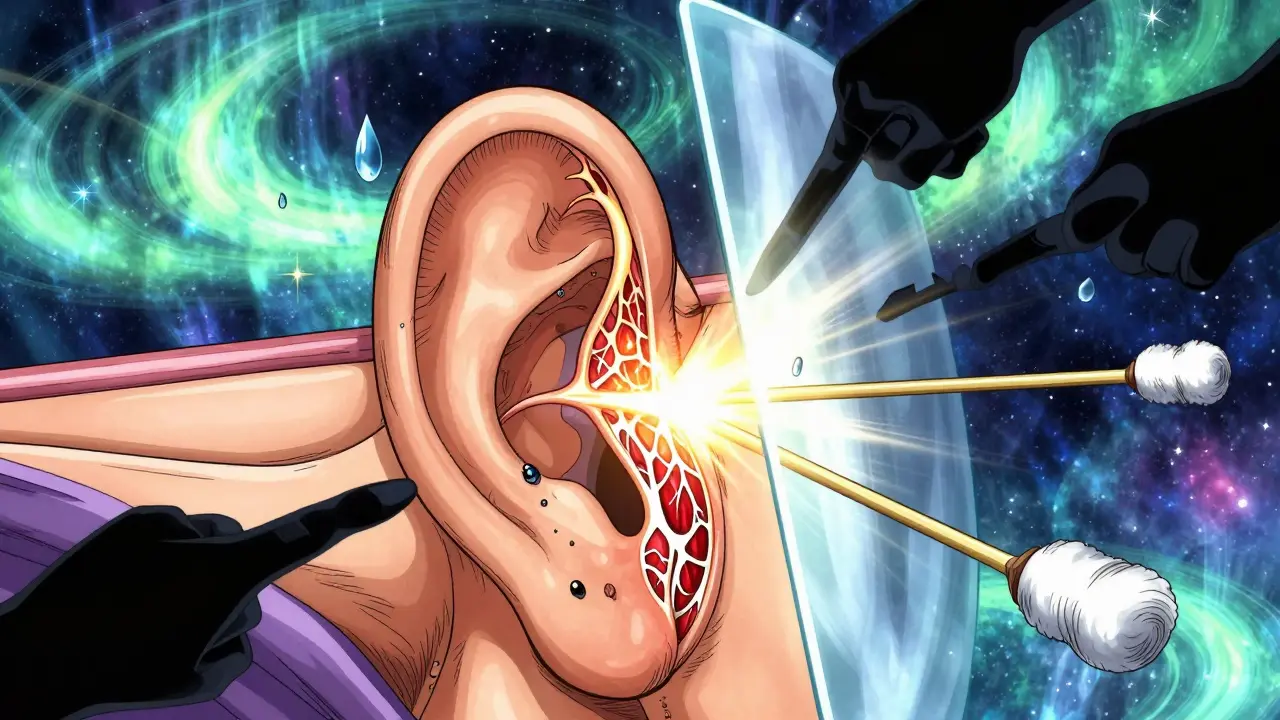
How to Protect Your Ear While It Heals
Protection isn’t optional. It’s the difference between healing on time and needing surgery.
Keep It Dry - No Exceptions
Showering? Use a waterproof earplug. If you don’t have one, pack a cotton ball soaked in petroleum jelly and gently plug the ear canal. Change it every time you shower. Bathing is safer than showering - just keep your head above water. No swimming. No hot tubs. No rain exposure if you’re out without a hat.
Manage Nasal Pressure
If you have a cold or allergies, don’t blow your nose hard. Try gentle single-nostril blowing: close one nostril, breathe out gently through the other. Use saline sprays to keep nasal passages clear. Antihistamines can help if allergies are the issue - but only if your doctor approves.
Avoid Pressure Changes
Don’t fly until you’re cleared. If you must fly, chew gum or swallow often during takeoff and landing to help equalize pressure. Diving? Wait at least 8-12 weeks, and get checked first. Even a shallow dive can be risky.
Don’t Touch It
Never stick anything in your ear - not even a tissue. Let the body do its job. If wax builds up, your doctor can safely remove it later. In the meantime, let it be.
Use Pain Relief Wisely
Over-the-counter painkillers like ibuprofen or acetaminophen help with discomfort. Avoid aspirin if you’re bleeding - it can thin the blood. Don’t use ear drops unless your doctor prescribes them. Some drops can damage the inner ear if the eardrum is broken.
When Do You Need Medical Help?
You don’t need to rush to the doctor for every earache. But here’s when to call:
- Pain or drainage that lasts longer than 3-4 days
- Yellow, green, or foul-smelling discharge
- Fever, dizziness, or balance problems
- Hearing doesn’t improve after 4-6 weeks
- Recurrent perforations (this has happened before)
If you’re still having issues after two months, you need an ENT specialist. They’ll use a microscope to check the eardrum. If it hasn’t closed, they may suggest one of two simple procedures:
- Myringoplasty: A tiny patch - made of gel, paper, or even your own fat - is placed over the hole. Takes 10-30 minutes. Success rate: 85-90% with modern materials.
- Tympanoplasty: Used for larger tears. A surgeon grafts tissue from another part of your body (often behind the ear) to repair the drum. Takes 30-120 minutes. Usually done as outpatient surgery.
These aren’t major surgeries. Most people go home the same day. Recovery is usually quick - just avoid water and pressure for a few more weeks.

What Happens If It Doesn’t Heal?
Left untreated, a non-healing perforation can lead to:
- Chronic ear infections: Repeated infections can erode ear bones, leading to lasting hearing loss.
- Permanent hearing loss: Happens in 3-5% of cases, especially if infection spreads.
- Mastoiditis: Infection spreads to the bone behind the ear. Rare, but serious - needs antibiotics or surgery.
- Vertigo and dizziness: If the inner ear gets infected, balance can be affected.
But here’s the truth: 70-80% of small perforations heal without surgery if you follow the protection rules. Your actions in the first 6 weeks make all the difference.
Long-Term Outlook
Most people recover fully. Hearing returns to normal. The eardrum becomes as strong as before. Stanford Health Care and Harvard Health both say the prognosis is excellent - as long as you don’t rush it.
There’s no magic pill. No miracle spray. Just patience, protection, and following basic rules. The body is designed to heal itself. You just have to give it the right conditions.
Can a perforated eardrum heal on its own?
Yes, most small perforations heal on their own within 3-6 weeks. Larger tears may take up to 2-3 months. The key is avoiding water, pressure changes, and further trauma. Healing happens naturally as new tissue grows over the tear.
How do I keep my ear dry while showering?
Use a waterproof earplug or pack a cotton ball with petroleum jelly and gently place it at the opening of your ear canal. Replace it after every shower. Avoid direct water spray - tilt your head away from the shower stream. Bathing is safer than showering.
Can I fly with a perforated eardrum?
It’s not recommended until the eardrum has fully healed. Pressure changes during flight can reopen the tear or cause severe pain. Wait at least 6-8 weeks and get clearance from your doctor before flying. If you must fly, chew gum or swallow frequently to help equalize pressure.
When should I see a doctor for a perforated eardrum?
See a doctor if pain or drainage lasts more than 3-4 days, if you develop fever or dizziness, if hearing doesn’t improve after 4-6 weeks, or if you notice foul-smelling discharge. These could signal infection or a larger tear that needs treatment.
Do I need antibiotics for a perforated eardrum?
Not always. If there’s no infection, antibiotics aren’t needed. But if you have drainage, pain lasting more than a few days, or signs of infection (fever, pus), your doctor may prescribe oral antibiotics or antibiotic ear drops to prevent complications. Never use over-the-counter drops - some can damage the inner ear.
Can I use earbuds or headphones with a perforated eardrum?
Yes, as long as they don’t go into the ear canal. Over-ear headphones are fine. Avoid in-ear earbuds - they can push debris into the ear, increase pressure, or irritate the healing tissue. Stick to external speakers or over-ear models until fully healed.
Will I lose hearing permanently?
In most cases, hearing loss is temporary and fully reverses once the eardrum heals. Permanent hearing loss occurs in only 3-5% of cases, usually when infection spreads or the injury is severe. Following protection rules cuts this risk dramatically.
Can I exercise with a perforated eardrum?
Light exercise like walking or cycling is fine. Avoid heavy lifting, contact sports, or activities that cause straining or sudden pressure changes (like weightlifting with breath-holding). Sweating is okay, but protect your ear from water. If you feel pressure or pain in your ear during exercise, stop and rest.