
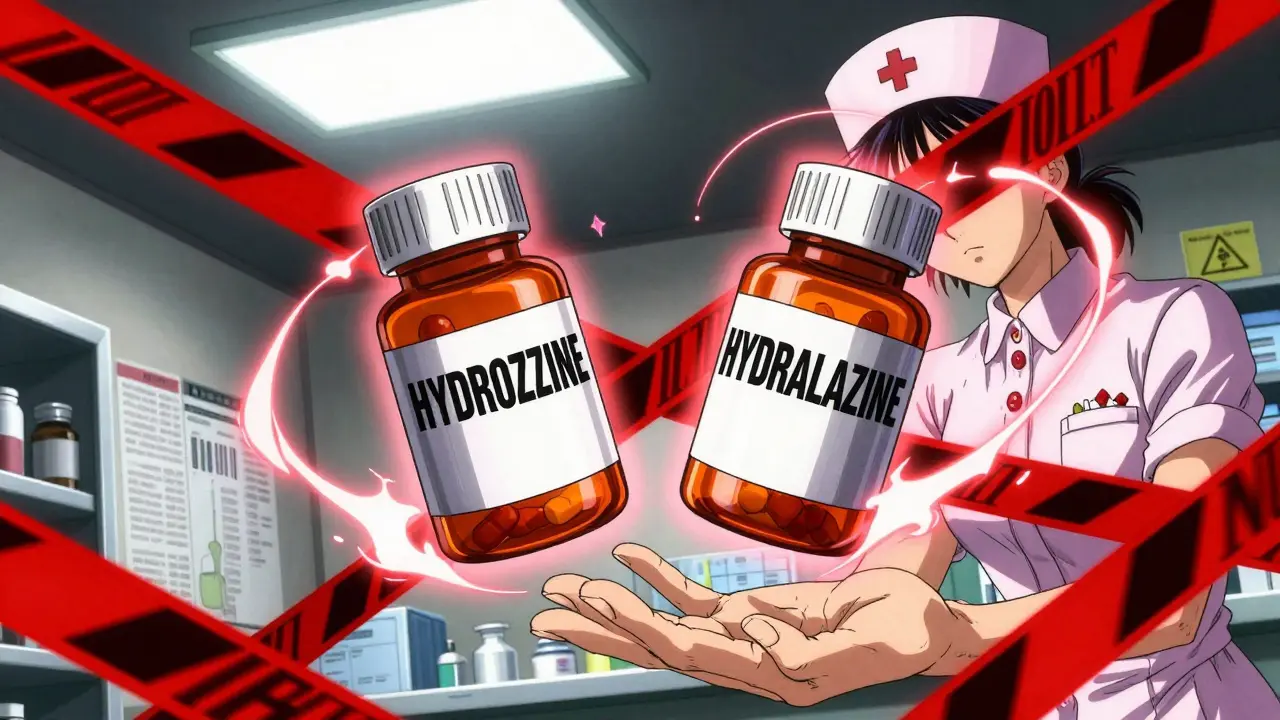
Every year, thousands of people are harmed because two drugs look too similar-or sound too much alike. It’s not a mistake in judgment. It’s not laziness. It’s a system failure, and it’s happening right now in hospitals, pharmacies, and clinics around the world. The problem? Generic drugs. When multiple manufacturers make the same medicine, they often end up with bottles, labels, and names that are nearly identical. And when a nurse hears "hydralazine" over the intercom but the label says "hydroxyzine," the consequences can be deadly.
What Are Look-Alike, Sound-Alike (LASA) Drugs?
Look-alike, sound-alike (LASA) drugs are medications whose names or packaging are so similar that they can be easily confused. This isn’t about rare cases. According to the World Health Organization, LASA errors account for about 25% of all medication mistakes globally. That’s one in four errors. And it’s not just brand-name drugs. The biggest risk comes from generics.
Look-alike means visual confusion: two pills that are the same color, shape, and size. Sound-alike means auditory confusion: two drug names that sound alike when spoken. For example, hydralazine (a blood pressure drug) and hydroxyzine (an antihistamine) look almost identical on paper. When a pharmacist shouts "hydroxyzine 10 mg" over the counter, and the label says "hydralazine," someone might grab the wrong bottle. In one documented case, a patient was given hydralazine instead of hydroxyzine-and suffered a dangerous drop in blood pressure.
Another classic pair: quinidine (for heart rhythm) and quinine (for malaria). Both are used in very different ways, but their names are nearly impossible to tell apart when spoken quickly. Even worse? Both are available as generics. No one checks the packaging. No one double-checks the label. And then the harm starts.
Why Generics Make It Worse
Generic drugs are supposed to be cheaper, safer, and just as effective. And for the most part, they are. But when it comes to naming and packaging, there’s no standard. One manufacturer makes a 10 mg tablet of metoprolol in white with blue lettering. Another makes a 10 mg tablet in white with red lettering. A third uses the same color, same shape, same font-but slightly different spacing. To the untrained eye, they’re identical.
And when you add brand names into the mix? It gets worse. Take Valtrex (valacyclovir) and Valcyte (valganciclovir). Both start with "Val," both are used in transplant and HIV patients, both come in pill form. But one treats herpes, the other treats a deadly CMV infection. Confusing them can mean giving someone a drug that does nothing-or worse, a drug that causes organ damage.
The problem is systemic. Regulatory agencies like the FDA and EMA now screen new drug names for LASA risks. In 2021, the FDA rejected 34 drug names just because they were too similar to existing ones. But that only stops new drugs. It doesn’t fix the hundreds of generics already on shelves. And since generics are made by dozens of companies, there’s no single authority controlling how they look or how they’re labeled.
Where the Errors Happen
Most people think errors happen at the pharmacy. But they happen everywhere.
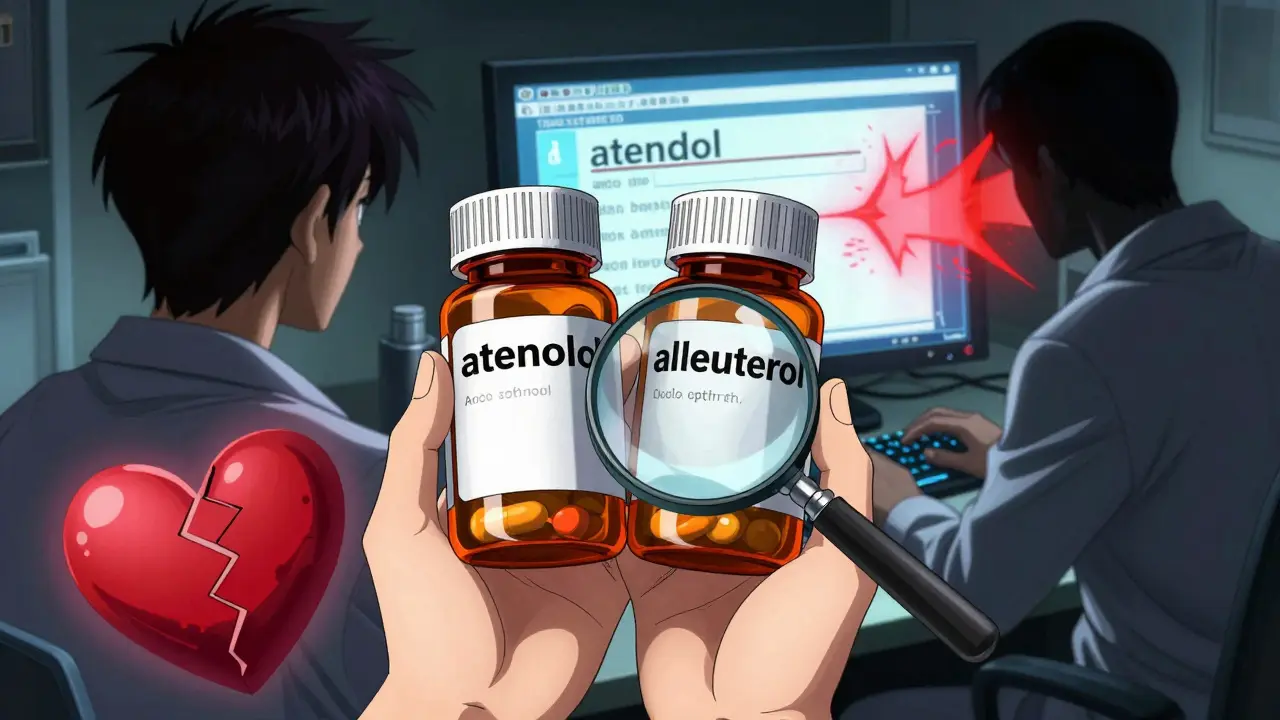
- Prescribing: A doctor types "albuterol" but the computer auto-fills "atenolol" because they’re next to each other on the dropdown menu.
- Dispensing: A pharmacist grabs a bottle from the wrong shelf. The labels are the same size. The font is the same. The dosage is the same. The only difference? One treats asthma. The other treats high blood pressure.
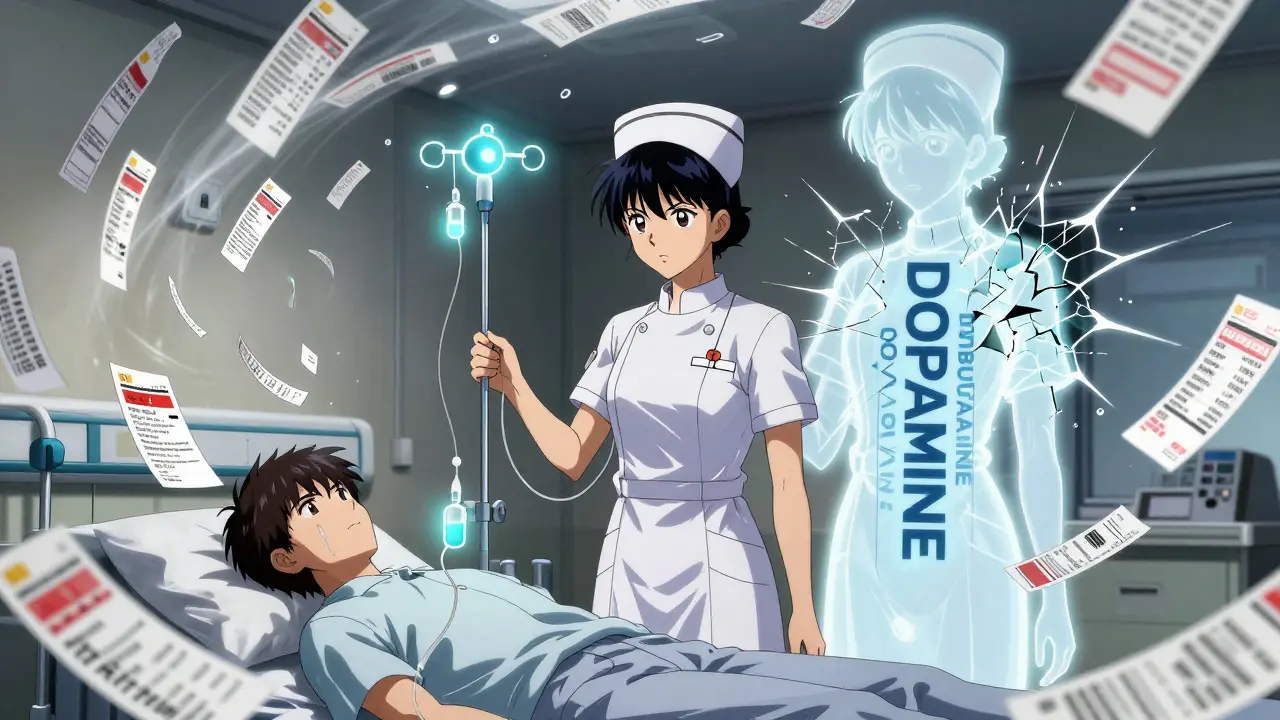
- Administration: A nurse hears "dopamine" and gives "dobutamine"-two IV drugs used in critical care. One increases heart rate. The other increases blood pressure. Mix them up, and a patient can go into cardiac arrest.
According to data from the UK’s National Reporting and Learning System, over 200,000 medication incidents were reported in just one year. Of those, 66 resulted in death. Many were linked to LASA confusion.
And it’s not just hospitals. In community pharmacies, pharmacists report encountering LASA errors at least once a month. A 2021 survey found that 78% of pharmacists had seen one in the past 30 days. One in three had seen a near-miss-where the error was caught just in time.
What’s Being Done-and What’s Not
There are solutions. But they’re not being used everywhere.
Tall man lettering is one of the most effective tools. It’s simple: you capitalize the different parts of similar names. Instead of "hydroxyzine" and "hydralazine," you write "HYDROXYZINE" and "HYDRALAZINE." That tiny change makes a huge difference. A study across 12 hospitals showed tall man lettering reduced errors by 67%.
Another fix? Physical separation. Keep similar drugs on different shelves. Don’t put "metoprolol" and "metaproterenol" next to each other. Store them on opposite sides of the pharmacy. Simple. Cheap. Effective.
Electronic health records (EHRs) can help too. When a doctor tries to prescribe "dopamine," the system should pop up a warning: "Did you mean dobutamine?" But most systems don’t do this. Or they do it poorly-flooding staff with false alerts until they start ignoring them.
Then there’s barcoding. When a nurse scans a patient’s wristband and the medication, the system checks if they match. In one hospital, this cut LASA errors by 45%. But not every clinic has it. Not every pharmacy can afford it.
And what about AI? A 2023 study found that AI-powered systems embedded in EHRs flagged 98.7% of potential LASA errors-and only gave false alerts 1.3% of the time. That’s almost perfect. But adoption is slow. Most hospitals still rely on paper lists and memory.
What Patients Can Do
You’re not powerless.
- Always ask: "What is this medicine for?" If the pharmacist says "It’s for your blood pressure," but you were prescribed it for anxiety, stop. Ask again.
- Check the label. Compare the name on the bottle to the name on your prescription. If they’re slightly different, ask why.
- Know your meds. If you take multiple drugs, keep a list. Bring it to every appointment.
- Don’t be afraid to speak up. If something looks wrong, say so. You’re not being difficult. You’re protecting your life.
One woman in Adelaide took her husband’s blood pressure pill by mistake. She thought it was her own. The bottle looked identical. The label looked identical. She ended up in the ER. She’s fine now. But she could’ve died.
The Bottom Line
Medication errors with generics aren’t rare. They’re predictable. They’re preventable. But they’re still happening because we treat them like individual mistakes instead of system failures.
The WHO’s global goal is to reduce severe medication harm by 50% by 2025. That’s possible. But only if hospitals, pharmacies, and regulators stop treating LASA errors as "just part of the job." They’re not. They’re avoidable. And they’re costing lives.
It’s time to stop relying on human memory. It’s time to use tall man lettering. It’s time to separate drugs on shelves. It’s time to build smart systems that catch errors before they reach the patient.
Because when two drugs look alike, or sound alike-it’s not an accident. It’s a design flaw. And someone has to fix it.
What are the most common look-alike, sound-alike drug pairs?
Some of the most frequently confused pairs include hydralazine/hydroxyzine, quinidine/quinine, dopamine/dobutamine, and Valtrex/Valcyte. The Institute for Safe Medication Practices (ISMP) updates its "List of Confused Drug Names" quarterly, and as of March 2023, it included 17 new high-risk pairs. These are not random-they’re based on real incidents and near-misses reported by pharmacists and nurses across hospitals.
Are brand-name drugs safer than generics when it comes to LASA errors?
Not necessarily. Brand-name drugs often have unique packaging and distinct names, which reduces confusion. But the real danger comes when generics are produced by multiple manufacturers. A generic version of a brand-name drug may look completely different from the original, but it may look nearly identical to another generic from a different company. This creates new LASA risks that didn’t exist before generics were introduced.
Why don’t all pharmacies use tall man lettering?
Tall man lettering is low-cost and highly effective, but it requires updating electronic systems, printing new labels, and retraining staff. Many pharmacies, especially smaller ones, lack the resources or leadership support to make these changes. Even when they know it works, they delay implementation-until someone gets hurt.
Can AI really prevent LASA errors?
Yes-when it’s designed right. A 2023 study showed AI systems embedded in electronic health records flagged 98.7% of potential LASA errors with only 1.3% false alerts. That’s far better than human memory. But AI only works if it’s built into the workflow. If the alert pops up as a pop-up that can be clicked away, it’s useless. The best systems block the prescription until the error is corrected.
What’s being done in Australia to reduce these errors?
Australia follows international guidelines and has adopted tall man lettering in many public hospitals. The Therapeutic Goods Administration (TGA) reviews new drug names for similarity risks. However, unlike the U.S. and EU, Australia doesn’t have a mandatory national database of LASA pairs. Many community pharmacies still rely on outdated lists. There’s growing pressure to standardize packaging and require barcode scanning in all dispensing settings.
Emma Deasy
March 13, 2026 AT 02:12Let me be perfectly clear: this is not a glitch. It is not an anomaly. It is not an unfortunate coincidence. This is a systemic, institutionalized, and utterly preventable catastrophe-and we are still letting it happen. Every time a nurse grabs the wrong vial because two labels look like twins, we are complicit. The FDA screens new names? Great. But what about the 8,000 existing generics? What about the 37 different manufacturers of metoprolol, each with their own font, shade of blue, and spacing? We are not just failing patients-we are weaponizing their trust. Tall man lettering isn’t a suggestion. It’s a moral imperative. Barcoding isn’t a luxury. It’s a lifeline. And until we treat this like the public health emergency it is, we will keep burying people under paperwork and misplaced capital letters.
tamilan Nadar
March 14, 2026 AT 08:18Adam M
March 14, 2026 AT 12:52Rosemary Chude-Sokei
March 14, 2026 AT 18:39I’ve worked in hospital pharmacy for over 18 years, and I can tell you-this isn’t new. But it’s still shocking. I once caught a hydralazine/hydroxyzine swap because the patient’s wife asked, ‘Why is this pill blue when last month it was white?’ That’s the power of a family member paying attention. We need to empower patients-not just educate them. And yes, tall man lettering works. We implemented it in our unit three years ago. Errors dropped by 72%. It’s not magic. It’s just basic human-centered design. Why isn’t this mandatory everywhere? Because bureaucracy prefers inertia to intervention.
Noluthando Devour Mamabolo
March 15, 2026 AT 13:00OMG this is so real 🥺 I work in a rural clinic in Cape Town and we had a near-miss last month with furosemide vs. fludrocortisone-same size, same color, same font. We don’t have barcode scanners. We don’t have EHRs that warn us. We have a laminated printout from 2017 taped to the wall. I cried after. Not because I was scared-I was angry. We have the tech. We have the data. We have the WHO guidelines. But we don’t have the political will. And that’s the real drug error.
Leah Dobbin
March 15, 2026 AT 14:01It’s fascinating how we’ve normalized this level of incompetence. We live in the age of quantum computing, yet we still rely on pharmacists memorizing 300 look-alike drugs like it’s 1998. The fact that we haven’t mandated unique packaging standards by now is a testament to the power of pharmaceutical lobbying. And let’s not pretend brand-name drugs are innocent-they’re just the first domino. The real villain? The FDA’s slow-moving bureaucracy and the myth that ‘market competition’ somehow improves safety. It doesn’t. It just makes the confusion more creative.
Ali Hughey
March 15, 2026 AT 23:11THIS ISN’T AN ACCIDENT. THIS IS A COVER-UP. 🚨 Did you know the FDA rejected 34 drug names in 2021? But they never fixed the 12,000 existing ones? Coincidence? I think not. The pharmaceutical industry profits from confusion. More errors = more lawsuits = more settlements = more money. And who pays? The patients. The nurses. The families who find out too late. Barcodes? AI? Tall man lettering? All distractions. The real solution? Ban generics. Period. Let only the original manufacturers make the drug. No competition. No cheap knockoffs. No confusion. Just pure, regulated, single-source medicine. Until then? We’re just waiting for the next death to make headlines.
Alex MC
March 16, 2026 AT 22:44Thanks for writing this. It’s easy to feel powerless when you’re just a patient or a nurse on the floor. But small changes add up. I started using tall man lettering on my handwritten scripts last year. My coworkers thought I was overdoing it. Now they do it too. We’ve had zero LASA errors since. It’s not about tech. It’s about culture. A little extra care. A double-check. A question asked. It’s not glamorous. But it saves lives. And that’s enough.