

Imagine waking up on Monday needing a strong laxative just to go, only to spend Wednesday frantically searching for the nearest bathroom because everything has turned into water. This unpredictable rollercoaster is the daily reality for people living with IBS-Mixed is a subtype of Irritable Bowel Syndrome where patients experience alternating bouts of constipation and diarrhea. Often referred to as IBS-M, this condition doesn't just affect your bathroom habits; it messes with your social life, your work productivity, and your mental health.
The real frustration with IBS-Mixed is that the treatment for one phase often triggers the other. If you take a medication to stop diarrhea, you might wake up two days later completely backed up. If you use a stimulant to clear constipation, you risk a sudden slide back into diarrhea. It feels like a tug-of-war where your gut is the rope. The goal isn't a "cure"-since this is a functional disorder and not a structural disease-but rather finding a balanced baseline that lets you live your life without fear of the next flare.
What Exactly is IBS-M?
To understand IBS-M, you first have to understand that it's different from Inflammatory Bowel Disease (IBD). While conditions like Crohn's cause visible damage or ulcers in the gut, IBS-M involves how the gut functions. It's usually a combination of visceral hypersensitivity (where your gut nerves overreact to normal digestion) and dysbiosis, which is basically an imbalance in your gut microbiome the complex community of bacteria and microorganisms living in the digestive tract .
Doctors use the Rome IV criteria the gold standard diagnostic guidelines for functional gastrointestinal disorders to diagnose this. To qualify, you generally need to have had abdominal pain at least once a week over the last three months, and at least 25% of your bowel movements must be hard or lumpy, while another 25% must be loose or watery. To track this accurately, many people use the Bristol Stool Scale a medical tool that classifies human feces into seven categories to identify bowel function . In IBS-M, you'll see yourself bouncing between Types 1-2 (constipation) and Types 6-7 (diarrhea).
The Dietary Puzzle: Low FODMAP and Beyond
Diet is usually the first line of defense. You've probably heard of the low FODMAP diet a nutrition plan that restricts fermentable oligosaccharides, disaccharides, monosaccharides, and polyols to reduce gas and bloating . FODMAPs are short-chain carbohydrates that the small intestine absorbs poorly. They end up fermenting in the colon, drawing in water and producing gas, which can trigger both ends of the IBS-M spectrum.
However, it's not as simple as just cutting out bread or onions. A strict elimination phase usually lasts 2 to 6 weeks, followed by a systematic reintroduction. Why the reintroduction? Because if you cut everything out forever, you might starve your good gut bacteria. About 50-60% of IBS-M patients see improvement with this approach, though it requires a lot of discipline and ideally the help of a dietitian.
Common triggers often include dairy, caffeine, and high-fat foods. For example, someone might find that a morning latte triggers immediate diarrhea, while a heavy, creamy pasta dinner two nights later leads to three days of constipation. Tracking these patterns in a diary-or better yet, a digital app like Cara Care-can reveal these hidden links.
| Trigger Category | Common Examples | Likely Effect on IBS-M |
|---|---|---|
| High FODMAPs | Garlic, Onions, Apples | Increased gas, bloating, and unpredictable urgency |
| Stimulants | Coffee, Energy Drinks | Rapid gut motility, leading to diarrhea (Type 6-7) |
| High-Fat Foods | Fried Chicken, Heavy Cream | Slower digestion, potentially worsening constipation |
| Soluble Fiber | Psyllium Husk, Oats | Stool regulation (can firm up diarrhea and soften constipation) |

The Medication Tightrope
Managing meds for IBS-M is like walking a tightrope. If you lean too far toward treating constipation, you might trigger a diarrhea flare. Most successful plans involve having a "toolbox" of medications and using them based on the predominant symptom of the day.
For the diarrhea side, medications like loperamide an antidiarrheal agent that slows down the movement of the intestines are common. But use them sparingly. Overusing loperamide is a fast track to a severe constipation phase. On the other side, polyethylene glycol an osmotic laxative that helps soften stool by drawing water into the colon is often preferred over stimulant laxatives because it's gentler and less likely to cause a sudden "crash" into diarrhea.
For the pain and cramping, antispasmodics medications that relax the smooth muscles of the gut to reduce cramping like dicyclomine are frequently used. Interestingly, some patients find relief with low-dose antidepressants. It's not necessarily because they are "depressed," but because these drugs modulate the gut-brain axis, reducing the hypersensitivity of the nerves in the intestines.
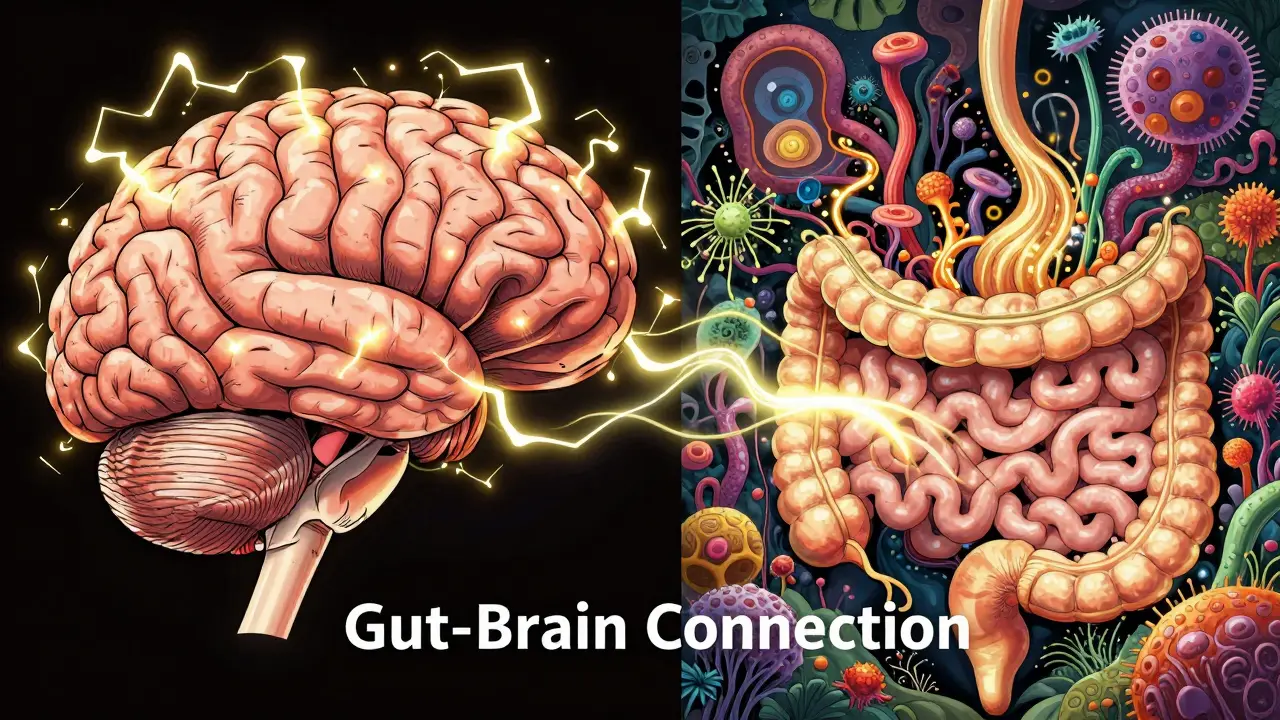
The Gut-Brain Connection and Mental Health
Your gut and your brain are in a constant 24/7 conversation. Stress doesn't just "make you nervous"; it physically changes how your gut moves. Roughly 68% of IBS-M patients report that their symptoms worsen during stressful periods. This is why a pill alone often isn't enough.
Cognitive Behavioral Therapy (CBT) has shown impressive results, with some studies suggesting a 40-50% reduction in symptom severity. CBT helps you change your reaction to the symptoms, which in turn reduces the stress signals sent to your gut. When you stop panicking about the possibility of an accident, your gut often settles down. Combining this with mindfulness or gentle exercise can help regulate the autonomic nervous system, which controls digestion.

Practical Steps for Daily Management
If you're struggling to find a rhythm, try this structured approach for a few months:
- Start a Detailed Log: Track what you eat, your stress levels, and the type of stool you produce using the Bristol Stool Scale. Do this for at least four weeks.
- Identify Your "Safe" Foods: Instead of just avoiding the "bad" stuff, find the foods that consistently leave you feeling neutral.
- Build Your Med Kit: Work with your doctor to have one gentle osmotic laxative and one antidiarrheal on hand. Don't switch blindly; use the log to see if you're entering a specific phase.
- Prioritize Soluble Fiber: Unlike insoluble fiber (like wheat bran), which can irritate the gut, soluble fiber (like psyllium) acts as a regulator. It absorbs excess water during diarrhea and adds bulk during constipation.
- Manage the Stress Spikes: Find a 10-minute daily habit-deep breathing, a short walk, or a meditation app-to keep your nervous system from triggering your gut.
Can IBS-M be cured?
Currently, there is no permanent cure for IBS-M because it is a functional disorder related to how the gut and brain communicate. However, it can be managed effectively. Most people find that a combination of dietary changes, stress management, and targeted medication allows them to achieve a high quality of life with minimal symptoms.
Is the low FODMAP diet safe for the long term?
The strict elimination phase of the low FODMAP diet is not meant to be permanent. Doing so for too long can lead to nutrient deficiencies and a decrease in beneficial gut bacteria. The goal is to identify specific triggers during the reintroduction phase and then create a personalized diet that only restricts the specific foods that cause you trouble.
Why do my symptoms change so suddenly?
IBS-M is characterized by visceral hypersensitivity and altered motility. This means your gut's "speed limit" is unstable. A combination of a trigger food, a spike in cortisol (stress), and an imbalance in gut bacteria can cause your digestive system to swing from being too slow (constipation) to too fast (diarrhea) almost overnight.
Which fiber is better for IBS-Mixed?
Soluble fiber is generally much better tolerated for IBS-M. While insoluble fiber (found in skins of vegetables and whole grains) can be scratchy and irritating to a sensitive gut, soluble fiber (like psyllium husk or oats) forms a gel-like substance. This helps normalize stool consistency regardless of whether you are currently experiencing diarrhea or constipation.
When should I see a doctor instead of managing it at home?
You should seek immediate medical attention if you experience "red flag" symptoms, which are not typical of IBS. These include unexplained weight loss, blood in the stool, fever, or anemia. Since IBS-M doesn't cause inflammation or bleeding, these signs suggest something else, like Inflammatory Bowel Disease (IBD) or other serious conditions.