

Albendazole is a powerful antiparasitic drug used to treat infections like roundworms, tapeworms, and pinworms. But it’s not something you just grab off the shelf and take. Taking it wrong can lead to serious side effects-or worse, make the infection worse. If you’ve been prescribed albendazole, you need to know exactly how to use it so it works and doesn’t harm you.
What albendazole actually does
Albendazole kills parasites by stopping them from absorbing glucose, which they need to survive. Without energy, the worms die and are passed out of your body. It’s effective against a range of parasites including ascariasis (roundworm), hookworm, pinworm, tapeworms like Taenia solium, and even some tissue infections like neurocysticercosis and hydatid disease.
It’s not a quick fix. For most intestinal worms, you’ll take a single dose. For deeper infections like cysticercosis, you might need to take it daily for weeks. The drug doesn’t work the same way for every parasite, so your doctor picks the dose and duration based on what you’re fighting.
How to take albendazole correctly
The way you take albendazole changes how well it works. You should always take it with food-especially fatty food. Studies show that taking albendazole with a meal high in fat increases its absorption by up to 65%. That means more of the drug gets into your bloodstream where it can kill the parasites.
Here’s how to do it right:
- Take albendazole during or right after a meal that contains fat-like eggs, cheese, nuts, avocado, or fried food.
- Swallow the tablet whole with a full glass of water. Don’t crush or chew it unless your doctor says to.
- Take it at the same time each day if you’re on a multi-day course. Set a phone reminder if needed.
- Don’t skip doses. Even if you feel better, finish the full course. Stopping early can let surviving worms come back stronger.
If you’re taking albendazole for tapeworms, your doctor might also give you a laxative to help flush out dead worms. Don’t take one on your own-it can cause complications if used incorrectly.
Dosage: It’s not one-size-fits-all
Albendazole dosages vary depending on your weight, the type of infection, and your age. Here are common guidelines:
| Infection | Dosage | Duration |
|---|---|---|
| Roundworm, hookworm, pinworm | 400 mg single dose | 1 day |
| Whipworm | 400 mg daily | 3 days |
| Tapeworm (Taenia) | 400 mg twice daily | 3 days |
| Neurocysticercosis | 400 mg twice daily | 8-30 days |
| Hydatid disease | 400 mg twice daily | 28 days (repeat cycles) |
Children get lower doses based on weight. For example, a child under 60 kg might get 15 mg per kg of body weight, split into two doses. Never guess the dose. Always follow your doctor’s prescription.
Who should not take albendazole
Albendazole isn’t safe for everyone. You should avoid it if:
- You’re pregnant-especially in the first trimester. Albendazole can harm the developing fetus. If you’re trying to get pregnant, use reliable birth control during treatment and for at least one month after.
- You’re breastfeeding. The drug passes into breast milk. Talk to your doctor about whether to pause nursing.
- You have liver disease. Albendazole is processed by the liver. If your liver is already damaged, you’re at higher risk of toxicity.
- You’ve had an allergic reaction to albendazole or similar drugs like mebendazole.
If you’re unsure, tell your doctor about every medication, supplement, or herbal remedy you take. Albendazole can interact with dexamethasone, cimetidine, and some seizure medications.

What side effects to watch for
Most people tolerate albendazole well, but side effects can happen. Common ones include:
- Headache
- Dizziness
- Nausea or vomiting
- Stomach pain
- Temporary hair loss
These usually go away after a few days. But if you notice any of these, call your doctor right away:
- Fever, sore throat, or mouth sores (signs of low white blood cells)
- Unusual bruising or bleeding
- Yellowing of skin or eyes (liver damage)
- Severe stomach pain or dark urine
- Confusion, seizures, or vision changes (possible brain involvement)
These are rare but serious. Albendazole can lower your white blood cell count or cause liver injury. That’s why your doctor may order blood tests before and during treatment, especially if you’re on it for more than a week.
What to do if you miss a dose
If you forget a dose, take it as soon as you remember. But if it’s almost time for your next dose, skip the missed one. Don’t double up. Taking too much can raise your risk of side effects like liver damage or bone marrow suppression.
For single-dose treatments (like for pinworms), if you miss it, just take it as soon as you can. If it’s been more than 24 hours, contact your doctor. You might need another dose.
How to know if it worked
For intestinal worms, you might see dead worms in your stool. That’s normal and a good sign. But don’t rely on that alone. Some infections-like neurocysticercosis or hydatid disease-don’t show visible signs.
Your doctor will tell you when to come back for a follow-up. This might mean:
- A stool test to check for parasite eggs
- Blood tests to monitor liver function
- Imaging like an MRI or ultrasound for tissue infections
If symptoms return-like abdominal pain, itching around the anus, or neurological issues-you might need another course. Some parasites can be stubborn, especially if they’ve developed resistance or if the infection was severe.
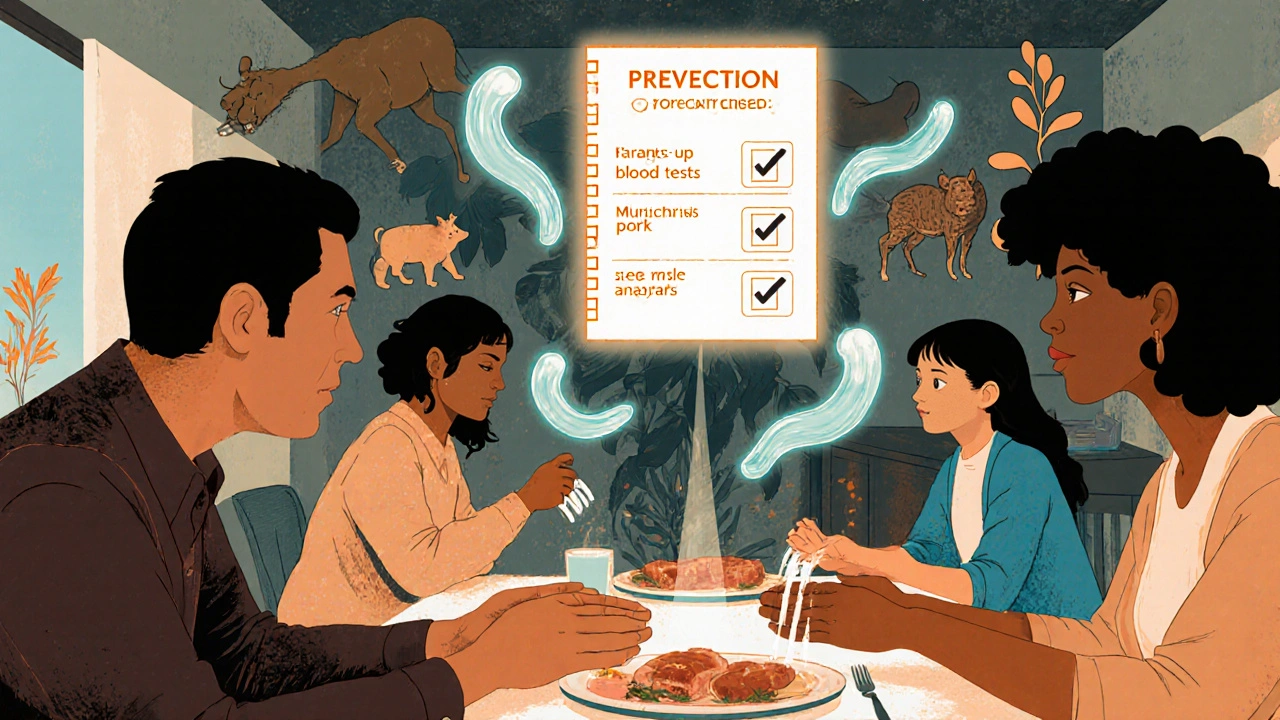
Preventing reinfection
Albendazole kills the worms inside you, but it doesn’t stop you from getting them again. Reinfection is common in areas with poor sanitation.
To reduce your risk:
- Wash your hands thoroughly with soap and water after using the toilet and before eating.
- Don’t eat raw or undercooked meat, especially pork or beef.
- Wash fruits and vegetables with clean water-even if they’re peeled.
- Avoid walking barefoot in soil that might be contaminated with human feces.
- If someone in your household has worms, treat everyone at the same time. Parasites spread easily.
In high-risk areas, doctors sometimes recommend preventive treatment every 6-12 months. But this should only be done under medical supervision.
Where to get albendazole
Albendazole is a prescription medication in most countries, including Australia. Don’t buy it from unlicensed online pharmacies. Many sell fake or contaminated versions. Counterfeit albendazole may contain no active ingredient-or worse, toxic chemicals.
Always get it from a licensed pharmacy. If you’re buying online, make sure the site requires a valid prescription and is registered with your country’s health authority. In Australia, look for the AHPRA logo.
If cost is an issue, ask your doctor about patient assistance programs. Some manufacturers offer discounts for low-income patients.
Final checklist before you start
Before you take your first dose, make sure you’ve covered these steps:
- Confirmed the diagnosis with your doctor (don’t self-diagnose parasites)
- Got the correct dosage based on your weight and infection type
- Understood when and how to take it-with food, at the right time
- Know the warning signs of serious side effects
- Arranged for follow-up testing
- Plan for preventing reinfection
Albendazole can be life-changing for people with parasitic infections. But it’s a tool-not a magic pill. Use it right, and it works. Use it wrong, and you risk your health.
Can I take albendazole without a prescription?
No. Albendazole is a prescription-only medication in most countries, including Australia. Taking it without medical supervision is dangerous. You might misdiagnose your condition, take the wrong dose, or trigger serious side effects. Always see a doctor first.
How long does it take for albendazole to work?
For intestinal worms, you may start to feel better within a few days. Dead worms can appear in stool within 24-48 hours. But for deeper infections like cysticercosis, it can take weeks or months to fully clear the parasites. Don’t stop treatment early just because you feel better.
Is albendazole safe for children?
Yes, but dosing is based on weight, not age. Children under 60 kg usually get 15 mg per kg of body weight, given in two doses per day. Always follow your doctor’s instructions. Never give a child an adult tablet without proper dosing guidance.
Can albendazole be taken with other medications?
It can interact with several drugs, including dexamethasone, cimetidine, and antiseizure medications like phenytoin. These can increase the risk of side effects or reduce albendazole’s effectiveness. Always tell your doctor about every medication, supplement, or herb you’re taking.
What should I do if I have a reaction to albendazole?
If you develop fever, mouth sores, unusual bruising, yellow skin, or confusion, stop taking albendazole and seek medical help immediately. These could be signs of serious blood or liver problems. Don’t wait to see if it gets better-act fast.
Tim H
October 28, 2025 AT 08:09took albendazole last month for giardia and honestly thought i was gonna die from the nausea but hey it worked lol
Richard H. Martin
October 29, 2025 AT 11:08THIS IS WHY AMERICA IS LOSING THE WAR ON PARASITES! People think they can just Google this stuff and pop a pill like it's aspirin! You need a DOCTOR, not a Reddit thread! I've seen too many people self-diagnose and then end up in the ER with liver failure! STOP BEING LAZY!
Adam Phillips
October 30, 2025 AT 01:45the real question is not how to take it but why we let corporations control our access to medicine at all if a drug can kill worms it should be available to anyone who needs it not just those who can afford a consult
Julie Lamb
October 31, 2025 AT 13:34Thank you so much for this detailed post! I was terrified to take it after reading scary stories online but this made me feel way more confident 💙
Ifeoluwa James Falola
November 1, 2025 AT 14:05In Nigeria, we often get albendazole from community health workers during deworming campaigns. Works fine if taken with palm oil or fried plantain. Always follow instructions.
Ramesh Deepan
November 2, 2025 AT 05:39Great breakdown. I'd add that if you're in a high-risk area like rural India or sub-Saharan Africa, treat the whole family at once. One person gets worms, everyone does. It's not shame, it's science. And yes, wash hands. Always.
Wayne Rendall
November 3, 2025 AT 06:39Minor correction: the table lists 'Whipworm' with a 3-day course, but WHO guidelines recommend a single 400mg dose for Trichuris trichiura unless heavy infection is confirmed. Always cross-reference with local protocols.
Umesh Sukhwani
November 3, 2025 AT 09:57As a physician from India, I have seen albendazole save lives in remote villages where sanitation is poor. But I also see patients who stop the course after two days because they feel 'better'. This is dangerous. The drug must be taken as prescribed, even if symptoms disappear. Parasites do not care about how you feel. They care about survival. Completing the course is not optional-it is the difference between cure and chronic infection.
Parents often ask me if their child can take half an adult tablet. The answer is always no. Dosing is weight-based, not age-based. A 20kg child is not a 60kg adult with a smaller body. The mathematics of pharmacokinetics do not bend to convenience.
Moreover, in areas where neurocysticercosis is common, imaging follow-up is critical. A stool test may be negative even if cysts remain in the brain. That is why we insist on MRI or CT scans after treatment. Do not assume invisibility means eradication.
Also, many patients come to me after buying albendazole from roadside pharmacies. These are often counterfeit. I have seen tablets with zero active ingredient. Others contain heavy metals. Always obtain from a licensed pharmacy. If you cannot afford it, ask for assistance programs. Your health is not a luxury.
Finally, let us not forget that prevention is the most powerful medicine. Clean water, proper toilets, and handwashing with soap are not 'old-fashioned' practices-they are the foundation of public health. No drug can replace these. Let us honor both science and simplicity.
Vishnupriya Srivastava
November 4, 2025 AT 13:52Interesting how the post avoids mentioning that albendazole is often used off-label for autoimmune conditions in some countries. The real issue isn't the drug-it's the lack of transparency in clinical guidelines.