
Supplement Label Risk Analyzer
Check off the features you see on your supplement label to analyze the potential safety risks and transparency levels.
Label Characteristics
Quick Guide: What to look for
USP Mark: Confirms the product actually contains the ingredients listed.
Proprietary Blend: Hides the exact dosage of individual herbs.
"FDA Approved": Misleading claim; FDA does not pre-approve supplements.
You might think that because a product is labeled "natural," it's automatically safe to take with your prescriptions. But that's a dangerous assumption. While your doctor gives you a detailed leaflet with every prescription, the bottle of vitamins or herbal extracts you bought at the store often stays silent about how it interacts with your meds. In fact, a huge gap exists between how the government regulates drugs and how they regulate supplements, leaving you to do the detective work yourself.
The Big Difference Between Drug and Supplement Labels
Before you start reading, you need to understand that supplement interactions is a tricky area because of how the law works. In the US, the FDA is the federal agency responsible for protecting public health by ensuring the safety and security of our nation's food supply and medications handles things very differently depending on what's in the bottle.
Prescription and over-the-counter (OTC) drugs are held to a strict standard. They must prove they are safe and effective before they hit the shelves. This means the FDA requires detailed studies on how they interact with other chemicals. On the other hand, dietary supplements fall under the Dietary Supplement Health and Education Act of 1994 (DSHEA). This law basically tells manufacturers: "You're responsible for making sure it's safe, but you don't need our permission to sell it."
The result? While nearly 100% of prescription drugs have interaction warnings, an FDA analysis found that only about 12.7% of popular supplements actually list them. If a label doesn't mention a drug interaction, it doesn't mean one doesn't exist-it just means the company wasn't required to list it.
How to Decode the "Supplement Facts" Panel
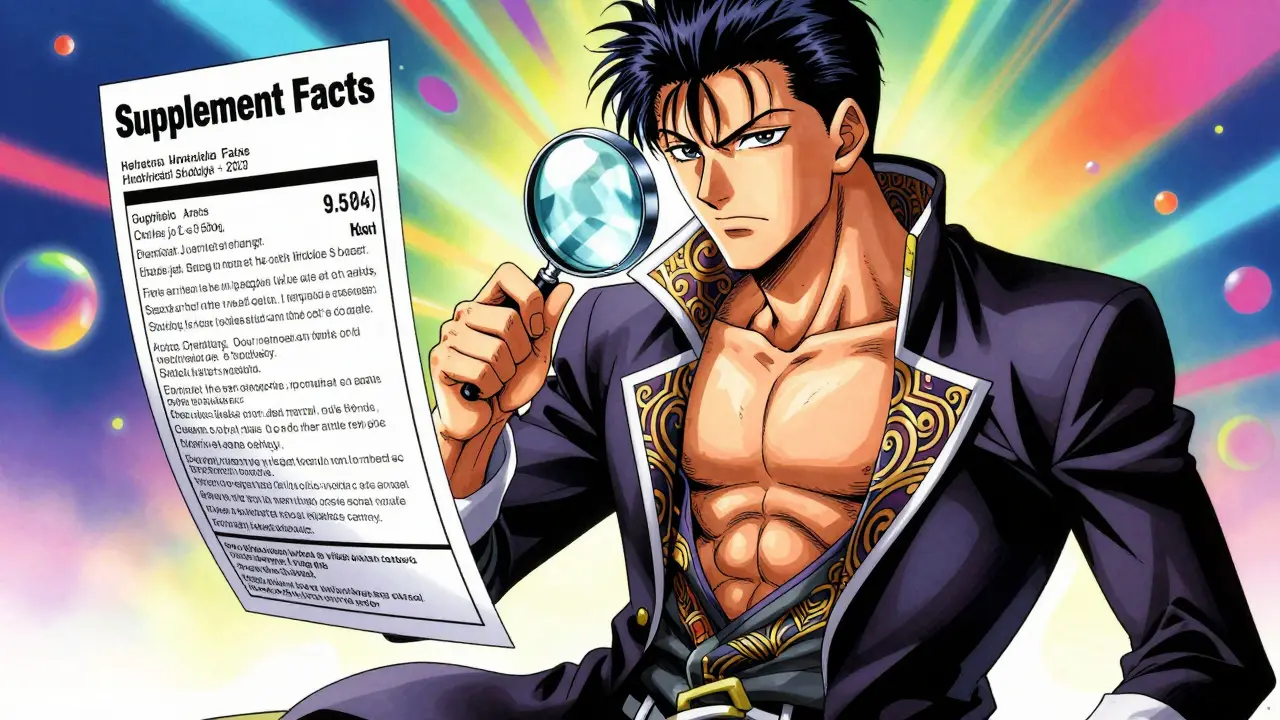
When you pick up a bottle, ignore the flashy marketing claims on the front and go straight to the Supplement Facts panel. This is the boxed area on the back or side of the package. Here is what you actually need to look for:
- Serving Size: This is where most people trip up. If the serving size is "3 capsules" but the dose of an ingredient is 500mg, that might mean 500mg total for all three, or 500mg per capsule. Read the fine print carefully, as misinterpreting this can lead to accidental overdosing.
- Amount Per Serving: This tells you exactly how much of a vitamin or herb you're getting. Compare this to the dosage your doctor recommends.
- Percent Daily Value (% DV): This shows how much of the recommended daily intake you're getting. Be wary of supplements that provide 1,000% or more of a specific vitamin, as high doses are more likely to clash with medications.
- Other Ingredients: Look at the bottom of the label for fillers, binders, and dyes. These can sometimes trigger allergies or interfere with how a drug is absorbed.
One major red flag is the "Proprietary Blend." This is a legal loophole where companies list a group of ingredients but don't tell you the exact amount of each one. If you see a blend, you're essentially guessing how much of a specific herb you're taking, which makes predicting drug interactions almost impossible.
| Feature | Prescription Drugs | OTC Medications | Dietary Supplements |
|---|---|---|---|
| FDA Pre-Market Approval | Required | Based on Monograph | Not Required |
| Mandatory Interaction Warnings | Yes (nearly 100%) | Yes (approx. 89%) | No (voluntary) |
| Standardized Format | Prescribing Info | Drug Facts Box | Supplement Facts Panel |
| Ingredient Transparency | Full Disclosure | Full Disclosure | Proprietary Blends allowed |
Real-World Dangers: When "Natural" Clashes with "Medical"
You might think, "It's just a vitamin, what's the worst that could happen?" The reality is that supplements can act like drugs in your body, either blocking your medication or making it dangerously potent.
Take St. John's wort, for example. It's often used for mood support, but it's notorious for lowering the levels of other drugs in your blood. The American Heart Association has noted that it can drop the levels of digoxin (a heart medication) by about 26%, which could lead to treatment failure. Similarly, Vitamin K-found in some supplements and green tea extracts-can counteract the effects of warfarin, a common blood thinner, reducing its effectiveness by 30-50% and increasing the risk of clots.
Even common vitamins can be problematic. High doses of Vitamin C (over 1,000 mg/day) can change the pH levels in your gut, which has been shown to decrease the efficacy of certain antiretroviral medications by about 22%. This shows that the "amount" listed on that label is just as important as the ingredient itself.
Your Action Plan for Staying Safe
Since you can't rely on the label to tell you everything, you have to take a proactive approach. Don't just take the manufacturer's word for it. Follow these steps every time you start a new supplement:
- Photograph the label: Take a clear picture of the Supplement Facts panel and the full ingredient list. Your pharmacist or doctor can't help you if you can't remember the exact name of the herb or the dosage.
- Use an Interaction Checker: Tools like the Medscape Drug Interaction Checker are invaluable. You can plug in your prescriptions and the supplement ingredients to see if there's a known conflict.
- Ask the "Three-Way" Question: When talking to your doctor, don't just ask "Is this okay?" Ask: "Will this supplement change how my medication is absorbed?" "Could this increase the side effects of my drug?" and "Does this supplement have a known effect on my specific condition?"
- Look for Third-Party Verification: Since the FDA doesn't approve supplements, look for a USP (U.S. Pharmacopeia) mark on the bottle. Products with this certification are far more likely to actually contain what the label says they do.
Common Pitfalls to Avoid
One of the biggest mistakes people make is assuming that if a supplement is sold in a pharmacy, it must be "vetted." Pharmacies sell supplements, but that doesn't mean the pharmacist has reviewed every single bottle on the shelf for interactions with every possible drug.
Another trap is the "Natural" label. Red yeast rice is a great example; it contains monacolin K, which is the exact same active ingredient found in the prescription drug lovastatin. If you're already taking a statin for cholesterol and add red yeast rice, you're essentially doubling your dose, which can lead to severe muscle pain or liver issues.
Why don't supplement labels just list drug interactions like medicines do?
It comes down to the law. Under the DSHEA of 1994, supplement manufacturers aren't required to conduct the same rigorous drug interaction studies that pharmaceutical companies must. Because the FDA doesn't pre-approve these products, the companies aren't legally mandated to list potential conflicts on the label unless they choose to do so voluntarily.
What is a "proprietary blend" and why is it a problem?
A proprietary blend is a list of ingredients grouped together under one total weight. The manufacturer doesn't have to tell you exactly how much of each individual ingredient is in that blend. This is a safety risk because you don't know if you're taking a tiny amount of an herb or a potent dose that could interact with your medication.
Can I trust a supplement if it says "FDA Approved" on the bottle?
Be very skeptical. The FDA does not "approve" dietary supplements for safety or effectiveness before they are marketed. If a label claims to be "FDA Approved," it's often a misleading marketing tactic. The FDA only regulates them after they hit the market, usually by stepping in if a product is found to be dangerous or misbranded.
What should I do if I'm already taking a supplement and a prescription?
Don't panic, but do take action. Bring the actual bottles (or photos of the labels) to your next doctor's appointment or take them to your pharmacist. Ask for a comprehensive medication review to ensure that nothing you're taking is working against your treatment plan.
Are there any labels that are more reliable than others?
Look for third-party certifications such as USP or NSF International. These organizations test products to verify that the ingredients listed on the label are actually in the bottle and that there are no harmful contaminants, which provides a higher level of certainty than a manufacturer's own label alone.