
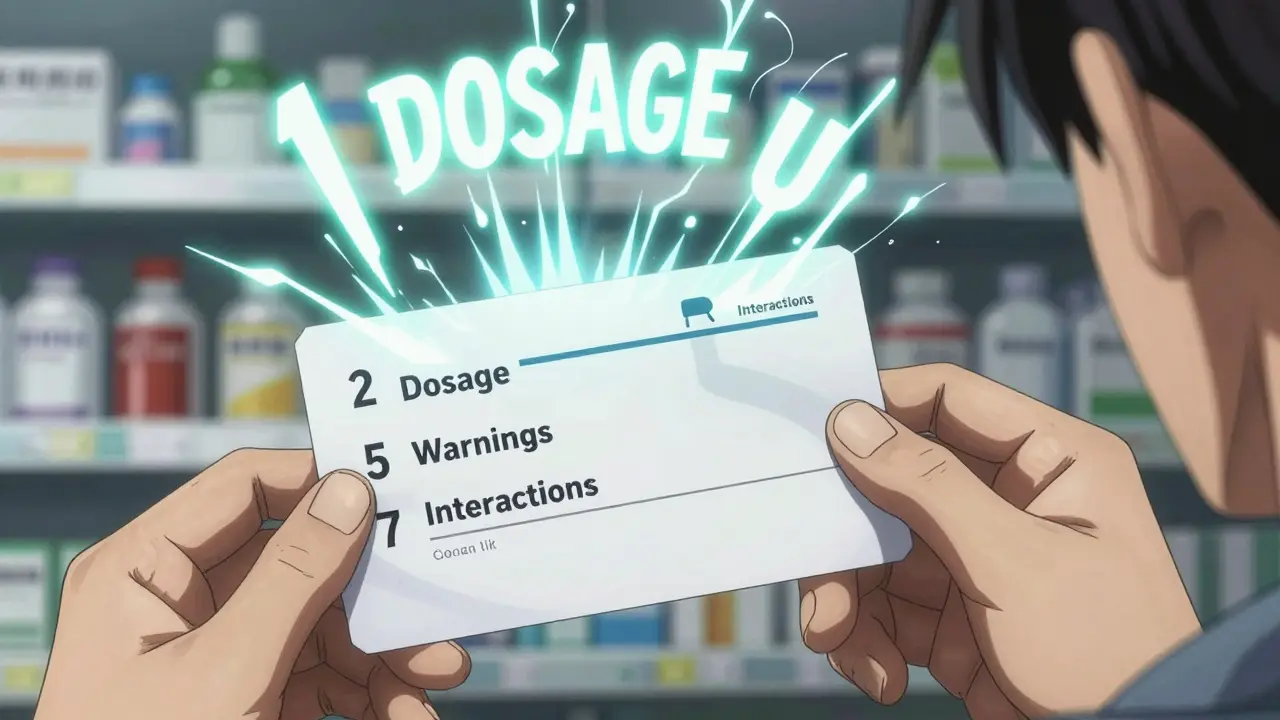
When you pick up a prescription, the small paper insert or digital PDF that comes with it isn’t just paperwork-it’s a legally required, highly structured document designed to keep you safe. The FDA drug label, officially called the United States Prescribing Information (USPI), is the single most important source of information about how a drug works, who should take it, what could go wrong, and how to use it correctly. Yet most people never read beyond the first page. That’s dangerous. Every year, thousands of medication errors happen because someone missed a warning, misunderstood the dose, or didn’t realize the drug interacted with something else they were taking. Learning how to read this label isn’t just for doctors or pharmacists. If you’re taking prescription medication, you need to know how to decode it.
What’s Inside the FDA Drug Label?
The FDA doesn’t leave this to chance. Since 2006, all prescription drugs sold in the U.S. must follow a strict format with 17 numbered sections. This system, called the Full Prescribing Information (FPI), was created because studies showed over half of dosing errors were linked to confusing or poorly organized labels. Today, every label has three main parts: the Highlights, the Table of Contents, and the full 17-section document. The Highlights are a quick snapshot-but they’re not enough. You need to dig into the full label to understand the real risks and benefits.
Section 1: Indications and Usage
This is where you find out what the drug is actually approved to treat. It’s not just "for high blood pressure"-it’s "for the treatment of Stage 2 hypertension in adults with a systolic blood pressure ≥140 mmHg and diastolic ≥90 mmHg, as monotherapy or in combination with thiazide diuretics." The label also includes the drug’s Established Pharmacologic Class (EPC), which tells you how it works in the body. For example, "angiotensin II receptor blocker" tells you it blocks a hormone that tightens blood vessels. Knowing this helps you understand why it’s prescribed and what other drugs in the same class might do similarly.
Section 2: Dosage and Administration
This is the most critical section for patients and providers alike. It tells you exactly how much to take, how often, and how to take it-on an empty stomach? With food? At bedtime? But it doesn’t stop there. It also breaks down adjustments for special cases: reduced doses for kidney disease, higher doses for obesity, or avoidance in children under 12. In March 2024, the FDA updated guidance to make these modifications clearer, especially for liver and kidney impairment. Many patients take the wrong dose because they assume "one pill a day" means the same for everyone. The label says otherwise.
Section 3: Dosage Forms and Strengths
Ever wonder why your pill looks different from your friend’s? This section lists every version of the drug available: tablets, capsules, liquids, injections, extended-release forms. Each has a unique strength-like 10 mg, 25 mg, 50 mg-and each is tied to a specific National Drug Code (NDC). That 10-digit number isn’t just a barcode. It breaks down into three parts: the labeler code (who makes it), the product code (what the drug is), and the packaging code (how many pills in the bottle). If you switch pharmacies and your pill changes color or shape, check the NDC on the label. It’s your proof that you’re still getting the right medication.
Section 4: Contraindications
This section says: "Don’t take this drug if..." It’s the red stop sign. Common contraindications include allergies to the drug itself, pregnancy (for certain medications), or severe liver failure. If you have any of these conditions and still take the drug, you could have a life-threatening reaction. The FDA requires this section to be unambiguous. No "may" or "possibly." Just "do not use." If you’re unsure whether you fit one of these criteria, talk to your doctor before taking the first pill.
Section 5: Warnings and Precautions
This is where the most serious risks live-and they’re not all in one place. The most critical warnings appear in a Boxed Warning, the FDA’s highest alert level. These are bold, black-bordered boxes at the top of Section 5. They cover risks like heart failure, suicidal thoughts, or sudden death. For example, some diabetes drugs have boxed warnings for pancreatitis. Below the box, you’ll find other precautions: risk of falls in elderly patients, interactions with alcohol, or the need for regular blood tests. These aren’t footnotes. They’re red flags that demand attention.
Section 6: Adverse Reactions
Here, you’ll see a list of side effects, but not just any list. They’re grouped by frequency: very common (≥1/10), common (≥1/100 to <1/10), uncommon (≥1/1,000 to <1/100), and rare. The data comes from clinical trials involving thousands of people. If a side effect shows up in 15% of users, it’s listed. If it’s only in 0.2%, it’s still included-but you’ll know it’s rare. Many patients panic when they see a long list of side effects. But look at the percentages. Some symptoms listed are so rare they’re statistically unlikely to happen to you. Focus on the common ones and know what to watch for.
Section 7: Drug Interactions
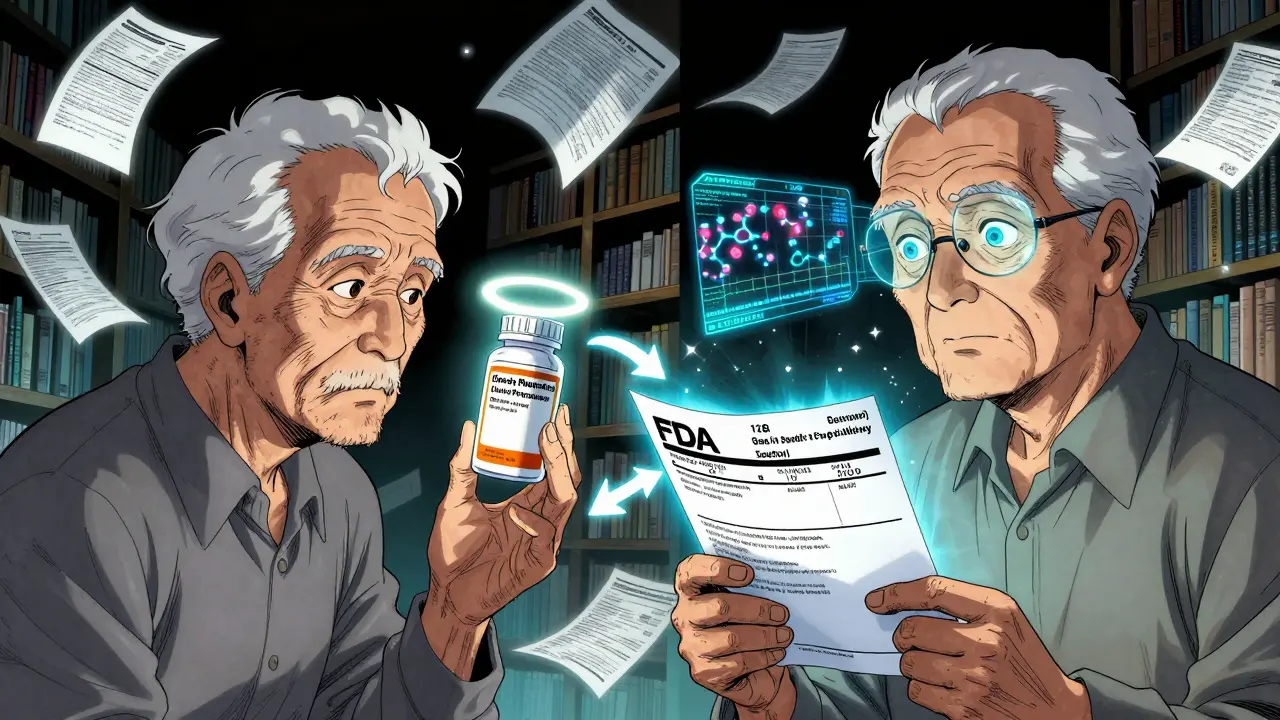
This section is a goldmine. It tells you which other drugs, supplements, or even foods can change how your medication works. For example, grapefruit juice can make some cholesterol drugs dangerously potent. Antibiotics can reduce the effectiveness of birth control pills. The FDA now requires this section to list interactions by mechanism-not just by name. So you’ll see "increases serum concentration of CYP3A4 substrates" instead of just "avoid with statins." If you’re on five or more medications, this section is non-negotiable. Ask your pharmacist to cross-check it with your full list.
Section 8: Use in Specific Populations
Pregnant? Breastfeeding? Over 65? Under 18? This section breaks down how the drug behaves in these groups. Many drugs aren’t tested in pregnant women, so the label says "limited data." But it also tells you what animal studies showed or what happened in rare human cases. For older adults, it may say "reduced renal clearance requires lower doses." For children, it may say "safety not established." If you’re in one of these groups, this section is your roadmap. Don’t assume a drug is safe just because it’s approved for adults.
Section 9: Drug Abuse and Dependence
Even non-addictive drugs can have abuse potential. This section tells you if the drug has been classified as a controlled substance (Schedule II-V) and what signs of dependence to watch for. Some antidepressants, for example, can cause withdrawal symptoms if stopped suddenly. Others, like certain painkillers, have clear abuse risk. If you’ve ever been told "don’t stop this cold turkey," this section explains why.
Section 10: Overdosage
What happens if you take too much? This section lists symptoms of overdose and what to do. It includes recommended treatments like activated charcoal or dialysis. It’s not just for emergencies-it helps you understand how dangerous a missed dose or double dose really is. If you accidentally take two pills, this section tells you whether to call 911 or just wait it out.
Section 11: Description
Here, you’ll find the chemical name, molecular formula, and structure. For most patients, this is just technical detail. But for those with allergies to certain compounds (like sulfa or lactose), it can be life-saving. If you’ve had reactions to inactive ingredients in the past, this section helps you spot them.
Section 12: Clinical Pharmacology
This explains how the drug moves through your body: how it’s absorbed, how long it lasts, how it’s broken down, and how it’s removed. If you have liver or kidney disease, this section tells you whether your body will struggle to clear the drug. It’s where you’ll find half-lives-how long it takes for half the drug to leave your system. A long half-life means it builds up over time. A short one means you need to take it more often.
Section 13: Nonclinical Toxicology
This section dives into animal studies: did the drug cause cancer? Birth defects? Genetic damage? While not directly about humans, it helps doctors weigh long-term risks. If you’re on a drug for years, like a rheumatoid arthritis medication, this section gives context for why monitoring is needed.
Section 14: Clinical Studies
This is where the FDA got its evidence. It summarizes the trials that proved the drug works. It lists how many people were studied, how long they were on it, and how well it worked compared to placebo or other drugs. If you’re skeptical about whether a drug really works, this section gives you the data. It’s not marketing-it’s science.
Section 15: References
Lists the studies, journals, and guidelines cited in the label. If you want to dig deeper, this is your starting point.
Section 16: How Supplied/Storage and Handling
This tells you how the drug is packaged, what the NDC is, and how to store it. Some drugs need refrigeration. Others must be kept away from light. Improper storage can make a drug ineffective-or even toxic. This section also lists expiration dates and lot numbers. If you’re unsure your pills are still good, check this section.
Section 17: Patient Counseling Information
This is the FDA’s script for how providers should talk to patients. It includes exact phrases like "take this at the same time each day" or "avoid alcohol while using this medication." But here’s the problem: only about 38% of doctors use it. If your provider doesn’t mention these points, ask. This section exists to make sure you’re not left guessing.
Recent Major Changes
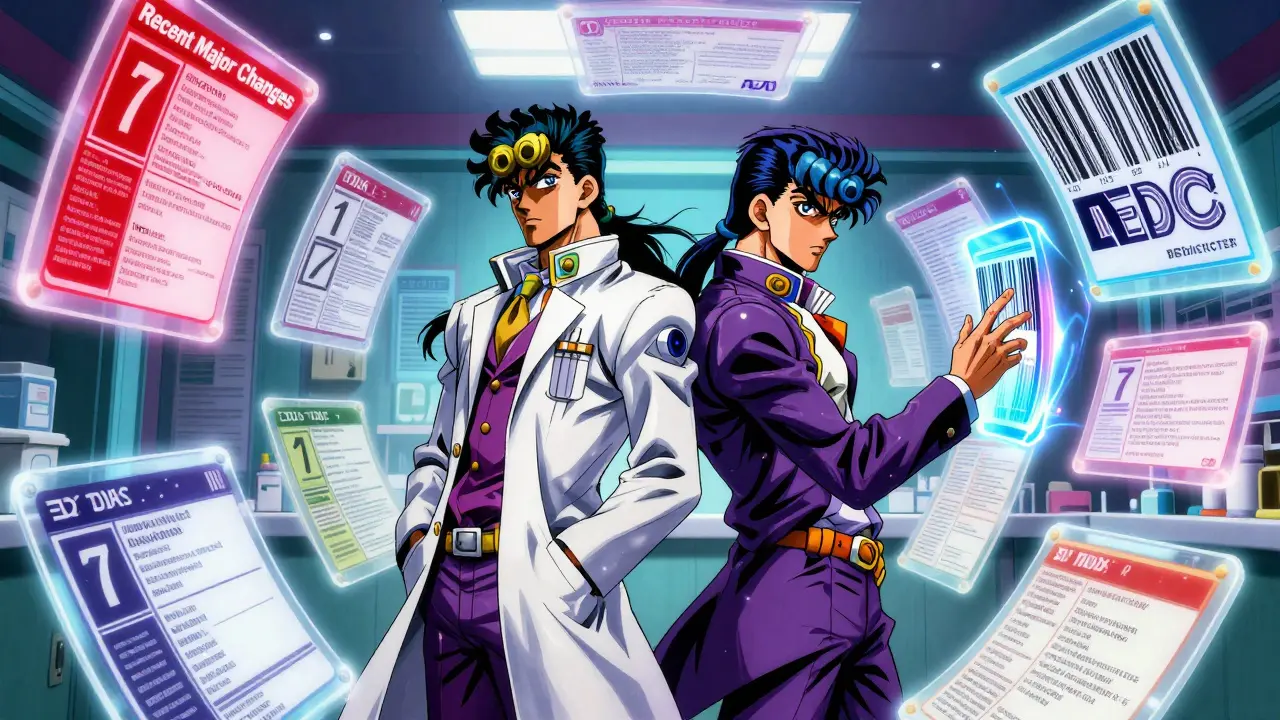
Since 2018, every label must include a "Recent Major Changes" section. It lists every section that was updated in the last six months. If your drug’s label changed last month, this tells you what changed-and why. The FDA says this reduces delays in safety updates by 35%. Always check this before refilling a prescription.
How to Use This in Real Life
For patients: Don’t just glance at the Highlights. Go to Section 2 (Dosage), Section 5 (Warnings), and Section 7 (Interactions). If you’re on multiple drugs, print the label and bring it to your pharmacist. For caregivers of elderly patients, Section 8 (Use in Specific Populations) is essential. For anyone with chronic illness, Section 12 (Clinical Pharmacology) helps you understand why dosing changes over time.
The FDA’s own guidance says: "The Highlights are not a substitute for the full prescribing information." That’s not a suggestion. It’s the law. And your safety depends on it.
What’s Changing in 2025?
The FDA is testing "dynamic labeling"-digital formats that let you click for more detail. Imagine tapping a section to see a video on how to take the drug, or a chart showing how your kidney function affects your dose. The goal? To cut medication errors by nearly a third. But until those are widely adopted, the paper or PDF label you have today is still your most reliable source. Don’t ignore it.
Is the FDA drug label the same as the pharmacy label?
No. The pharmacy label is a simplified version meant for quick reference: drug name, dose, instructions, and refill info. The FDA drug label is the full, legally required prescribing document with all 17 sections. The pharmacy label tells you what to do. The FDA label tells you why, what could go wrong, and how to avoid it.
Can I trust the Highlights section alone?
No. The Highlights are designed to be a quick summary, but they’re intentionally incomplete. The FDA requires them to include a disclaimer: "This section does not contain all the information about the drug." Missing a boxed warning or a key interaction because you only read the Highlights is a common cause of serious harm.
Why do drug labels change so often?
New safety data emerges all the time. A post-market study might reveal a rare heart rhythm issue, or a drug interaction might be discovered after thousands of patients use it. The FDA requires manufacturers to update labels within 30 days of new evidence. The "Recent Major Changes" section helps you spot these updates. If your drug’s label changed last month, it’s not a mistake-it’s a safety fix.
What should I do if I can’t understand the label?
Ask your pharmacist. They’re trained to interpret the FDA label and explain it in plain language. You can also call the drug manufacturer’s medical information line-listed on the label. Never guess. Misunderstanding a dose or a warning can lead to hospitalization.
Do generic drugs have the same label as brand-name drugs?
Yes. By law, generic drugs must have the same active ingredient, strength, dosage form, and labeling as the brand-name version. The only differences are in inactive ingredients (like dyes or fillers), which are listed in Section 11. The safety and usage information is identical.
Ken Cooper
February 7, 2026 AT 17:52Okay so I just read my blood pressure med label for the first time and holy cow. I thought "take one daily" meant one pill, period. But nope. It says if you have kidney issues, reduce to half. I’ve been taking the full dose for 3 years. My kidneys are fine… but what if they weren’t? This is wild. Everyone should do this. It’s like reading the manual for your car before you drive it.
Alex Ogle
February 9, 2026 AT 01:00There’s this quiet horror in realizing how much of your health is hidden in tiny print. I used to think the doctor knew everything. Turns out, they’re just reading the same label I am. Section 5, the boxed warnings? I read one about a diabetes med I take. It said "risk of sudden pancreatitis leading to death." Not "may cause stomach upset." Not "some patients report discomfort." It said DEATH. I stared at that word for ten minutes. No one told me. No one even hinted. The system assumes you’ll dig. But most people don’t know where to dig. And that’s not an accident. It’s a design flaw.
They give you a 17-section document and call it "information." But if you’re not a pharmacist or a lawyer, it’s a maze. And the scariest part? The label doesn’t care if you understand it. It just has to exist.
Karianne Jackson
February 10, 2026 AT 17:26OMG I JUST FOUND OUT MY MEDS CAN KILL ME IF I DRINK COFFEE???
John McDonald
February 11, 2026 AT 00:30Section 3 with the NDC codes? That’s the secret decoder ring. I switched pharmacies last year and my pill went from blue to green. I freaked out. Called my pharmacist. They said, "Check the NDC." I did. Same number. Same drug. Just a different manufacturer. I didn’t know that was legal. It’s wild how much trust we put in the color and shape of a pill. But the code? That’s the real truth.
Also, if you’re on meds long-term, write down your NDC. Keep it in your phone. You’ll thank yourself when you’re in a new city and your pharmacy is closed.
Chelsea Cook
February 12, 2026 AT 20:09Oh sweet mother of mercy, the FDA label is basically a horror novel written by a bureaucrat who hates joy. "Contraindications: Do not use." Like, yeah, thanks for the dramatic pause, but what if I’m 87 and have three pacemakers and still want to take this? Are you gonna sue me? Or just let me die quietly while the label sighs in perfect compliance?
Also, why is "adverse reactions" not called "stuff that might make you wish you’d never been born"? Just saying. The language is so clinical it’s almost poetic in its cruelty.
Andy Cortez
February 14, 2026 AT 17:56Y’all are overthinking this. The FDA label is just corporate legalese dressed up like science. They don’t want you to understand it. They want you to take it. Period. I worked in pharma. The real warning? The one they don’t put on the label? It’s that 40% of these drugs have no long-term data. They get approved on 6-month trials. Then we give them to people for 20 years. The label? It’s a shield. Not a guide.
Read it? Sure. But don’t trust it. Trust your gut. And your doctor if they’ve been around longer than the drug.
Jacob den Hollander
February 15, 2026 AT 15:03I’m a caregiver for my mom, and this article hit me hard. She’s on five meds. I’ve been reading the labels with her, one section at a time. We started with Section 2-dosage. Turns out, one of her pills should be taken with food, but she’s been taking it on an empty stomach for years because the nurse said "just take it." We found out it’s causing stomach ulcers. We didn’t know. No one told us. I’m so grateful for this. Maybe we should make a simple checklist: 1. Check NDC. 2. Read contraindications. 3. Note boxed warnings. 4. Ask your pharmacist: "Is this the same as last time?"
It’s not about being a doctor. It’s about being a human who cares enough to read the fine print.
Andrew Jackson
February 16, 2026 AT 09:16It is an affront to civilization that the American populace is expected to interpret complex pharmacological data without formal training. The FDA’s labeling structure is a masterpiece of regulatory precision, yet it is rendered meaningless by the intellectual indolence of the citizenry. To presume that laypersons can adequately comprehend contraindications, pharmacokinetics, and adverse reaction profiles without years of biomedical education is not merely naive-it is an indictment of our societal decay. The solution is not to dumb down the label. The solution is to require pharmacology literacy as a prerequisite for prescription access. We must restore order. We must restore discipline.
Randy Harkins
February 16, 2026 AT 20:15Thank you for this. 🙏 I’ve been scared to read my own labels because I thought I’d panic. But reading Section 1 made me realize I actually understand more than I thought. I’m gonna print out the highlights for each of my meds and stick them on my fridge. Small step. Big deal. 💪
Chima Ifeanyi
February 18, 2026 AT 16:57Let’s be real: the entire USPI framework is a performative compliance theater. The 17 sections? They exist to satisfy regulatory audits, not patient safety. The real issue is that pharmaceutical companies fund the studies that generate the data used in these labels. Conflict of interest isn’t a footnote-it’s the entire table of contents. And don’t get me started on how they bury long-term risks in Section 17 under "post-marketing surveillance." That’s where the bodies go. Not in the boxed warning. In the appendix. Because nobody reads past Section 5.
Tori Thenazi
February 20, 2026 AT 09:37Wait… so you’re telling me the government doesn’t tell us everything? Like… what if the label is hiding something? What if the real side effects are… I don’t know… mind control? Or maybe the pills are secretly tracking us? I read somewhere that the NDC code has a hidden GPS chip. I think the FDA is part of a bigger system. They want us dependent. And the label? It’s a distraction. A shiny object. While they’re busy telling us about "kidney impairment," they’re really just hiding the fact that your medication is linked to the alien agenda. 🛸👁️