
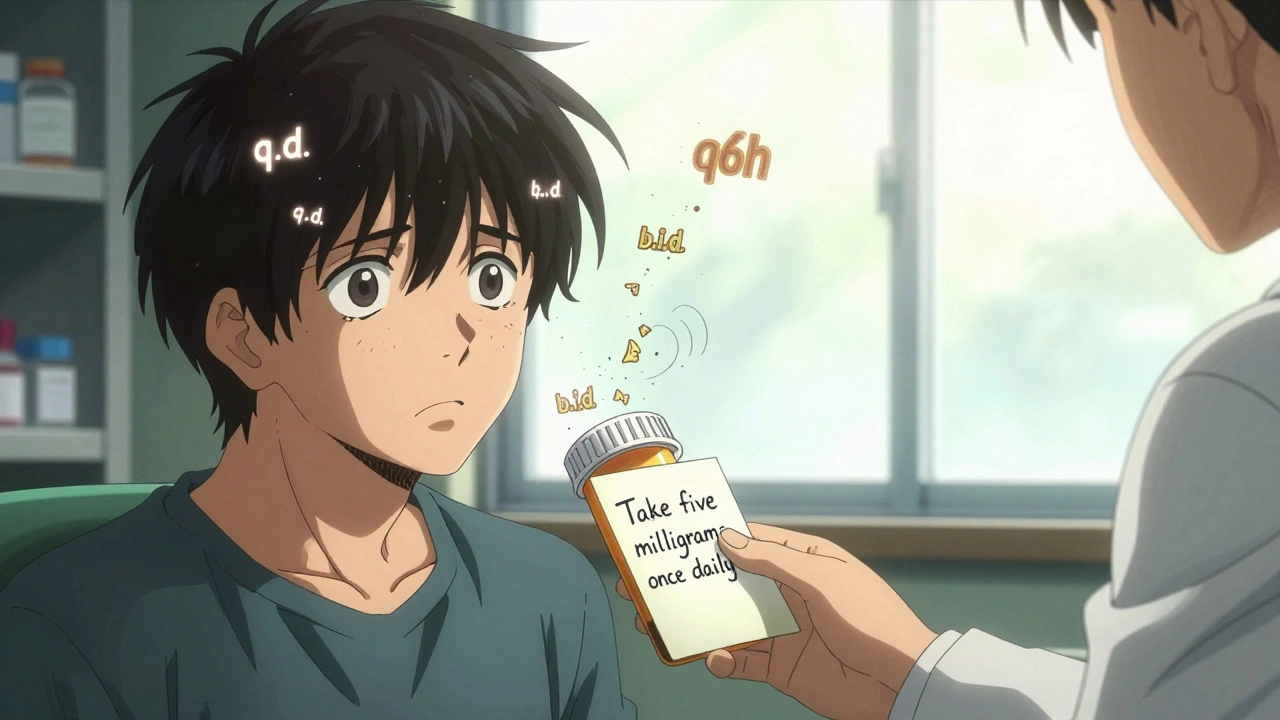
Ever opened a prescription bottle and stared at the label like it’s written in code? Medication instructions that say "take one by mouth q.d." or "take as needed" can feel impossible to follow - and you’re not alone. Millions of people in the U.S. take three or more medications daily, and unclear directions are one of the top reasons people make dangerous mistakes. A single typo, an outdated abbreviation, or conflicting info between drug brands can lead to overdoses, missed doses, or harmful side effects. The good news? You don’t have to guess. Here’s exactly how to get clear, safe instructions when the label doesn’t make sense.
Why Medication Instructions Get So Confusing
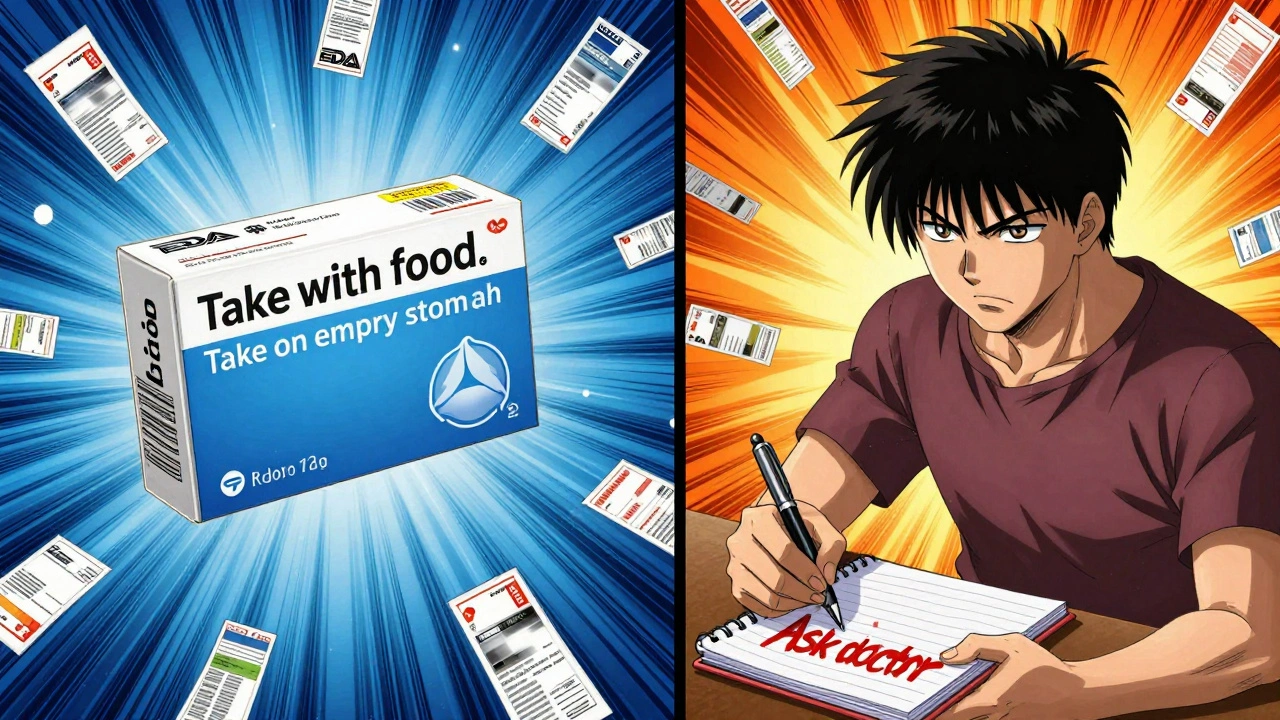
It’s not your fault. The problem isn’t that patients aren’t paying attention - it’s that the system is outdated. Many prescriptions still use abbreviations banned by safety experts. "Q.d." means "daily," but it looks like "q.i.d." (four times a day). "IN" could mean intranasal - or it could be mistaken for IV (intravenous). Even simple things like writing "5 mg" instead of "five milligrams" can cause confusion if handwriting is unclear. Manufacturers also don’t always agree. Two companies might make the exact same drug - say, generic metformin - but one says "take with food," while the other says "take on an empty stomach." Neither is wrong, but the difference matters. If you switch brands without checking, you might get sick or lose the drug’s effectiveness. The FDA requires Medication Guides for high-risk drugs like opioids or isotretinoin, but for most other medications, there’s no standardized format. That’s why you end up with mixed messages.What to Do When You Don’t Understand Your Prescription
Don’t assume it’s just you. If you’re unsure, you’re right to ask. Here’s how to get answers quickly and safely:- Read the label again - slowly. Look for words like "as needed," "before meals," or "at bedtime." Write them down. Sometimes the confusion comes from missing context.
- Call your pharmacist. Pharmacists are trained to decode these instructions. They see hundreds of prescriptions a day and know what’s ambiguous. Don’t wait until your next refill. Call the same pharmacy where you picked it up - they have your record.
- Ask your doctor or nurse. If the instruction is unusual - like "take 2 tablets every 6 hours for 3 days, then 1 tablet daily" - ask why. Is it to build up in your system? Is it tied to a symptom? Understanding the purpose helps you follow it correctly.
- Check for a Medication Guide. If your drug is high-risk (like blood thinners, epilepsy meds, or certain antidepressants), you should’ve received a printed guide with your prescription. If you didn’t, ask for it. These guides explain risks, side effects, and exact dosing in plain language.
Key Abbreviations to Watch Out For (And What to Ask Instead)
Some abbreviations are still used - even though they’re dangerous. Here’s what to look for and what to replace them with:- "q.d." or "QD" → Ask: "Is this once a day?"
- "b.i.d." → Ask: "Twice a day - should I take it in the morning and evening?"
- "t.i.d." → Ask: "Three times a day - should I space them out evenly?"
- "q4h" or "q6h" → Ask: "Every 4 or 6 hours - does that mean while I’m awake or all day and night?"
- "as needed" → Ask: "What’s the maximum I can take in 24 hours? And what symptom should I be waiting for before taking it?"
- "d" in "mg/kg/d" → Ask: "Is this dose per day, or per dose?"
Always ask for the full phrase: "Take five milligrams by mouth once daily." No abbreviations. No shortcuts. If they hesitate, say: "I want to make sure I take this safely. Can you write it out clearly?"
Timing Matters More Than You Think
When you take a drug can be just as important as how much you take. Cholesterol meds like statins work best at night because your liver makes most cholesterol while you sleep. Blood pressure pills are often taken in the morning to control spikes during the day. Some antibiotics need to be taken on an empty stomach - food can block absorption. Others need food to avoid nausea. If your instruction says "twice daily," ask: "Should I take it 12 hours apart?" For example, 8 a.m. and 8 p.m. That’s more effective than 8 a.m. and 6 p.m. Same goes for "three times a day" - aim for 8-hour gaps if possible. If you’re on a complex schedule, use a pill organizer with labeled times or set phone alarms. The CDC recommends this for anyone taking multiple medications.What to Do If Two Pharmacies Give You Different Instructions
This happens more often than you’d think. One pharmacy fills your prescription with Brand A; another fills it with Brand B - and the directions differ. That’s not a mistake. It’s a loophole in the system. Different manufacturers submit slightly different instructions to regulators, and both are approved. Here’s what to do:- Keep the original prescription from your doctor.
- Compare the two labels side by side.
- Call your doctor’s office and say: "I got two different instructions for the same drug. Can you confirm which one is right for me?"
- If your doctor isn’t sure, ask them to check the FDA-approved prescribing information for both brands.
Some doctors don’t realize this happens. But once they do, they can write "dispense as written" or "no substitutions" on the prescription to avoid future confusion.
How to Keep Track of Your Medications
Write everything down. Keep a simple list: drug name, dose, frequency, purpose, and any special notes. Update it every time you get a new prescription or change a dose. Bring this list to every doctor’s visit - even if you think they already know. Use a pill organizer. Buy one with morning, afternoon, evening, and night compartments. Fill it weekly. If you’re traveling, bring extra pills and your list. If you’re caring for someone else - an older parent, a child, or a partner - make sure you’re both clear on the instructions. Don’t assume they remember. Repeat it back to them: "So you take this at 8 a.m. with breakfast, and this one at bedtime. Is that right?"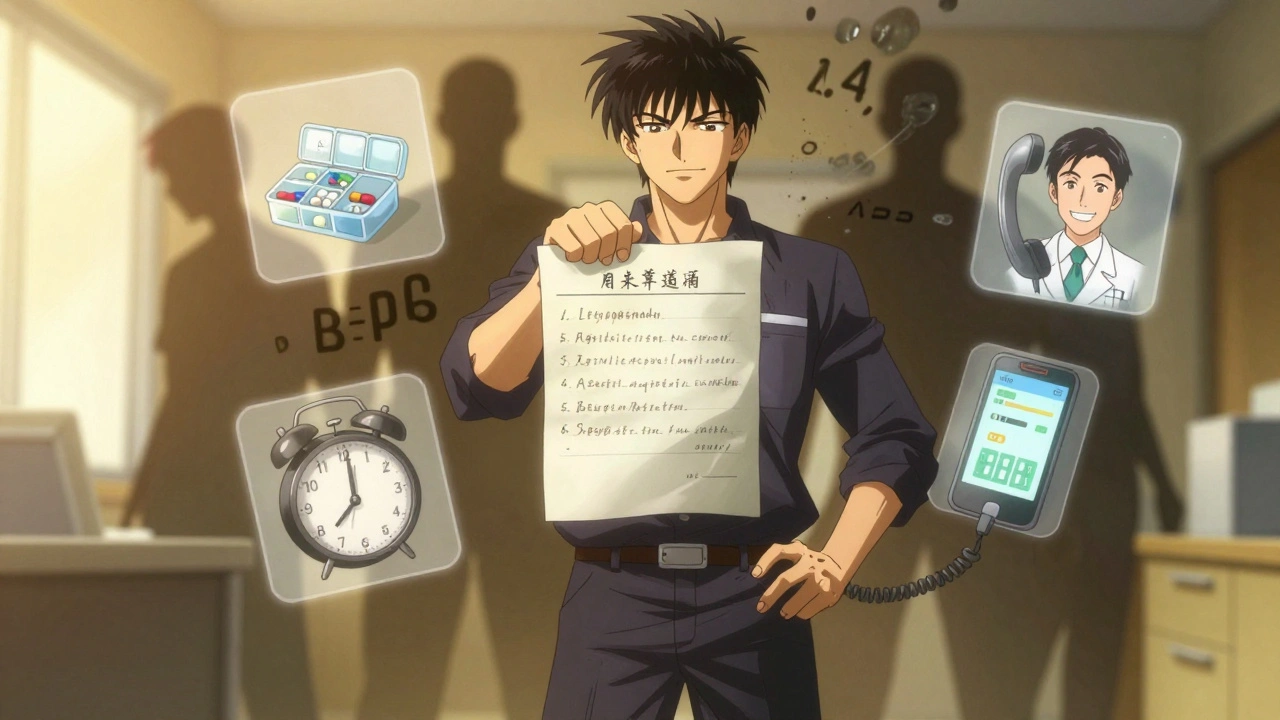
When to Seek Help Immediately
If you’ve already taken a dose and realize the instructions were wrong - or you’re not sure what you took - don’t wait. Call your pharmacist or go to an urgent care center. If you think you’ve overdosed, call Poison Control at 1-800-222-1222 (U.S.) or your local emergency number. Don’t rely on Google. Don’t wait to see if you feel sick. Mistakes with medications can escalate fast.What’s Being Done to Fix This
Organizations like the Institute for Safe Medication Practices (ISMP) and the FDA have been pushing for years to eliminate dangerous abbreviations. Many hospitals now use electronic systems that auto-convert "q.d." to "daily" and block unsafe dosing patterns. Pharmacists are trained to catch errors before they reach you. But the system isn’t perfect. The NIH points out that when manufacturers give conflicting instructions, there’s no central database to compare them. That means doctors and patients are left to figure it out on their own. Until that changes, your best defense is asking questions - loudly and often.Medication safety isn’t just about doctors and pharmacies. It’s about you. You’re the last line of defense. If something doesn’t feel right - if the label looks odd, if the timing seems off, if you’re unsure - speak up. No one will think you’re being difficult. They’ll think you’re smart.
What should I do if my medication label uses abbreviations like "q.d." or "b.i.d."?
Ask your pharmacist or doctor to rewrite the instructions in plain language. Say: "Can you please write this out as 'once daily' or 'twice a day'?" Abbreviations like q.d., b.i.d., and t.i.d. are outdated and can cause dangerous mistakes. You have the right to clear instructions.
Can I just look up my medication online to figure out the right dose?
No. Online sources may give general info, but they don’t know your health history, other medications, or your doctor’s specific instructions. A drug like metformin might have a standard dose, but if you have kidney issues, your dose could be lower. Always confirm with your prescriber or pharmacist.
Why do different brands of the same drug have different instructions?
Each manufacturer submits its own labeling to regulators, and small differences in formulation or testing can lead to different recommendations - like taking with or without food. While both may be safe, the difference can affect how well the drug works for you. Always check with your doctor if you switch brands.
What if I forget to take my medication at the right time?
It depends on the drug. For most, if you miss a dose by a few hours, take it as soon as you remember. But for some - like blood thinners or seizure meds - timing is critical. Never double up unless your doctor says so. Call your pharmacist for advice specific to your medication.
Is it okay to ask my pharmacist to explain my prescription again, even if they already did?
Absolutely. Pharmacists expect it. They’re trained to help you understand your meds. If you’re unsure, say: "I want to make sure I’m taking this right. Can you go over it one more time?" There’s no such thing as asking too many questions when it comes to your health.
How can I tell if I’m getting a Medication Guide with my prescription?
Medication Guides are required for high-risk drugs like opioids, birth control pills, and certain antidepressants. They’re usually a small printed sheet inside the box. If you don’t see one, ask: "Was a Medication Guide supposed to come with this?" If it should have, the pharmacy is required to give it to you.
Brian Perry
December 3, 2025 AT 20:30Sandridge Nelia
December 4, 2025 AT 23:56Paul Corcoran
December 5, 2025 AT 02:30Pamela Mae Ibabao
December 5, 2025 AT 20:18Michael Bene
December 5, 2025 AT 23:03Pooja Surnar
December 6, 2025 AT 22:10Chris Jahmil Ignacio
December 6, 2025 AT 22:13Palanivelu Sivanathan
December 7, 2025 AT 03:52Colin Mitchell
December 8, 2025 AT 21:59