

When you have a headache, sore muscles, or a fever, reaching for an OTC pain reliever seems simple. But not all painkillers work the same way - and picking the wrong one could mean less relief or even harm. Two main types dominate the shelf: acetaminophen and NSAIDs. Knowing the difference isn’t just helpful - it’s essential for safe, effective pain management.
How Acetaminophen Works (And When It’s Best)
Acetaminophen - sold as Tylenol, Panadol, and countless generics - doesn’t reduce swelling. That’s its biggest limitation. But it does something else really well: it blocks pain signals in your brain. It raises your pain threshold, so you feel less discomfort. That’s why it’s often the go-to for headaches, mild back pain, or fever.
It’s also the safest choice for many people. Unlike NSAIDs, it doesn’t irritate your stomach lining. That’s why doctors recommend it for pregnant women, children under 12, and anyone with a history of ulcers or sensitive digestion. The American Academy of Pediatrics and the FDA both list acetaminophen as the only recommended OTC pain reliever for babies as young as two months.
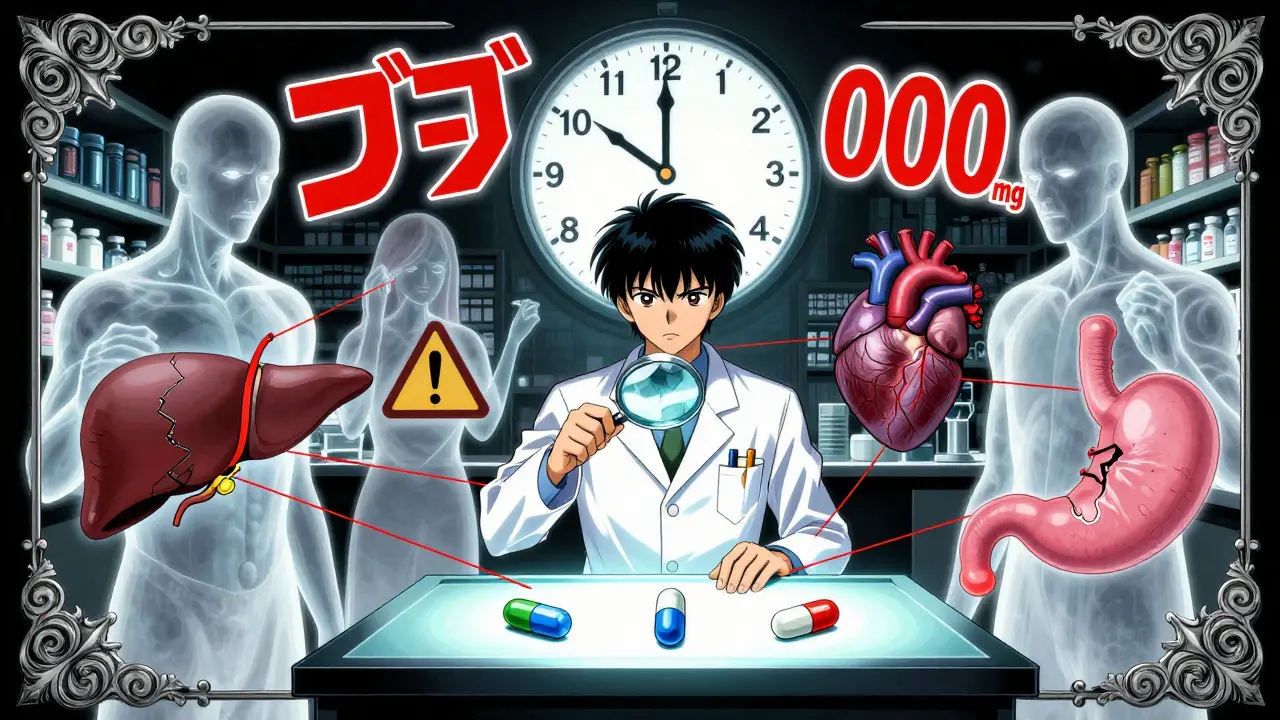
But there’s a catch. Your liver handles acetaminophen. Take too much - even just a little over the daily limit - and you risk serious liver damage. The official max is 4,000 mg per day, but experts now advise sticking to 3,000 mg or less, especially if you drink alcohol or have liver issues. The problem? Many cold and flu meds also contain acetaminophen. People unknowingly double up, and that’s how 15,000 Americans end up in the hospital every year from accidental overdose.
How NSAIDs Work (And When They’re Better)
NSAIDs - short for nonsteroidal anti-inflammatory drugs - include ibuprofen (Advil, Motrin), naproxen (Aleve), and aspirin. These drugs don’t just dull pain. They fight inflammation. That’s why they’re more effective for arthritis, sprains, menstrual cramps, or tendonitis. If your knee is swollen, your shoulder is inflamed, or your period comes with heavy cramping, NSAIDs often work faster and stronger than acetaminophen.
Studies show NSAIDs reduce pain scores by 30-50% in osteoarthritis patients, while acetaminophen only manages 10-20%. That’s a big gap. For muscle strains or post-workout soreness, NSAIDs also win. They lower prostaglandins - chemicals your body makes when tissues are injured - which means less swelling, less heat, less redness.
But they come with trade-offs. NSAIDs block COX-1 and COX-2 enzymes throughout your body. That’s good for pain, but it also reduces the protective mucus in your stomach. That’s why 2-4% of regular NSAID users develop ulcers each year. Taking them with food helps, but it doesn’t eliminate the risk. Long-term use can also raise blood pressure and increase heart attack risk - especially with ibuprofen. The FDA warns that chronic high-dose ibuprofen can raise heart attack risk by 10-50%.
Not all NSAIDs are equal, though. Naproxen has a lower cardiovascular risk than ibuprofen, according to the European Heart Journal. If you need long-term pain relief and have heart concerns, naproxen may be the better pick - as long as your stomach can handle it.
Side Effects Compared: Stomach, Liver, and Heart
Let’s cut through the noise. Here’s what actually matters when choosing between them:
| Side Effect | Acetaminophen | NSAIDs (Ibuprofen, Naproxen) |
|---|---|---|
| Stomach irritation or ulcers | Less than 0.5% annual risk | 2-4% annual risk |
| Liver damage | High risk with overdose (15,000+ hospitalizations/year) | Minimal risk |
| Heart attack risk | No increased risk | 10-50% higher with chronic ibuprofen use |
| Kidney strain | Low risk | Higher risk with long-term use |
| Safe in pregnancy | Yes, preferred choice | Not recommended after 20 weeks |
| Safe for children | Yes, down to 2 months | Only for children over 6 months (ibuprofen) |
One key point: if you have high blood pressure, heart disease, or kidney problems, NSAIDs can make things worse. Acetaminophen is usually safer here - as long as you don’t exceed the dose.

Which One Should You Choose?
Here’s a simple decision guide based on your situation:
- Headache, fever, or mild body aches? Start with acetaminophen. It’s gentle and effective.
- Swollen joint, sprained ankle, or menstrual cramps? Go with an NSAID. You need the anti-inflammatory effect.
- Pregnant or nursing? Stick with acetaminophen. Avoid NSAIDs after 20 weeks.
- Under 12 years old? Acetaminophen is your only safe OTC option.
- Have a history of ulcers or stomach bleeding? Skip NSAIDs. Acetaminophen is safer.
- Have heart disease or high blood pressure? Talk to your doctor, but acetaminophen is usually preferred. If you must use an NSAID, naproxen is lower risk than ibuprofen.
And here’s something many people don’t know: you can take them together. Harvard Health and the Mayo Clinic both say combining a low dose of acetaminophen with an NSAID can give you better pain relief than either alone - and let you use less of each. For example: 500 mg acetaminophen + 200 mg ibuprofen every 6-8 hours. This reduces the chance of side effects from either drug at high doses.
What to Avoid
Some mistakes are common - and dangerous.
- Don’t mix NSAIDs. Taking ibuprofen and naproxen together doesn’t help - it just doubles your stomach and kidney risk. The FDA says this increases bleeding risk by 300%.
- Don’t take acetaminophen with other cold meds. Check labels. Many cough syrups, sinus tablets, and flu remedies contain acetaminophen. Add them to Tylenol, and you’re flirting with liver failure.
- Don’t use NSAIDs long-term without checking in. If you’re taking them more than 10 days a month, talk to your doctor. There are better options for chronic pain.
- Don’t drink alcohol while taking acetaminophen. Even one drink a day can raise your liver damage risk.
Cost and Availability
Generic versions of both are cheap. A bottle of 100 acetaminophen 500 mg tablets costs about $3-$5 - that’s $0.03 to $0.05 per pill. Ibuprofen 200 mg runs about $0.04-$0.07 per pill. You’re not paying for brand names. Store brands work just as well.
Both are widely available. You’ll find them in every pharmacy, grocery store, and convenience shop. The FDA requires clear warning labels on both: liver toxicity for acetaminophen, heart and stomach risks for NSAIDs. Read them. They’re there for a reason.
What’s Next for OTC Pain Relief?
Neither acetaminophen nor NSAIDs are perfect. But they’ve been around for decades - and they work. Experts agree they’ll remain first-line options through at least 2030. Research is underway for new painkillers that target different pathways, with 17 NIH-funded trials as of late 2023. But nothing has replaced these two yet.
The bottom line? Don’t treat all pain the same. Match the drug to the problem. Use acetaminophen for general aches and fever. Use NSAIDs when swelling is part of the picture. And never take more than you need.
Can I take acetaminophen and ibuprofen together?
Yes, and it’s often recommended. Taking a low dose of acetaminophen (500 mg) with a low dose of ibuprofen (200 mg) can provide better pain relief than either alone, while reducing the risk of side effects from high doses of either. Space them out by 3-4 hours if needed. Always follow the maximum daily limits for each.
Which is safer for long-term use: acetaminophen or NSAIDs?
It depends. For your stomach and kidneys, acetaminophen is safer. For your heart, NSAIDs - especially ibuprofen - carry more risk. If you need daily pain relief for arthritis, acetaminophen is usually the first choice. But if inflammation is the main issue, naproxen may be better than ibuprofen. Always talk to your doctor before using either daily for more than a few weeks.
Is naproxen safer than ibuprofen?
Yes, for heart health. Studies show naproxen has a lower risk of causing heart attacks than ibuprofen, especially with long-term use. It also lasts longer - up to 12 hours per dose - so you take it less often. But it’s harder on the stomach than ibuprofen. If you have heart disease, naproxen is often preferred over ibuprofen. If you have stomach issues, acetaminophen is still the safest bet.
Why is acetaminophen the only option for young children?
NSAIDs like ibuprofen aren’t approved for babies under 6 months, and aspirin is dangerous due to Reye’s syndrome. Acetaminophen has been safely used in infants since the 1950s, with clear dosing guidelines based on weight (10-15 mg per kg). It’s gentle on the stomach and doesn’t affect platelet function, making it ideal for kids.
Can I take NSAIDs if I have high blood pressure?
It’s risky. NSAIDs can raise blood pressure and reduce the effectiveness of some blood pressure medications. If you have hypertension, acetaminophen is the preferred OTC pain reliever. If you must use an NSAID, naproxen is a better choice than ibuprofen, and only use the lowest dose for the shortest time possible. Always check with your doctor first.
What’s the safest way to avoid liver damage from acetaminophen?
Never exceed 3,000 mg per day. Always check the labels of other medicines - cold, flu, and sleep aids often contain acetaminophen. Avoid alcohol while taking it. If you have liver disease, ask your doctor before using it at all. Keep a list of all your medications and review them with your pharmacist.
Final Tip: Know Your Body
There’s no one-size-fits-all painkiller. What works for your neighbor might not work for you. Pay attention to how your body reacts. If a medication gives you stomach upset, stop it. If it doesn’t help after two days, try the other type. And if you’re unsure, talk to your pharmacist - they’re trained to help you choose safely.
Tim Goodfellow
December 18, 2025 AT 14:13Man, this post is a godsend. I’ve been taking ibuprofen for my back pain like it’s candy, not realizing I was slowly turning my stomach into a warzone. Learned I should’ve been using naproxen instead. Also, didn’t know acetaminophen + ibuprofen combo was a legit strategy. Mind blown. 🤯
mary lizardo
December 19, 2025 AT 04:30While the information presented is technically accurate, the lack of citation from peer-reviewed meta-analyses renders this piece merely anecdotal. The FDA’s warnings are not regulatory mandates but advisory statements, and the conflation of correlation with causation in the cardiovascular risk data is statistically indefensible. One must question the editorial oversight of such content.
Ryan van Leent
December 21, 2025 AT 02:55Adrienne Dagg
December 21, 2025 AT 03:36OMG I just realized I’ve been taking Advil AND that cold medicine with acetaminophen?? 😱 I’m so done with this. Going to switch to just tylenol now. Also, naproxen for cramps?? Game changer. 🙌
Connie Zehner
December 22, 2025 AT 03:41You think this is bad? Wait till you find out the pharmaceutical companies are hiding the real truth. Acetaminophen is linked to autism in children, and NSAIDs are secretly designed to make you dependent. The FDA doesn’t care because they’re funded by Big Pharma. I’ve been taking ginger tea and ice packs since 2018. I’m 87 and still running marathons. You’re being lied to.
Kelly Mulder
December 23, 2025 AT 13:17It is patently evident that the author’s conflation of statistical correlation with causal inference constitutes a gross epistemological failure. The assertion that naproxen possesses a lower cardiovascular risk profile than ibuprofen is predicated upon observational cohort studies with uncontrolled confounders. One must, therefore, regard this entire exposition as methodologically unsound and intellectually irresponsible.
mark shortus
December 24, 2025 AT 11:11I took ibuprofen for 12 days straight after my knee surgery… and then I woke up one morning and my stomach was GONE. Just… gone. Like a horror movie. I had to be rushed to the ER. Now I only use acetaminophen. And I cry every time I see a bottle of Advil. 😭
Vicki Belcher
December 25, 2025 AT 08:00This is exactly the kind of info we need more of! So many people just grab whatever’s in the cabinet without thinking. I always check labels now - and I’ve started keeping a little notebook of what I take and when. You’re doing great work. 💪❤️
Gloria Parraz
December 26, 2025 AT 13:15Don’t let fear paralyze you. This article gives you the tools to make smart choices - not to panic. If you’re unsure, talk to your pharmacist. They’re not salespeople, they’re your health allies. You’ve got this. And if you’re managing chronic pain? You’re stronger than you know.
Sahil jassy
December 27, 2025 AT 23:10Nicole Rutherford
December 28, 2025 AT 13:44Of course you’re taking the wrong one. You always do. You think you know pain? You haven’t even scratched the surface. I’ve had migraines since I was 14. I’ve tried everything. You’re not doing it right. And yes, I’m still here. Because I’m the only one who knows what’s real.
jessica .
December 29, 2025 AT 20:12Wait - so the government lets companies sell poison that’s in EVERY cold medicine? And you’re telling me this isn’t a cover-up? Who profits? Why do they keep this on shelves? This is worse than the vaccine lies. I’m not taking anything from CVS anymore. I’m going to the woods. I’ll chew willow bark. #AmericaWakeUp