
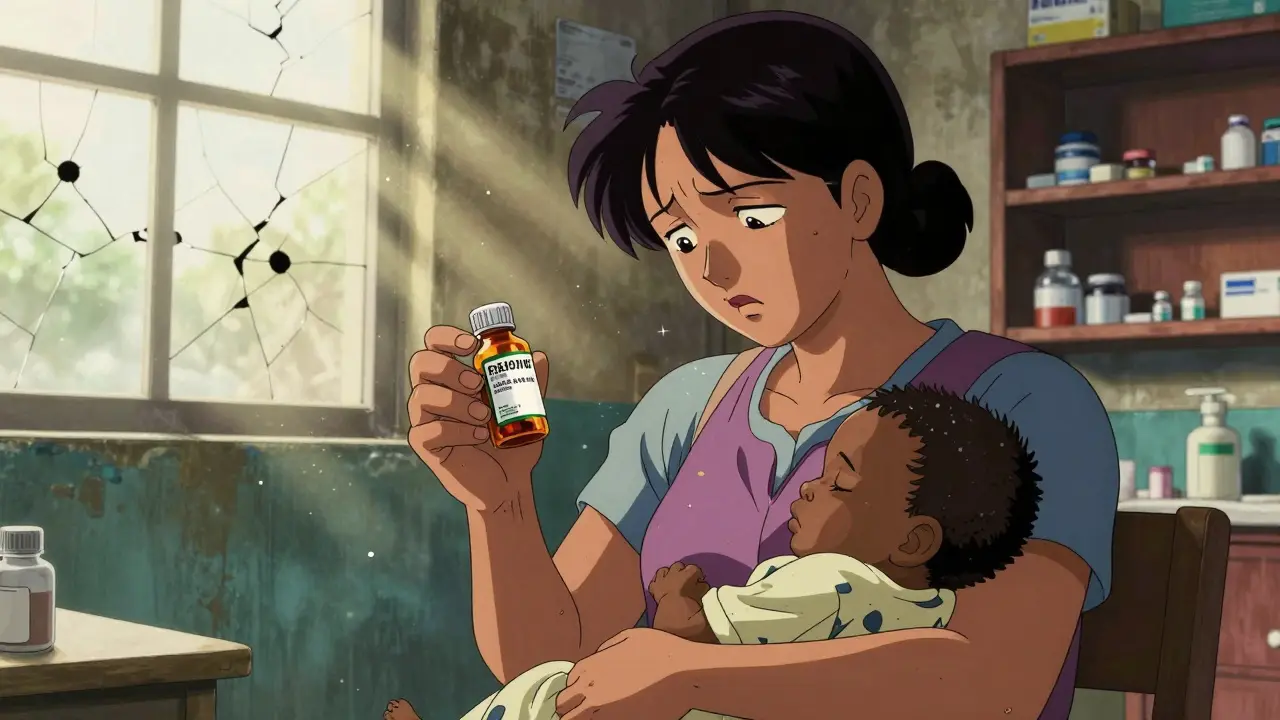
Imagine needing insulin, HIV meds, or antibiotics-but a single month’s supply costs more than your entire monthly income. This isn’t a dystopian fantasy. It’s reality for millions in low-income countries. The problem isn’t that these drugs don’t exist. It’s that they’re priced out of reach. Generics were meant to fix this. But in practice, they’re still not reaching the people who need them most.
What Are Generics, Really?
Generics are exact copies of branded medicines. Same active ingredient. Same dosage. Same effect. But they cost 80% less. That’s not a guess. It’s what the World Health Organization (WHO) confirmed after tracking HIV, tuberculosis, and malaria treatments. When generic versions of antiretroviral drugs hit the market in the early 2000s, prices dropped from $10,000 per patient per year to under $100. That’s how 10 million people got life-saving treatment where none existed before.
They’re not cheaper because they’re low quality. They’re cheaper because the patent expired. No company has to spend millions on R&D or marketing. No monopoly. No inflated price tag. Just the science, made affordable.
Why Aren’t Generics Everywhere?
Here’s the twist: in the U.S., 85% of all prescriptions are filled with generics. In low-income countries? Only 5% of the pharmaceutical market is made up of unbranded generics. That’s not a typo. Five percent.
Why? It’s not about availability. It’s about systems. Many countries still charge high import taxes on medicines. Some have complex approval processes that take years. Others rely on private distributors who mark up prices just to cover their own costs. And in many places, patients pay out-of-pocket for 90% of their meds. That means even a $5 generic can be unaffordable if you’re earning $2 a day.
Even when generics are available, people don’t always trust them. In rural clinics, patients often ask for the branded version-even if it costs ten times more-because they’ve been told it’s "better." That’s not ignorance. It’s the result of decades of aggressive marketing by big pharma, and weak public health education.
Who’s Making Generics-and Who’s Not Helping
Five companies-Cipla, Hikma, Sun Pharma, Teva, and Viatris-produce 90% of the essential generic drugs used in low-income countries. They make them. They ship them. But according to the Access to Medicine Foundation, they only have clear plans to make 41 out of 102 priority drugs accessible to the poorest patients. And even then, few of those plans actually lower prices for people who pay cash at the pharmacy.
Big pharmaceutical companies like Pfizer, Novartis, and Sanofi say they’re helping through "inclusive business models." They license drugs to local manufacturers or donate medicines. But here’s the problem: they rarely say how many people actually get them. No transparency. No tracking. No accountability. It’s hard to fix a problem if you won’t measure it.
Where It’s Working-and Where It’s Failing
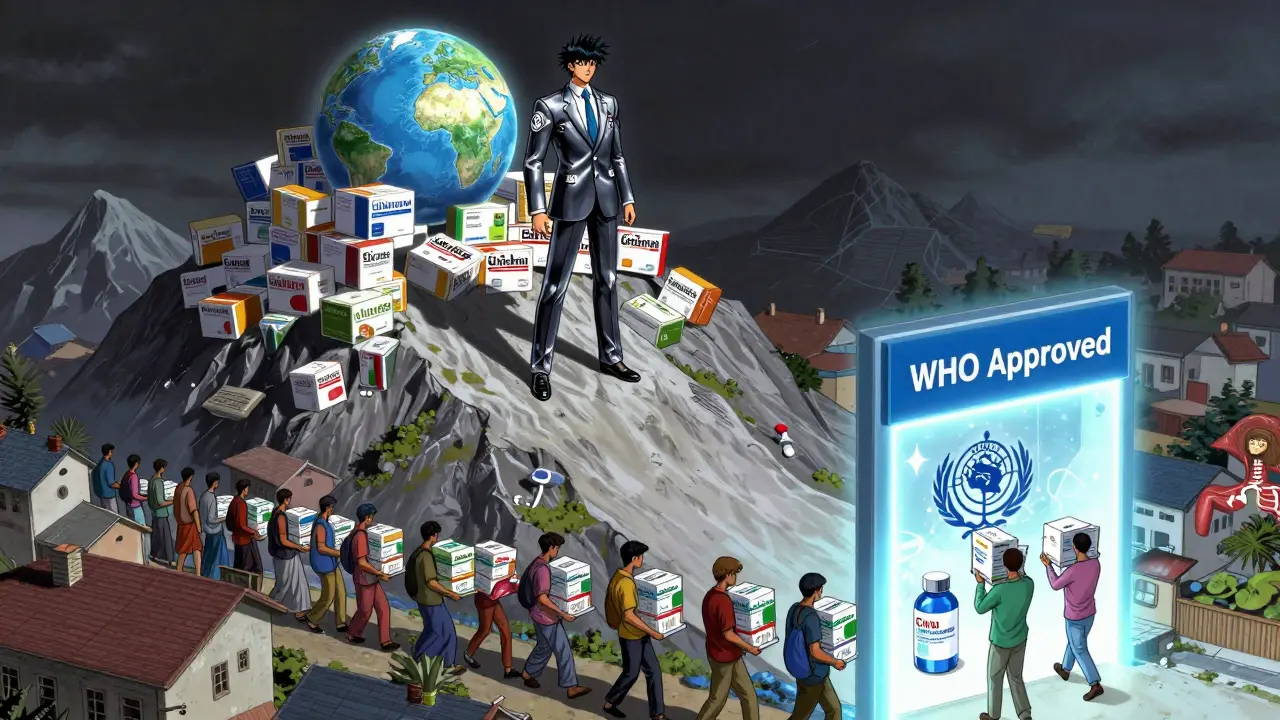
Some regions are getting better. Southeast Asia has the highest generic market share-82% by volume. That’s because governments there pushed for bulk procurement, simplified regulations, and local manufacturing. India, Thailand, and South Africa became hubs for generic production and export.
Meanwhile, the Western Pacific region-home to countries like the Philippines and Papua New Guinea-has seen medicine availability drop. Public clinics are running out of stock. Private pharmacies are overcharging. And the people? They’re choosing between food and medicine.
Africa is caught in the middle. In 2001, African leaders promised to spend 15% of their national budgets on health. Two decades later, only 23 of 54 countries met that goal. Without funding, there’s no storage, no transport, no trained staff to distribute meds. Generics sit in warehouses. Patients die on waiting lists.
The Hidden Barriers
It’s not just money. It’s logistics. In rural Malawi, a generic antimalarial might be produced in India, shipped to Nairobi, cleared through customs, trucked to Kampala, flown to a regional hub, and finally driven 100 kilometers on a dirt road to a clinic. By the time it gets there, the price has tripled. The cold chain broke. The pills expired.
Regulatory systems are broken too. Some countries have no agency to check if generics are safe. Others require duplicate testing-even for drugs already approved by WHO or the FDA. That delays availability by years. Meanwhile, counterfeit drugs flood the market. A 2023 WHO report found that 1 in 10 medicines in low-income countries are fake. That’s not the fault of generics. It’s the fault of weak oversight.
Even clinical trials are unfair. Only 43% of global trials happen in low- and middle-income countries-even though those countries bear 75% of the disease burden. That means drugs are tested mostly on white, wealthy populations. We don’t know how well they work on people with different genetics, diets, or co-infections. That’s not just inequitable. It’s dangerous.
What Needs to Change
There are clear, simple fixes that work.
- Remove taxes and tariffs on essential medicines. A 10% import tax on a $10 generic drug adds $1 to the price. That’s a meal for a child.
- Speed up approvals. If a drug is approved by WHO, the EU, or the U.S. FDA, it should be automatically accepted in low-income countries. No retesting. No delays.
- Build public supply chains. Governments should buy in bulk, store centrally, and distribute for free or at cost. No middlemen. No markups.
- Invest in local manufacturing. Countries like Ethiopia and Rwanda are starting to make their own generics. That creates jobs, cuts costs, and reduces dependence on imports.
- Train community health workers to explain generics. When patients understand that a generic is just as safe and effective, they choose it.
And yes-big pharma needs to stop lobbying for patent extensions and data exclusivity. Those rules exist to protect profits, not patients. They delay generic entry by years. In some cases, they block it entirely.
Hope Is Still Possible
There are bright spots. Uganda now produces generic HIV drugs locally. Bangladesh makes affordable hepatitis C treatments. Kenya’s government has set up a national procurement system that cuts prices by 40%. These aren’t miracles. They’re policy choices.
Generics have already saved tens of millions of lives. But they’re not a magic bullet. They’re a tool. And like any tool, they only work when the system around them is built to use them.
The question isn’t whether generics can help. It’s whether the world is willing to fix the broken systems keeping them out of reach. Because for 2 billion people, the difference between a generic and no drug at all is life or death.
Tatiana Bandurina
January 21, 2026 AT 16:11Generics aren't the problem - it's the global supply chain that's been deliberately sabotaged by trade agreements written in boardrooms, not clinics. The WHO has the data, the patents are expired, and the manufacturing capacity exists - yet we still treat medicine like a luxury good. This isn't inefficiency. It's policy violence.
Oren Prettyman
January 21, 2026 AT 22:36One must, however, consider the broader macroeconomic implications of wholesale generic adoption in low-income nations - particularly the erosion of local pharmaceutical innovation ecosystems, the unintended disincentive for domestic R&D investment, and the long-term dependency on foreign manufacturing hubs that may themselves be subject to geopolitical volatility. The moral imperative is clear, but the structural consequences are rarely quantified with sufficient rigor.
Keith Helm
January 23, 2026 AT 13:33Remove tariffs. End retesting. Bulk buy. Distribute. Done.
Rob Sims
January 24, 2026 AT 10:58Oh wow, so the answer is just to make drugs cheaper? No wonder the rich keep getting richer - they’re the only ones who can afford to be this naive.
Philip House
January 24, 2026 AT 22:22Let’s be real - the only reason generics work in India is because they don’t care about patents. In the US, if you tried to make a $2 insulin, the lawyers would eat your lunch before breakfast. This isn’t a health crisis - it’s a legal one. Big Pharma owns the laws. And the laws don’t care if you die.
Liberty C
January 25, 2026 AT 16:49The tragedy isn’t that generics exist - it’s that we’ve turned the alleviation of human suffering into a moral performance. We cheer for ‘access’ while funding private equity firms that buy up generic manufacturers and jack up prices just enough to stay just below public outrage thresholds. It’s not capitalism - it’s cruelty with a PowerPoint.
Neil Ellis
January 27, 2026 AT 15:29I’ve seen clinics in rural Kenya where a $1 generic antimalarial is the only thing standing between a child and death. The system is broken, yes - but the people? They’re brilliant, resourceful, and refusing to give up. We just need to stop standing in their way. The tools are already here. We just need to stop pretending we’re too busy to hand them over.
Lana Kabulova
January 29, 2026 AT 10:26Wait - so if a drug is approved by WHO, FDA, or EMA, why on earth are countries still requiring duplicate testing? That’s not regulation - that’s bureaucratic theater. And the cold chain failures? Those aren’t accidents - they’re the result of underfunded infrastructure that’s been ignored for decades. It’s not that generics don’t work - it’s that the system refuses to let them reach anyone.
Alec Amiri
January 29, 2026 AT 18:52Everyone’s talking about generics like they’re the solution - but nobody’s talking about the fact that most people in these countries don’t even have a doctor to prescribe them. No clinic. No pharmacist. No fridge. No electricity. A pill doesn’t help if you can’t get it to the person who needs it. Fix the road first.
Daphne Mallari - Tolentino
January 29, 2026 AT 22:15It is worth noting, with considerable gravitas, that the very notion of pharmaceutical equity presupposes a level of institutional stability and governance capacity that is, in many of the cited jurisdictions, either nascent or actively deteriorating. One cannot simply import access - one must cultivate it, through sustained investment, legal reform, and civic accountability. The absence of these conditions renders even the most well-intentioned policy frameworks inert.