
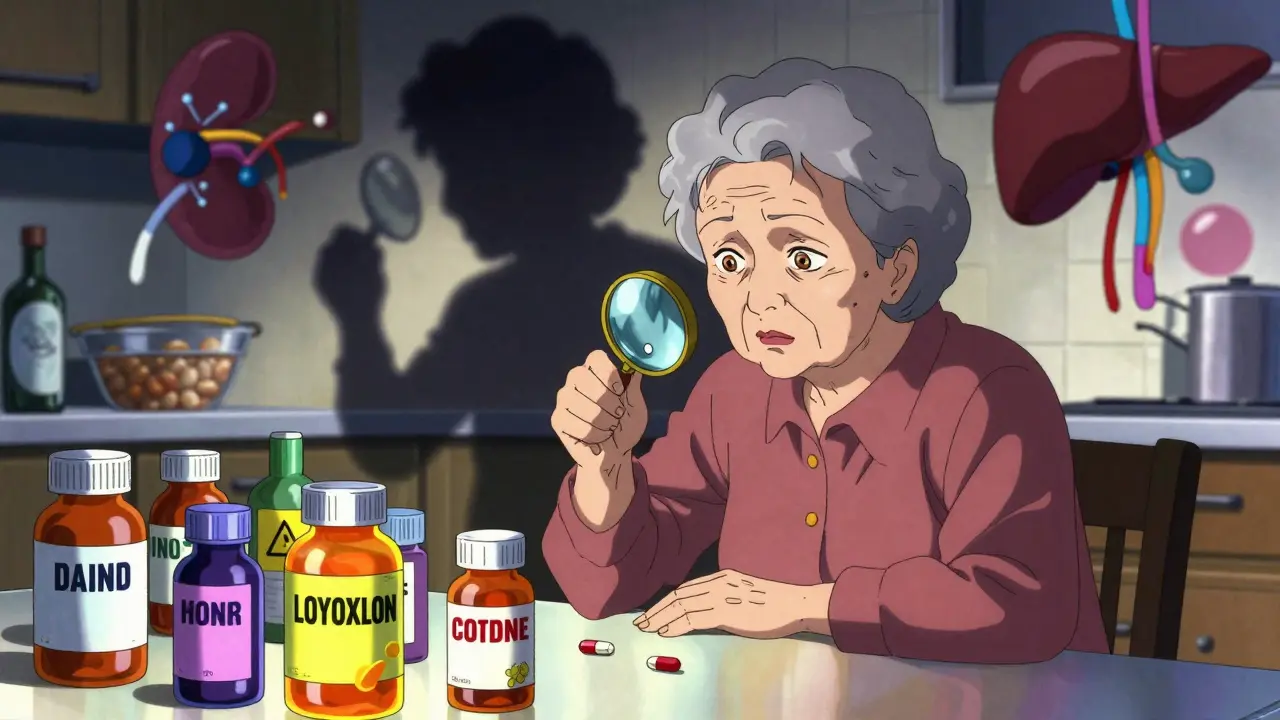
When you're over 65, taking medication isn't just about following a prescription-it's about staying safe. Many older adults rely on generic drugs because they're cheaper, and for good reason: the FDA says they're just as safe and effective as brand-name versions. But here's the catch: generic drug safety in older adults isn't just about the drug itself. It's about how your body changes with age, how many pills you're taking, and whether those pills are even right for you anymore.
Why Age Changes How Drugs Work
Your body doesn't process medicine the same way at 70 as it did at 30. As you get older, your liver and kidneys slow down. Studies show that by age 75, your body may clear drugs up to 30% slower than when you were younger. That means a pill that was perfectly safe at 60 can build up in your system at 78 and turn into an overdose.Body composition changes too. Older adults tend to have more body fat and less water. This affects how drugs are absorbed and distributed. For example, water-soluble drugs like lithium or certain antibiotics can become too concentrated. Fat-soluble drugs like diazepam can stick around longer, making you drowsy or unsteady.
And then there's the brain. Older adults are more sensitive to drugs that affect the central nervous system-things like sleeping pills, anti-anxiety meds, and even some painkillers. Even small doses can cause confusion, falls, or memory problems. A 2023 study found that 41% of seniors on CNS medications reported dizziness or unsteadiness within weeks of starting or changing their dose.
Polypharmacy: The Silent Danger
Taking five or more medications is common for older adults with chronic conditions. But here’s the math: if you’re on two drugs, your risk of a bad reaction is about 13%. At five drugs? It jumps to 58%. With seven or more, it hits 82%. That’s not a typo. That’s real.Polypharmacy isn’t just about quantity-it’s about combinations. Some drugs don’t play well together. For example, mixing opioids with benzodiazepines (like Xanax or Valium) increases the risk of fatal overdose by 154%. Adding gabapentin to that mix? Respiratory depression risk goes up 70%. These aren’t rare events. They’re predictable-and preventable.
Even common drugs can be dangerous. Beta blockers can cause dangerously slow heart rates. Digoxin can trigger irregular heartbeats. Insulin and sulfonylureas for diabetes? They’re linked to 20-25% of fall-related injuries in seniors because of low blood sugar episodes. And none of this changes just because the drug is generic.
Generic vs. Brand: The Real Differences
The FDA requires generics to be bioequivalent-meaning they deliver the same amount of active ingredient into your bloodstream as the brand-name drug, within 80-125% of the original. That sounds strict. And for most drugs, it works fine.But for drugs with a narrow therapeutic index (NTI), even small differences matter. Warfarin is the classic example. It’s used to prevent blood clots, but too much can cause bleeding, too little can cause a stroke. While studies show generic warfarin is 98.7% equivalent to brand-name Coumadin, 42% of seniors still believe the brand is safer. And yes, some patients report instability after switching-like one 82-year-old woman whose TSH levels fluctuated after changing from brand-name Synthroid to generic levothyroxine. Her pharmacist later found the issue wasn’t the drug, but inconsistent dosing timing and food interactions.
For antidepressants, the same rules apply. SNRIs like venlafaxine (generic or brand) carry a 37% higher fall risk in older adults. The Beers Criteria 2023 update flagged these as potentially inappropriate for seniors with a history of falls-regardless of whether they’re generic or not.
Aspirin for heart health? It’s no longer recommended for primary prevention in people 70 and older. A 2016 review found the bleeding risk outweighs any benefit. Again, this applies to generic aspirin just as much as branded.
What the Experts Say
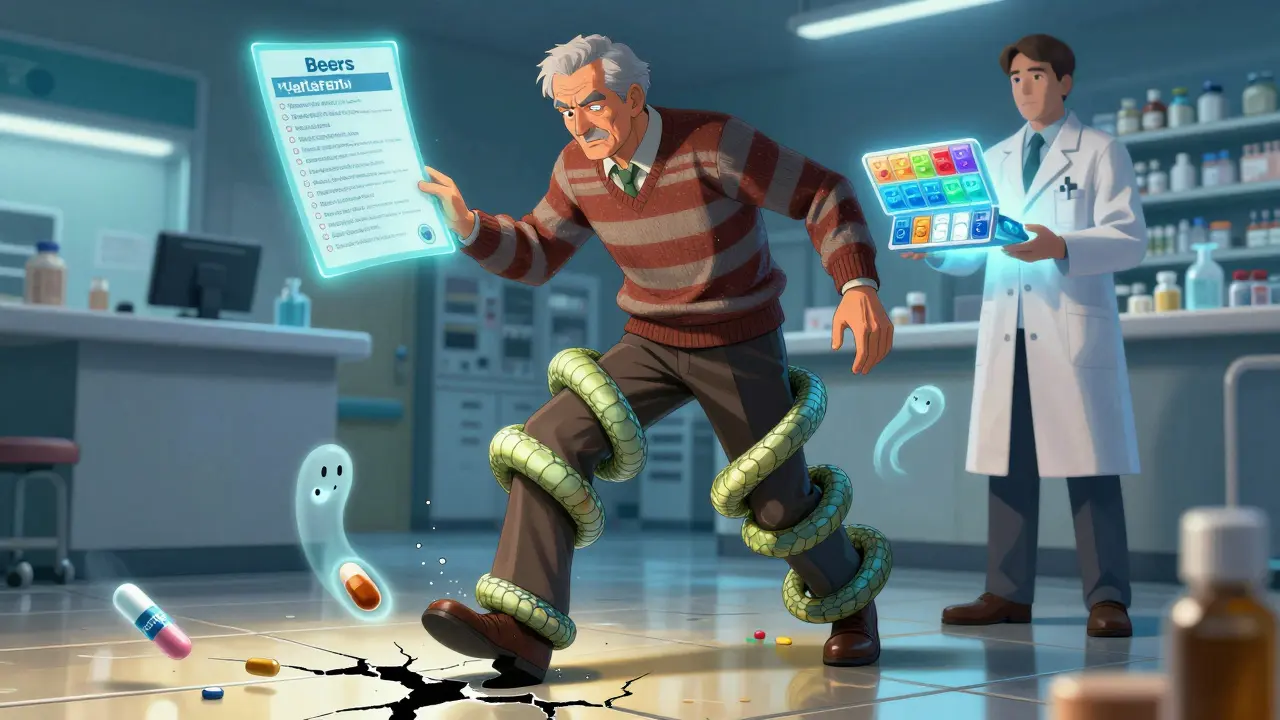
Dr. Michael Steinman, a geriatrician at UCSF, put it plainly: "The issue isn’t generic versus brand. It’s whether the drug is appropriate for someone with multiple conditions, slowed metabolism, and changing body chemistry."The Beers Criteria 2023, updated by the American Geriatrics Society, is now the gold standard for safe prescribing in older adults. It doesn’t care if a drug is generic. It cares if it’s right for your age, your kidneys, your balance, and your other medications.
Dr. Dima Qato’s research found that when pharmacists take 10 minutes to explain generics to seniors, acceptance and proper use go up by 37%. That’s not magic. That’s communication.
And Dr. Jerry Avorn from Harvard reminds us: "Most drug studies are done on healthy, single-disease patients. Older adults rarely fit that profile. We’re prescribing based on incomplete data."
How to Stay Safe
You don’t have to avoid generics. But you do need to manage them wisely.- Know your meds. Keep a written list of every pill, supplement, and OTC drug you take-including dosage and why. Update it every time you see a doctor.
- Ask about alternatives. If you’re on a drug flagged in the Beers Criteria (like cyclobenzaprine, diphenhydramine, or certain antipsychotics), ask if there’s a safer option. Often there is.
- Use pill organizers. Color-coded containers and automated dispensers reduce medication errors by 34%, according to the Journal of the American Geriatrics Society.
- Check labels. Many seniors have trouble reading small print. Ask your pharmacist for large-type labels. The National Eye Institute says 65% of adults over 65 have vision problems that affect label reading.
- Get a medication review. Pharmacists can spot duplicates, dangerous interactions, and unnecessary drugs. Quarterly reviews reduce adverse events by 27%.
- Watch for new symptoms. If you feel more tired, confused, dizzy, or unsteady after a new prescription or generic switch, don’t assume it’s "just aging." Call your doctor.

What’s Changing Now
The FDA is starting to pay attention. In 2022, they launched the Sentinel Initiative, which now tracks adverse events in older adults separately for generic and brand-name drugs. Preliminary data shows similar safety profiles overall-but for warfarin in patients over 80, generic versions had 1.8 times more adverse event reports. That doesn’t mean generics are unsafe. It means we need better monitoring and labeling.Starting in 2024, the FDA will pilot enhanced labeling for high-risk generics used by seniors. That means clearer warnings, bigger fonts, and explicit notes about kidney or liver risks.
The National Institute on Aging has committed $27 million to research how aging affects drug metabolism. That’s not just science-it’s future-proofing care for millions.
Bottom Line
Generic drugs are not inherently riskier. But older adults are more vulnerable to harm from any medication-generic or brand. The real danger isn’t the label on the bottle. It’s the lack of attention to age-related changes, polypharmacy, and poor communication.If you or a loved one is on multiple medications, don’t assume "it’s just a generic" means it’s safe. Ask questions. Review your list. Talk to your pharmacist. And remember: a cheaper pill isn’t a better pill if it’s the wrong one for your body right now.
Are generic drugs as safe as brand-name drugs for older adults?
Yes, by FDA standards, generic drugs must deliver the same active ingredient in the same way as brand-name versions. However, older adults may be more sensitive to small variations in how drugs are absorbed or to inactive ingredients. For drugs with a narrow therapeutic index-like warfarin or levothyroxine-even minor differences can affect stability. While clinical studies show most generics are equivalent, individual responses vary, especially with age-related changes in metabolism.
What medications should older adults avoid?
The 2023 Beers Criteria lists several drugs as potentially inappropriate for older adults, regardless of whether they’re generic or brand. These include: benzodiazepines (e.g., diazepam), anticholinergics (e.g., diphenhydramine), muscle relaxants (e.g., cyclobenzaprine), nonsteroidal anti-inflammatory drugs (NSAIDs) like ibuprofen for long-term use, and certain antipsychotics. Even common OTC sleep aids and allergy pills can increase fall risk, confusion, and urinary retention. Always ask if a medication is still needed.
Why do some seniors say generic drugs don’t work as well?
Some seniors report changes in effectiveness after switching to generics-especially with thyroid meds like levothyroxine or blood thinners like warfarin. This isn’t always due to the drug itself. Differences in pill size, coating, or inactive ingredients can affect absorption. Also, switching brands can disrupt routines. One 2022 study found that 63% of caregivers worried about effectiveness after a switch. Counseling from a pharmacist can reduce these concerns by 37%.
How can I reduce the risk of adverse drug reactions?
Start by getting a full medication review with your pharmacist every three months. Keep an updated list of all medications-including supplements and OTCs. Avoid new prescriptions unless absolutely necessary. Use pill organizers. Check for interactions before starting anything new. And never stop or change a dose without talking to your doctor. Simple steps like these can cut adverse events by nearly one-third.
Should I avoid generics if I’m on multiple medications?
No. Generics are safe and cost-effective. But if you’re on five or more medications, the risk of harmful interactions rises sharply. Focus less on whether a drug is generic and more on whether it’s still necessary, appropriate for your age, and safe with your other drugs. Ask your pharmacist to run a drug interaction check. That’s far more important than the brand name on the bottle.
trudale hampton
March 20, 2026 AT 03:48Man, I've been taking generic lisinopril for years and never had an issue. But my mom switched from brand to generic levothyroxine and started feeling like a zombie. Turns out her body just didn't like the filler. Not saying generics are bad-just that everyone's different. Talk to your pharmacist, not just your doctor.
Shaun Wakashige
March 20, 2026 AT 16:31lol at all this science. just stop taking so many pills 😅
Paul Cuccurullo
March 21, 2026 AT 23:16It's not about whether the drug is generic-it's about whether we're treating the person, or just the condition. We've become a society that prescribes like we're playing whack-a-mole with symptoms, not addressing root causes. The body isn't a machine to be patched. It's a living, aging system that deserves dignity, not a pharmacy list.
That 41% statistic? That's not just dizziness. That's loss of autonomy. That's fear. That's the sound of someone trying to stand up and realizing their legs don't listen anymore.
And yet we keep adding more pills. Because it's easier than changing how we care.
Solomon Kindie
March 22, 2026 AT 00:38so like the fda says generics are equal but then there's like 42% of people who think brand is better and then there's that one study that says warfarin has more adverse events in seniors on generic but wait is that because of the inactive ingredients or the timing or the fact that old people forget to take it with food or maybe it's all of the above i mean how do you even isolate one variable when your liver is basically a sleepy old man who forgot his job description
Natali Shevchenko
March 22, 2026 AT 11:47I've been a caregiver for my 89-year-old father for six years now, and I can tell you-this isn't theoretical. The day we switched his generic simvastatin to a different manufacturer, he started stumbling in the hallway. We thought it was his arthritis flaring. Turns out, the new batch had a different coating, and his stomach couldn't absorb it properly. We went back to the original generic, and within three days, he was walking like himself again. It's not about brand vs. generic. It's about consistency. Your body remembers how a pill feels, even if it doesn't know why.
And don't get me started on pill organizers. I bought one of those fancy digital ones with alarms. He ignored it for two weeks. Then I just put his meds in a labeled egg carton beside his coffee mug. He took them every morning without fail. Sometimes the simplest solution is the one that respects the person, not the system.
Johny Prayogi
March 23, 2026 AT 14:15Y’all need to stop overcomplicating this. If you’re on 7 meds, you’re doing it wrong. Period. 🤷♂️ Pharmacist reviews? Yes. Pill organizers? Great. But the real fix? Less meds. Cut the clutter. Your body doesn’t need 10 pills to survive. It needs one thing: rest, movement, and someone who actually listens.
Also, generic aspirin is fine. But if you’re taking it for heart health at 75? You’re probably just making your stomach bleed for nothing. 🚫
Nicole James
March 25, 2026 AT 04:24Let’s be real-how many times has the FDA approved a generic drug, and then three months later, there’s a recall because of contamination? And who gets hurt? Seniors. Always seniors. And now they’re saying 'enhanced labeling'? Like we didn’t already know this was a money game? Big Pharma doesn’t care if you live or die-they care if you keep buying. Generic? Sure. But who’s really behind the generic? Same corporations. Same factories. Same profit margins. They just changed the label.
And don’t tell me about the 'Sentinel Initiative.' It’s a PR move. They’ve been tracking this for decades. They just didn’t act-until the media caught on.
Nishan Basnet
March 26, 2026 AT 03:55I work in a pharmacy in Delhi, and I see seniors every day who come in with bags full of pills from three different doctors. I don't judge-I listen. One man, 84, was on seven medications, including diphenhydramine for sleep. I asked if he knew it was linked to dementia risk. He looked at me like I'd spoken in another language. So I sat with him for 15 minutes. Showed him the Beers Criteria. We cut two meds, switched one to a safer alternative, and now he sleeps better, walks steadier, and says he feels like 'himself again.' It's not magic. It's attention. And it's free.
Generics aren't the enemy. Neglect is.
Allison Priole
March 27, 2026 AT 00:12My grandma used to say, 'If it ain't broke, don't fix it.' And honestly? That’s the whole thing right there. If she was doing fine on her brand-name levothyroxine for 10 years, why switch just to save $2? She had a panic attack when the pharmacy switched her without telling her. We had to call the doctor, get it switched back, and now they put a big red note on her file: 'DO NOT SUBSTITUTE.' It’s not about trust in generics-it’s about trust in the system. And when they change things without telling you? That’s not safety. That’s betrayal.
Also, I’ve started writing down every med on a sticky note and putting it on her fridge. She can’t read the tiny labels anymore. The fridge? That’s her control center. Small changes. Big difference.
Casey Tenney
March 28, 2026 AT 09:13If you're taking five meds, you're already losing. Stop pretending you're in control.
Sandy Wells
March 30, 2026 AT 04:24Pharmacists say they can reduce adverse events by 27% with reviews. But only 12% of seniors actually get them. Why? Because insurance won't pay. Because doctors are too busy. Because the system is designed to push pills, not people. We're not talking about safety. We're talking about profit margins. And until we fix that, no amount of labeling or 'enhanced warnings' will help.
trudale hampton
March 31, 2026 AT 06:28^^^ I’ve been there. My mom’s pharmacist now calls me when they change her med. No more surprises. Best thing they ever did.