

Foreign food factories don’t get warning before FDA visits anymore
For decades, if you ran a food plant in India, China, or Mexico and shipped products to the U.S., you got a heads-up before the FDA showed up. A few days’ notice. Time to clean up, train staff, pull records, hire translators. It was standard. But that changed in May 2024. The FDA dropped the practice. Now, inspections at overseas facilities are unannounced-just like they’ve always been in the U.S.
This isn’t a minor tweak. It’s a full reset in how the U.S. protects its food supply. About 15% of everything Americans eat comes from abroad. That’s over 300,000 registered foreign facilities. And until recently, the FDA only inspected a fraction of them-often on schedule, often on their terms. Now, the agency is demanding the same level of readiness from every plant, no matter where it’s located.
Why the FDA changed the rules
The old system had a glaring flaw: it created a double standard. U.S. food plants could be inspected at any time, with no notice. Foreign plants? They got a call. That meant inspections could be staged. Clean floors for the day, hidden problems behind closed doors, records held back until the last minute.
FDA Commissioner Martin A. Makary called it out plainly: "American manufacturers don’t get to pick when we show up. Neither should foreign ones."
The shift wasn’t just about fairness. It was about safety. In 2018, ProPublica found that foreign food inspections had dropped to historic lows under previous administration budget cuts. Some countries had more than 1,000 registered facilities per FDA inspector. That’s not oversight-it’s guesswork.
Now, the goal is simple: find problems before food hits U.S. shelves. Unannounced visits catch real conditions-not prepared ones. A broken chiller. Contaminated water lines. Missing sanitation logs. These aren’t always visible when you know you’re being watched.
How the FDA picks which plants to inspect
The FDA doesn’t inspect every foreign facility every year. There are too many. Instead, they use a risk-based system with three main filters:
- What’s being made? Raw seafood, sprouts, or powdered infant formula? High risk. Canned beans or bottled water? Lower risk.
- How’s it made? Does the process involve multiple steps, raw ingredients, or temperature controls? Complex processes = higher chance of contamination.
- History of trouble? Has the facility had products rejected at U.S. ports? Refused shipments? That’s a red flag. Repeat offenders get bumped to the top of the list.
Since the FDA Food Safety Modernization Act (FSMA) passed in 2011, inspection targets were set to double every year for five years. That push is still ongoing. The agency now aims to inspect at least 10% of high-risk foreign facilities annually. For medium-risk, it’s around 5%. Low-risk? Maybe once every five years-or not at all.
What happens during an unannounced inspection
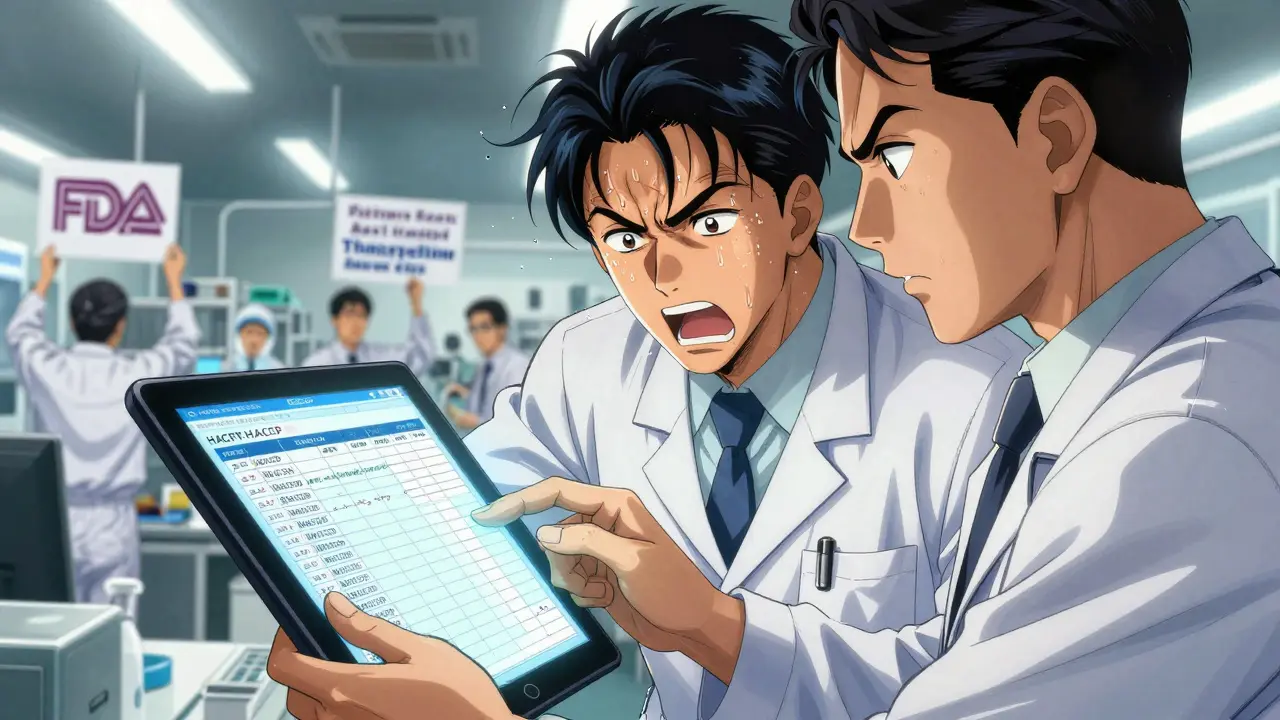
Imagine waking up to find FDA inspectors in your production area. No call. No email. Just a knock. That’s the new reality.
Inspectors will:
- Walk through every part of the facility-production, storage, packaging, waste areas
- Review records on the spot: sanitation logs, temperature logs, supplier approvals, training records
- Observe employees handling food-do they wash hands? Wear gloves? Follow procedures?
- Take photos and samples if they suspect contamination
- Ask questions-no translator? That’s your problem, not theirs
Here’s what’s no longer allowed:
- Delaying access to any area
- Redacting parts of documents
- Turning off cameras or lights during inspection
- Asking inspectors to stay at your hotel or ride in your company car
The FDA now strictly prohibits inspectors from accepting any travel accommodations from the facility. No rides. No meals. No gifts. This isn’t about being rude-it’s about avoiding even the appearance of favoritism.
What gets you in trouble-and how bad it can get
Most inspections end with a Form 483, listing observations. That’s normal. It’s not a fine. It’s a warning.
But if you refuse inspection, hide records, or block access? That’s a federal offense.
Under Section 306 of FSMA, the FDA can automatically refuse entry to any food from a facility that denies access. That means your entire shipment gets turned away at the border. No second chance. No appeal.
Worse, if you lie, delay, or obstruct, the U.S. Department of Justice can pursue criminal charges. Fines? Up to millions of dollars. Corporate debarment? Possible. Executives could even face personal liability.
One company in Vietnam was recently prosecuted for limiting FDA access to its refrigeration unit. The FDA took photos of the broken thermostat. The company claimed it was "just a small issue." The DOJ filed charges. The plant lost its U.S. export license. That’s not hypothetical. It’s happened.
How foreign plants are adapting
Big manufacturers with U.S. supply chains-like Nestlé, PepsiCo, or Danone-had systems in place. They already ran daily audits, kept digital records, and trained staff in English. For them, the change was a tweak.
Small and medium-sized factories? That’s where the pain is.
Many now hire full-time bilingual quality managers. Others install cloud-based documentation systems that are always online. Some run weekly mock inspections with internal teams pretending to be FDA agents. One facility in Thailand started requiring all employees to wear ID badges with English names-so inspectors don’t have to guess who’s who.
Language is still the biggest hurdle. A Spanish-speaking inspector asking for "sanitation logs" might get a confused look from a worker who’s never heard the term in English. No more time to call in a translator. That’s why many plants now train staff on basic FDA terminology-"HACCP," "GMP," "critical control point." It’s not optional anymore.
What you need to do right now
If you export food to the U.S., here’s your checklist:
- Verify your facility is registered with FDA’s FURLS system. If you’re not registered, you’re already non-compliant.
- Ensure all records are digital and accessible 24/7-no paper-only logs. Cloud storage is best.
- Train every employee on basic FDA expectations: handwashing, gowning, reporting issues, no hiding anything.
- Designate a U.S.-point of contact who can answer questions during an inspection-even if it’s 3 a.m. your time.
- Conduct monthly internal audits as if the FDA could walk in tomorrow.
- Never promise inspectors lodging, meals, or rides. Say no. Always.
And if you’re not ready? You’re not just risking a shipment rejection. You’re risking your entire U.S. market access.
The bigger picture: Why this matters for you
This isn’t just about compliance. It’s about trust.
When a U.S. consumer buys imported organic berries or baby formula, they expect it to be safe. The FDA’s shift signals that they’re serious about protecting that trust-even if it’s harder, more expensive, or less convenient.
Other countries are watching. The EU and Canada are already moving toward similar unannounced inspection models. The U.S. is setting the standard.
For foreign manufacturers, this is a wake-up call: global supply chains don’t get special treatment. If you want to sell in the U.S., you play by U.S. rules-no exceptions, no warnings, no excuses.
Lance Nickie
January 13, 2026 AT 19:14Acacia Hendrix
January 14, 2026 AT 06:03Let’s be clear: the FDA isn’t being punitive. They’re enforcing baseline biosecurity protocols that have been standard in the EU since 2006. The fact that we’re still treating this as a ‘surprise’ reveals a profound regulatory lag in emerging economies.
Avneet Singh
January 15, 2026 AT 15:34Lethabo Phalafala
January 16, 2026 AT 18:05This isn’t about rules. It’s about dignity. We’re not criminals. We’re workers trying to do right by people halfway across the world. Don’t make us beg for mercy with a broken printer and a 3G connection.
Priyanka Kumari
January 18, 2026 AT 04:21vishnu priyanka
January 20, 2026 AT 03:57John Pope
January 20, 2026 AT 18:39And don’t give me that ‘it’s for safety’ crap. The U.S. still imports melamine-laced milk powder from China in 2023. You’re not protecting us-you’re protecting profits.
John Tran
January 22, 2026 AT 10:38Milla Masliy
January 24, 2026 AT 05:48Clay .Haeber
January 25, 2026 AT 01:47Damario Brown
January 25, 2026 AT 02:41sam abas
January 25, 2026 AT 09:51Adam Vella
January 25, 2026 AT 23:39Nelly Oruko
January 26, 2026 AT 18:21mike swinchoski
January 27, 2026 AT 22:32