

If you’ve ever woken up with gritty, burning eyes-or spent hours squinting at a screen while your vision blurs and tears won’t stay-then you know dry eye isn’t just an annoyance. It’s a daily struggle. And if you’re managing it because of medications you’re taking for something else-like high blood pressure, depression, or allergies-you’re not alone. Dry eye disease affects over 16 million adults in the U.S. alone, and for many, it’s a side effect they never saw coming. The good news? You don’t have to just live with it. Two of the most effective, widely used tools in dry eye management are lubricants and humidifiers. But not all lubricants are the same, and not all humidifiers work the same way. Here’s what actually helps-and what doesn’t.
Understanding Dry Eye: It’s Not Just Lack of Tears
Dry eye isn’t simply your eyes being “dry.” It’s a breakdown in the tear film, which has three layers: oil, water, and mucus. When one layer fails, the whole system collapses. For most people (about 86%), the problem isn’t that their eyes don’t make enough tears-it’s that the tears evaporate too fast because the oily layer is thin or missing. That’s why slapping on plain water drops often doesn’t help for long. You need to fix the leak, not just add more water.Over-the-Counter Lubricants: What’s Actually in Those Bottles?
Most people start with artificial tears from the drugstore. They’re cheap, easy to find, and seem like a quick fix. But not all are created equal. The active ingredients matter.- Carboxymethylcellulose (CMC) and polyethylene glycol are common in low-viscosity drops like Refresh Tears. They give quick relief but last only 1-2 hours. Good for mild symptoms or daytime use.
- Propylene glycol is often added to help the solution stick to the eye longer. Some people find it irritating, though.
- Sodium hyaluronate is a natural substance found in your body. It holds water like a sponge. Drops with 0.1-0.4% hyaluronate (like Systane Ultra) can last 4-6 hours and are less likely to blur vision. Best for moderate dryness.
Prescription Lubricants: When OTC Isn’t Enough
If your dry eye is moderate to severe-or linked to inflammation from autoimmune conditions, long-term screen use, or certain medications-OTC drops won’t cut it. That’s where prescription options come in.- Cyclosporine (Restasis, generic): This isn’t a lubricant-it’s an immunosuppressant. It works by calming down the inflammation that’s killing your tear glands. But here’s the catch: it takes 3-6 months to work. If you’re expecting instant relief, you’ll get frustrated. About 17% of users quit because of the burning sensation when they first start. Refrigerating the bottle helps. Generic versions cost $150-$250 a month, down from $500+ for the brand.
- Lifitegrast (Xiidra): This one targets a different part of the inflammation process. You might feel better in as little as two weeks. But 25% of users report stinging or discomfort right after putting it in. It costs around $450-$550 a month, and insurance often requires you to try cyclosporine first.
- Miebo (perfluorohexyloctane): Approved in 2023, this is a game-changer for evaporative dry eye. It’s not water-based. It’s a special oil that forms a protective shield over your tear film, stopping evaporation instantly. People report relief within minutes. Clinical trials showed 1.5 times better symptom improvement than placebo at two weeks. The downside? It costs $650 a month. And you can’t wear contacts for 30 minutes after using it.
- Loteprednol (Eysuvis): A short-term steroid drop used for flare-ups. It works fast-within days-but you can’t use it long-term. It’s meant for 10-14 days at a time, usually when your eyes get really red and irritated.
- Varenicline (Tyrvaya): This one’s unusual. It’s a nasal spray. You spray it in your nose twice a day, and it signals your brain to make more tears. It costs about $200 a month and has fewer side effects than eye drops. But it’s not for everyone. If you’re sensitive to smells or have nasal congestion, it might not work well.
Humidifiers: The Simple Tool That Makes a Big Difference
You might think humidifiers are just for winter when the air feels like a desert. But they’re just as important in summer if you’re in an air-conditioned office or home. Dry air pulls moisture out of your eyes faster. A humidifier adds moisture back into the air, which helps your tear film stay stable.- Look for a model that maintains 40-60% humidity. Anything lower than 40% won’t help much. Anything above 60% encourages mold.
- Use a cool-mist humidifier if you have kids or pets. Warm-mist models can be a burn risk.
- Place it near your bed or desk-where you spend the most time. If you’re on a computer all day, put it on your nightstand or side table.
- Clean it every 3 days. Stagnant water breeds bacteria and mold, which can make your dry eye worse.
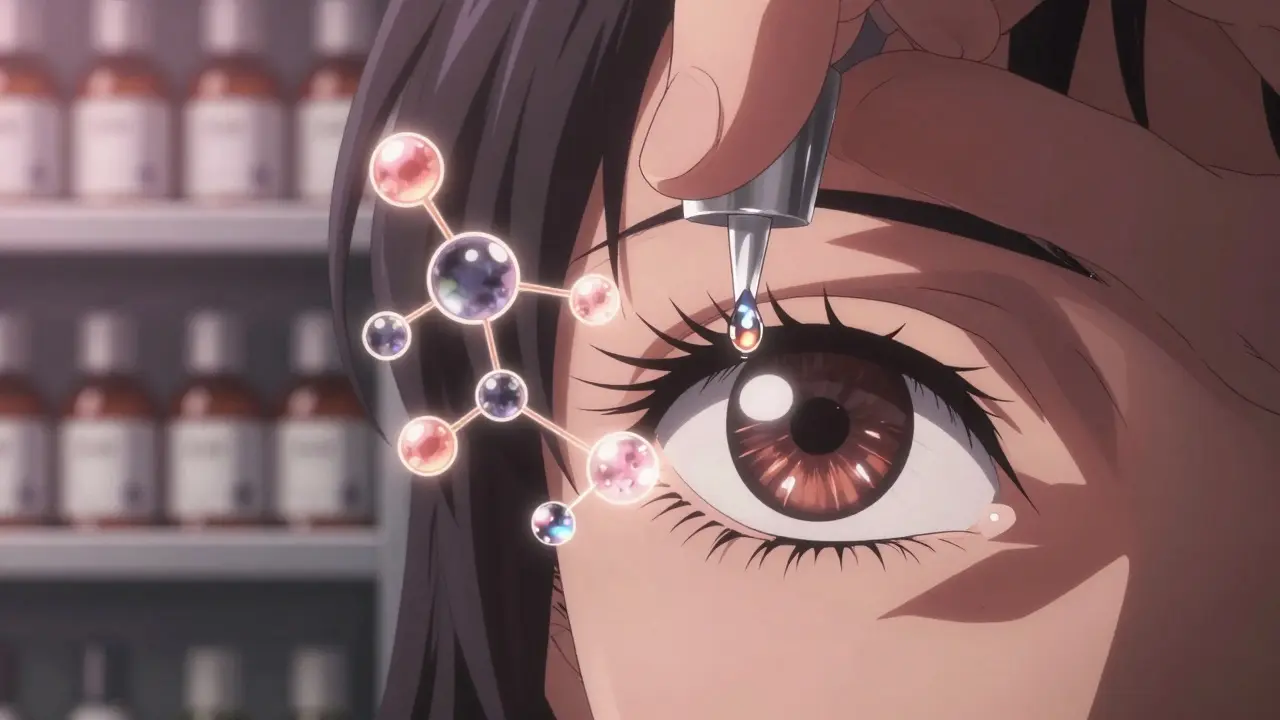
What Works Best Together?
The most successful dry eye management isn’t about one magic product. It’s about stacking tools.- Mild dry eye: Preservative-free artificial tears (2-4 times a day) + a humidifier at night.
- Moderate dry eye: Sodium hyaluronate drops + humidifier + punctal plugs (tiny inserts placed by your doctor to keep tears from draining too fast).
- Severe or inflammatory dry eye: Cyclosporine or lifitegrast daily + Miebo for immediate relief during flare-ups + humidifier + eyelid hygiene (warm compresses and gentle cleaning).
Common Mistakes and How to Avoid Them
- Using too many drops: More isn’t better. Overusing drops-even preservative-free ones-can wash away your natural tears. Stick to 4-6 times a day unless your doctor says otherwise.
- Ignoring the root cause: If your dry eye started after you began a new medication (like antihistamines, antidepressants, or beta-blockers), talk to your doctor. Sometimes switching meds helps.
- Not waiting between drops: If you’re using more than one type, wait 5 minutes between each. Otherwise, the second drop just washes out the first.
- Buying cheap humidifiers: Cheap models don’t regulate humidity well. They run too long or not enough. Look for one with a built-in hygrometer.
Cost, Access, and Insurance Hurdles
Let’s be real: dry eye treatments can be expensive. Miebo costs $650 a month. Xiidra is close to $500. Even generics aren’t cheap. Many insurance plans require you to try cheaper options first-this is called “step therapy.” Some won’t cover Miebo unless you’ve failed cyclosporine and lifitegrast. If you’re struggling with cost:- Ask your doctor about manufacturer coupons. Allergan, Bausch + Lomb, and others offer savings cards.
- Check if your pharmacy has a patient assistance program.
- Use generic cyclosporine instead of Restasis-it’s the same drug, half the price.
- Consider buying preservative-free drops in bulk online from reputable pharmacies.

What’s Coming Next?
New treatments are on the horizon. Reproxalap, a new anti-inflammatory eye drop, showed strong results in 2024 trials, reducing redness and improving tear production. Neurostimulation devices that trigger tear production through mild electrical pulses are also being tested. But for now, the foundation remains: lubricants that match your type of dry eye, and a humidifier that keeps the air from sucking the moisture out of your eyes.Frequently Asked Questions
Can I use artificial tears while wearing contact lenses?
Yes, but only if the drops are labeled “for contact lens wearers.” Most standard artificial tears contain ingredients that can stick to your lenses and cause irritation. Always remove your contacts before using Miebo or other oil-based drops, and wait at least 30 minutes before putting them back in. For other drops, wait 10-15 minutes.
Why does my dry eye get worse at night?
At night, your blink rate drops, your eyelids don’t spread tears evenly, and indoor air gets drier-especially if you’re using heating or air conditioning. Humidifiers help, but so does applying a thick lubricant gel or ointment before bed. These are heavier and blur vision, so they’re meant for nighttime use only.
Is dry eye permanent?
It depends. If it’s caused by a temporary factor like screen overuse or medication, it can improve once you adjust. But if it’s tied to aging, autoimmune disease, or long-term inflammation, it’s usually chronic. That doesn’t mean you can’t manage it well. With the right combination of lubricants, humidifiers, and lifestyle changes, most people can live comfortably without major disruption.
Do I need to see an eye specialist for dry eye?
If OTC drops aren’t helping after 2-4 weeks, or if you’re experiencing pain, light sensitivity, or vision changes, see an eye doctor. General practitioners often don’t know the difference between evaporative and aqueous-deficient dry eye. An optometrist or ophthalmologist can test your tear quality, check your oil glands, and recommend targeted treatments.
Can diet help with dry eye?
Yes. Omega-3 fatty acids from fish oil or flaxseed can improve the quality of your tear film’s oily layer. Studies show that taking 1,000-2,000 mg of EPA and DHA daily can reduce dry eye symptoms over 3-6 months. It’s not a replacement for lubricants, but it’s a helpful support.
Solomon Ahonsi
February 1, 2026 AT 19:59George Firican
February 3, 2026 AT 06:32Matt W
February 3, 2026 AT 21:17Anthony Massirman
February 4, 2026 AT 08:05Bob Hynes
February 4, 2026 AT 21:48Eli Kiseop
February 5, 2026 AT 19:48Ellie Norris
February 5, 2026 AT 22:42Bridget Molokomme
February 7, 2026 AT 10:34Monica Slypig
February 9, 2026 AT 09:48Becky M.
February 10, 2026 AT 18:50