

Feeling bloated after every meal? Stomach cramps after eating dairy? Floating, oily stools that won’t go away? You might be wondering if digestive enzyme supplements could help. The truth is, they can - but only in specific cases. For most people, these supplements won’t fix underlying issues. For others, they’re life-changing.
What Digestive Enzymes Actually Do
Your body makes enzymes naturally to break down food. The pancreas produces amylase for carbs, protease for proteins, and lipase for fats. Every day, it releases about 800-1,500 mL of pancreatic juice packed with these enzymes. That’s what lets you digest a steak, a bowl of pasta, or a slice of cheese without problems. When your body doesn’t make enough, food doesn’t break down properly. That’s when symptoms like gas, bloating, diarrhea, and fatty stools show up. This isn’t just "indigestion." It’s often a sign of something deeper - like exocrine pancreatic insufficiency (EPI), which affects 1-5% of the general population, but up to 90% of people with pancreatic cancer or chronic pancreatitis.Prescription vs. Over-the-Counter Enzymes
There are two main types of enzyme supplements: prescription and OTC. They’re not the same thing. Prescription products like Creon, Zenpep, and Pancreaze are FDA-approved drugs. They contain standardized doses of lipase, protease, and amylase - usually from pig pancreas - and are coated to survive stomach acid. A single Creon capsule can have 10,000, 20,000, or even 40,000 lipase units. These are used for EPI, cystic fibrosis, or after pancreatic surgery. OTC enzymes? They’re sold as dietary supplements. Brands like Digestive Gold, NOW Foods, and Lactaid contain enzymes too, but without strict quality control. Batch-to-batch differences can be 20-30%. Many don’t have enteric coating, so stomach acid destroys them before they reach the small intestine. A 2019 study found 15-25% of OTC products contain less than 80% of the enzyme amount listed on the label.When OTC Enzymes Actually Work
OTC enzymes aren’t magic pills. But they can help in specific, non-EPI situations:- Lactose intolerance: Lactase enzyme supplements like Lactaid work well. In one study, 82% of users reported being able to eat dairy without symptoms. That’s because lactase breaks down milk sugar - and if your body doesn’t make enough, adding it back helps.
- IBS and bloating: Some people with irritable bowel syndrome (IBS) find relief from enzyme blends that target FODMAPs (fermentable carbs). A 2021 meta-analysis showed 50-60% symptom reduction for bloating and gas with OTC enzymes, especially after high-FODMAP meals like beans or broccoli.
- Gas after vegetables: Many users report fewer farts after eating cabbage, Brussels sprouts, or lentils when taking a broad-spectrum enzyme. It’s not curing anything - it’s just helping digest tough fibers.
When OTC Enzymes Don’t Work - and Might Hurt
If you have EPI, OTC enzymes won’t cut it. A 2016 clinical trial showed prescription PERT reduced fatty stools in 70-85% of patients. OTC versions? Only 30-40% effective. That’s not a minor difference - it’s the gap between managing your condition and staying sick. Worse, some people with SIBO (small intestinal bacterial overgrowth) take enzymes thinking it’ll help. Instead, it makes bloating worse. Why? Enzymes break down food faster, giving bacteria more fuel to ferment. A 2021 case series documented this exact pattern. And don’t believe the hype. Many OTC products claim to "boost metabolism," "aid weight loss," or "detox your gut." The FDA issued 12 warning letters in 2022 to companies making these claims. A 2020 analysis found 78% of such claims have zero clinical backing.How to Use Enzymes Correctly
If you’re going to try them, do it right.- Timing matters: Take enzymes right before you eat - ideally within 15 minutes. If you take them too early, they’re gone by the time food arrives. Too late, and digestion starts without them.
- Start low, go slow: Begin with 10,000 lipase units per meal. If symptoms don’t improve after a week, increase by 10,000 units. Most people find their sweet spot between 25,000 and 50,000 units per meal. Never go over 80,000 without medical supervision.
- Match dose to fat: About 500 lipase units are needed per gram of fat. A cheeseburger? That’s 20-30 grams of fat - you’ll need 10,000-15,000 lipase units just for that. A salad? Maybe 5,000.
- Split doses for slow eaters: If you take 30 minutes to finish a meal, take half the enzymes at the start and half halfway through. One 2018 study showed this improved symptom control by 35%.

What to Watch Out For
Enzymes aren’t risk-free.- Bezoars: Undigested food masses can form if you take too little enzyme with a high-fat meal. This is rare - about 0.5% of PERT users - but serious.
- Drug interactions: Proton pump inhibitors (PPIs) like omeprazole reduce stomach acid. That sounds good, right? But for some enzymes, especially animal-based ones, acid is needed to activate them. Using PPIs without medical advice can make enzymes less effective.
- Constipation: Some people on prescription enzymes report this side effect. It’s not common, but it happens.
Who Should See a Doctor First
Don’t self-diagnose. If you have:- Unexplained weight loss
- Chronic diarrhea or fatty stools
- Persistent abdominal pain
- History of pancreatitis, gallbladder removal, or diabetes
The Bottom Line
Digestive enzyme supplements aren’t a cure-all. For people with EPI, prescription enzymes are essential. For others - lactose intolerant, IBS sufferers, or those who get gassy after beans - OTC enzymes can offer real, measurable relief. But they’re not a substitute for medical care. If your symptoms are new, worsening, or paired with weight loss or pain, see a doctor. Enzymes might help - but only if you’re using them for the right reason.Can digestive enzyme supplements help with IBS?
Yes, for some people. Studies show OTC enzyme blends can reduce bloating, gas, and diarrhea in 50-60% of IBS patients, especially after eating high-FODMAP foods like onions, garlic, or beans. But they don’t fix the root cause of IBS. If symptoms persist, see a doctor to rule out SIBO or other conditions.
Are OTC digestive enzymes safe to take long-term?
For most healthy people using them for occasional bloating or lactose intolerance, yes. But long-term use without knowing why you need them isn’t advised. If you’re relying on enzymes daily for years, you may be masking an underlying issue like EPI, celiac disease, or SIBO. Always get tested before making them a regular part of your routine.
Do digestive enzymes help with weight loss?
No. There’s no clinical evidence that digestive enzymes promote weight loss. Marketing claims that they "boost metabolism" or "burn fat" are misleading. Enzymes help break down food - they don’t increase calorie burn or fat loss. Any weight loss from enzyme use is likely due to reduced bloating or better digestion, not fat burning.
What’s the difference between Creon and Lactaid?
Creon is a prescription pancreatic enzyme replacement therapy (PERT) used for conditions like EPI. It contains all three enzymes - amylase, protease, and lipase - in high, standardized doses with enteric coating. Lactaid is an OTC supplement that contains only lactase, the enzyme that breaks down milk sugar. It’s meant for lactose intolerance, not general digestion.
Can I take digestive enzymes with proton pump inhibitors (PPIs)?
It depends. PPIs reduce stomach acid, which can interfere with the activation of some animal-based enzymes (like those in Creon). Microbial enzymes (from fungi) are more acid-resistant and less affected. If you’re on PPIs and using enzymes, talk to your doctor. You might need to adjust timing, switch enzyme types, or add a pH-neutralizing agent like bicarbonate.
How do I know if I have exocrine pancreatic insufficiency (EPI)?
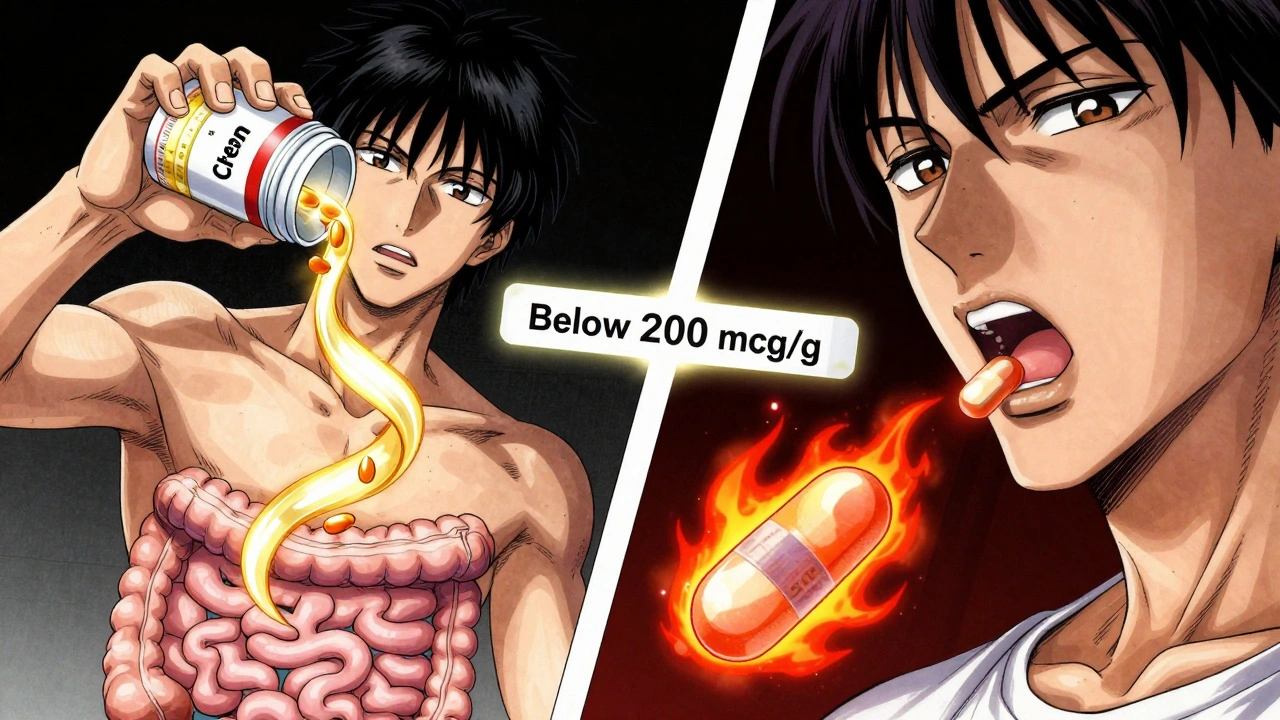
EPI is diagnosed with a fecal elastase-1 test - a simple stool sample. If levels are below 200 mcg/g, it suggests EPI. Other signs include persistent fatty stools, unexplained weight loss, and nutrient deficiencies (like low vitamin D or B12). If you have chronic pancreatitis, cystic fibrosis, or have had pancreatic surgery, you’re at higher risk and should be tested even if symptoms are mild.
Why do some people say digestive enzymes made their symptoms worse?
The most common reason is undiagnosed SIBO. Enzymes break down food faster, giving bacteria in the small intestine more fuel to ferment. This can increase gas, bloating, and discomfort. Another reason is taking too high a dose, which can cause constipation or even form undigested food masses (bezoars). If symptoms worsen, stop and consult a doctor.
Are there natural ways to boost digestive enzymes?
Yes - but not through supplements. Eating slowly, chewing thoroughly, and managing stress can help your body produce more enzymes naturally. Some foods like pineapple (bromelain) and papaya (papain) contain natural enzymes, but you’d need to eat large amounts to have any effect. They’re not replacements for medical-grade enzymes in cases of EPI.
Sakthi s
December 4, 2025 AT 01:13Been using Lactaid for years-no more bloating after ice cream. Simple fix, no drama.
Precious Angel
December 4, 2025 AT 02:29Oh wow, so you're telling me Big Pharma doesn't want us to know that enzymes are the real cure for everything?
Let me guess-the FDA is in bed with Big Dairy and Big Meat to keep us sick so we keep buying their drugs.
I’ve been taking raw papaya peel and Himalayan salt crystals for my EPI since 2018, and my colon is now glowing like a neon sign. My doctor said I was ‘delusional’-but he also thinks the moon landing was faked, so what does he know?
And don’t get me started on PPIs. They’re not just acid blockers-they’re mind-control nanobots implanted by Monsanto to make you dependent on their ‘digestive aids.’
My neighbor’s cat started using enzymes and now it’s running for Congress. Coincidence? I think not.
Melania Dellavega
December 5, 2025 AT 15:56I used to think enzymes were just a scam until I started having terrible bloating after every meal. I tried everything-low FODMAP, probiotics, even acupuncture.
Then I tried a low-dose OTC blend with protease and amylase, just before dinner. Within three days, I could eat broccoli without feeling like my stomach was a balloon.
It didn’t cure my IBS, but it gave me back my life. I don’t need to plan every meal around avoiding beans anymore.
That said, I got tested for EPI first. I didn’t want to mask something serious.
It’s not about pills. It’s about listening to your body-and knowing when to ask for help, not just buy something off Amazon.
Bethany Hosier
December 6, 2025 AT 14:09Did you know that the FDA’s warning letters about enzyme claims were all issued during a full moon?
And the 2020 analysis? It was funded by the National Enzyme Eradication Coalition-a shadow group tied to Big Pharma and the Illuminati.
They don’t want you to know that enzymes can reverse aging, cure autism, and make your Wi-Fi faster.
Also, pineapple enzymes are illegal in 14 countries because they expose the truth about dairy industry manipulation.
Check your stool color. If it’s not gold, you’re being gaslit.
Krys Freeman
December 8, 2025 AT 02:45Why are we even talking about this? Just eat less junk and stop being weak.
My grandpa worked 12-hour shifts and ate lard sandwiches daily. No enzymes. No problems.
Shawna B
December 9, 2025 AT 05:35i took enzymes and my gas got worse why
Jerry Ray
December 9, 2025 AT 13:57Everyone says OTC enzymes work for IBS, but have you seen the label on that NOW Foods bottle? It says ‘50,000 units’ but the capsule’s the size of a pea. That’s not science, that’s wishful thinking.
And if you think lactase helps everyone with dairy issues, you’ve never met someone with a milk protein allergy.
Also, I tried Creon once. It made me constipated and my butt felt like it was being hugged by a brick. So no. Not buying it.
Sophia Lyateva
December 11, 2025 AT 09:47enzyms are bad for you i heard on a tiktok that they cause leaky gut and the gmo corn theyre made from is laced with glyphosate and the co2 from the manufacturing is making the polar bears cry
AARON HERNANDEZ ZAVALA
December 11, 2025 AT 17:54I get what you’re saying about enzymes being helpful for some and not others.
I used to take them for bloating after beans, and it helped. But then I realized I was eating way too many beans because I thought they were ‘healthy.’
Maybe the real fix isn’t the enzyme-it’s the portion size. Or maybe I just needed to chew slower.
I’m not saying don’t use them. Just don’t let them become a crutch. Listen to your body. It’s smarter than the label.
Lyn James
December 12, 2025 AT 03:51It’s absolutely disgusting how we’ve normalized chemical dependency in the name of ‘digestive wellness.’
Our ancestors didn’t need pills to digest cabbage. They had discipline. They had respect for food. They chewed each bite 32 times-because they understood that digestion begins in the mouth, not in a capsule.
Now we pop enzymes like candy while scrolling TikTok and eating a 12-ounce steak with fries.
And you call that progress? This isn’t medicine. It’s spiritual laziness dressed up in a supplement bottle.
Fix your lifestyle. Stop outsourcing your biology. Your gut isn’t a broken machine-it’s a sacred temple. And you’re treating it like a vending machine.
Shannon Wright
December 13, 2025 AT 12:12Thank you for writing this with such clarity.
I was diagnosed with EPI after 3 years of unexplained weight loss and diarrhea. I thought I was just ‘sensitive.’
Creon changed my life. I gained 18 pounds in 4 months. My vitamin D went from 12 to 52. I can eat cheese again.
But I also learned something deeper: if you’re relying on supplements long-term, you owe it to yourself to find out why.
Don’t just treat the symptom. Ask: what’s broken underneath?
And if you’re using OTC enzymes? Be honest with yourself. Are you masking something? Or are you just giving your body a little nudge?
Either way-know why you’re taking them.
vanessa parapar
December 14, 2025 AT 16:06OMG I can’t believe you’re even suggesting OTC enzymes are okay. I’ve been a functional medicine practitioner for 15 years and I’ve seen 47 patients with enzyme-induced SIBO flare-ups.
And don’t get me started on how the FDA is corrupt.
Real healers use digestive bitters and apple cider vinegar before meals. Enzymes are for people who don’t want to do the real work.
Ben Wood
December 14, 2025 AT 22:57While the article presents a relatively evidence-based overview of pancreatic enzyme replacement therapy and OTC enzymatic supplements, it fails to adequately address the potential epigenetic implications of long-term exogenous proteolytic enzyme ingestion on gut microbiome homeostasis, particularly in relation to zonulin upregulation and intestinal barrier integrity. Furthermore, the cited 2019 study on batch variability lacks sufficient methodological transparency regarding HPLC quantification protocols and reference standard calibration. One must also consider the confounding variable of concomitant PPI usage, which may artificially elevate fecal elastase levels via reduced luminal acidification, thereby creating a false-negative diagnostic scenario. In light of these considerations, I would strongly recommend a multi-omic gut metagenomic analysis prior to initiating any enzymatic supplementation regimen, particularly in patients with a history of autoimmune comorbidity.