

Managing Type 2 diabetes often means taking more than one pill a day. For many, that means juggling metformin, a DPP-4 inhibitor, an SGLT2 blocker, or a sulfonylurea-each with its own schedule, side effects, and cost. That’s where diabetes combination medications come in. These pills pack two drugs into one, cutting pill burden and making daily routines simpler. But here’s the real question: can you switch to a generic version? And if you do, will it still work?
What Are Diabetes Combination Medications?
Diabetes combination medications are single pills that contain two different types of blood sugar-lowering drugs. Most commonly, they pair metformin-often the first-line treatment-with another agent like sitagliptin, empagliflozin, or glipizide. These combinations aren’t new. The FDA approved the first one, Janumet (sitagliptin/metformin), back in 2007. Since then, about 25 such products have hit the U.S. market.The goal? Better control with fewer pills. Studies show patients on combination therapy are 37% more likely to stick with their treatment than those taking multiple separate pills. That matters because missing doses leads to higher HbA1c levels, more complications, and higher long-term costs.
These drugs work together. Metformin reduces liver glucose production and improves insulin sensitivity. Add a DPP-4 inhibitor like sitagliptin, and you boost insulin release after meals. Throw in an SGLT2 inhibitor like empagliflozin, and your kidneys start flushing out extra sugar through urine. Together, they hit multiple pathways at once-something single drugs rarely do well.
Why Generic Versions Matter
Brand-name combination meds can cost hundreds of dollars a month. Janumet XR, for example, runs about $587 for 30 tablets. Glucovance (glyburide/metformin) used to cost over $300. That’s not sustainable for most people, especially those on Medicare or without good insurance.The good news? Generics exist for some of the older combinations. Since 2010, generic versions of Glucovance (glyburide/metformin) and Metaglip (glipizide/metformin) have been available. Today, you can buy 60 tablets of generic Metaglip for around $18.75. That’s a 95% drop in price.
That kind of savings changes lives. On Reddit’s r/Diabetes community, 68% of 247 respondents said they switched to generics because their insurance forced them to. And 42% reported no difference in how well their blood sugar was controlled. That’s a win.
Which Combination Medications Have Generic Versions?
Not all combinations are created equal when it comes to generics. Here’s what’s available as of late 2025:- Metaglip (glipizide/metformin) - Generic since 2012. Available in 2.5/500mg and 5/500mg strengths. Most common generic combination.
- Glucovance (glyburide/metformin) - Generic since 2010. Comes in 1.25/250mg, 2.5/500mg, and 5/500mg. Watch for hypoglycemia risk with glyburide.
- Jentadueto (linagliptin/metformin) - First generic approved by FDA in May 2023, but market entry delayed until 2025 due to patent lawsuits.
- Janumet (sitagliptin/metformin) - No generic yet. Patent protection for the XR version lasts until 2026.
- Synjardy (empagliflozin/metformin) - Still brand-only. No generic expected before 2026.
That means if you’re on a newer combo-especially one with an SGLT2 or DPP-4 inhibitor-you’re likely stuck with the brand for now. But for older combinations, generics are widely available and often the default choice at pharmacies.
When Substitution Works-and When It Doesn’t
Switching from brand to generic sounds simple. But diabetes meds aren’t like switching painkillers. Small differences in how a drug is absorbed can affect blood sugar control.Generics must be bioequivalent to the brand-meaning they deliver 80-125% of the active ingredient in the same timeframe. For most drugs, that’s fine. But for diabetes, even a 10% variation can mean the difference between stable glucose and a low-blood-sugar episode.
There are documented cases where patients had trouble after switching. One user on Diabetes Daily reported recurrent hypoglycemia after switching from brand Glucovance to generic. The glyburide component released differently, causing unpredictable insulin spikes.
That’s why experts like Dr. John Buse from the UNC Diabetes Center warn that the FDA’s bioequivalence standards may not be tight enough for some diabetes drugs. The American Association of Clinical Endocrinology found that 19% of endocrinologists saw treatment failures after automatic pharmacy substitutions.
So, substitution works best when:
- You’ve been on the brand version for months or years and your blood sugar is stable.
- You’re switching to a generic that’s been on the market for over a decade (like Metaglip or Glucovance).
- Your doctor approves the switch and you commit to close monitoring.
It’s riskier when:
- You’re on an extended-release (XR) version-most generics are only immediate-release.
- You have kidney issues or other conditions affecting drug clearance.
- You’re new to combination therapy and still finding your dose.
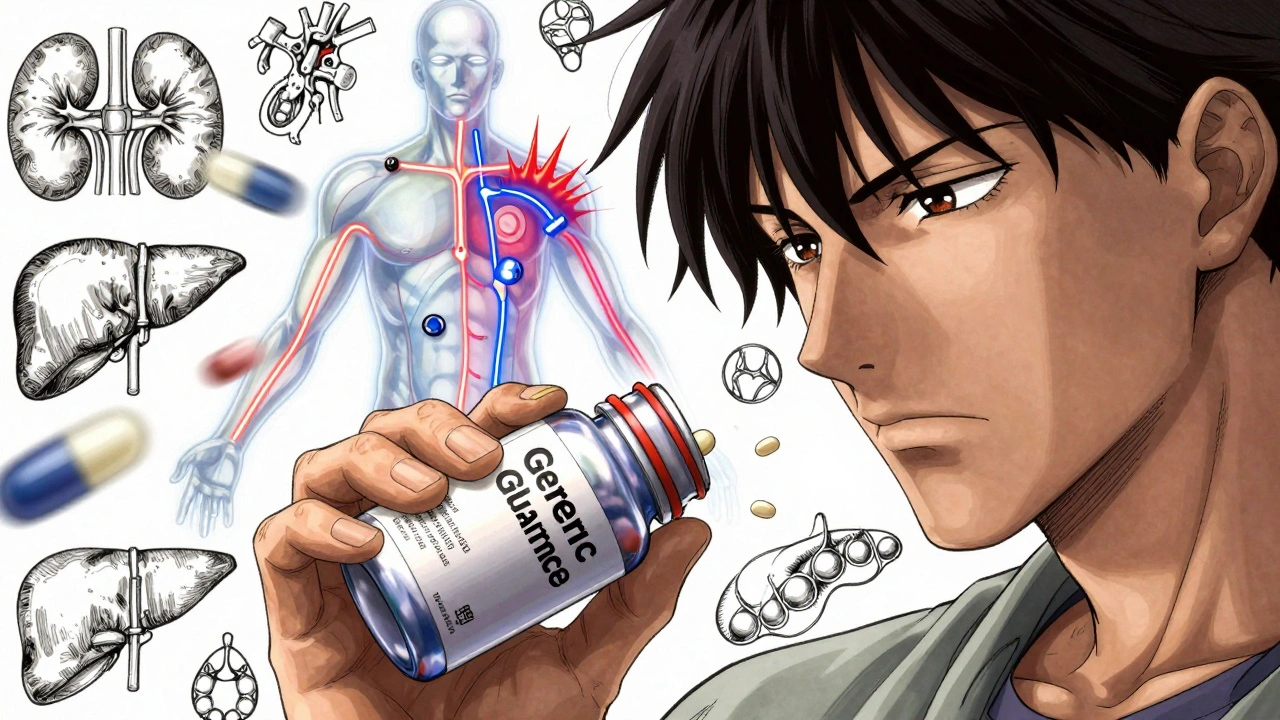
What to Expect When You Switch
If your doctor says it’s safe to switch, here’s what happens next:- Appearance changes - Your pill might be a different color, shape, or size. One user said the generic Metaglip was too big to swallow. Talk to your pharmacist about alternatives if this is a problem.
- Dosing schedule - Some generics require twice-daily dosing, even if the brand was once-daily. Read the label carefully.
- Side effects - You might notice new stomach upset, nausea, or changes in how often you feel low. That doesn’t always mean the generic isn’t working-it might just mean your body needs time to adjust.
Here’s the critical part: monitor your blood sugar closely for the first 2-4 weeks. Test 4 times a day-fasting, before meals, and 2 hours after eating. Keep a log. If your average glucose rises by more than 15-20 mg/dL or you’re having frequent lows, call your doctor. Don’t wait.
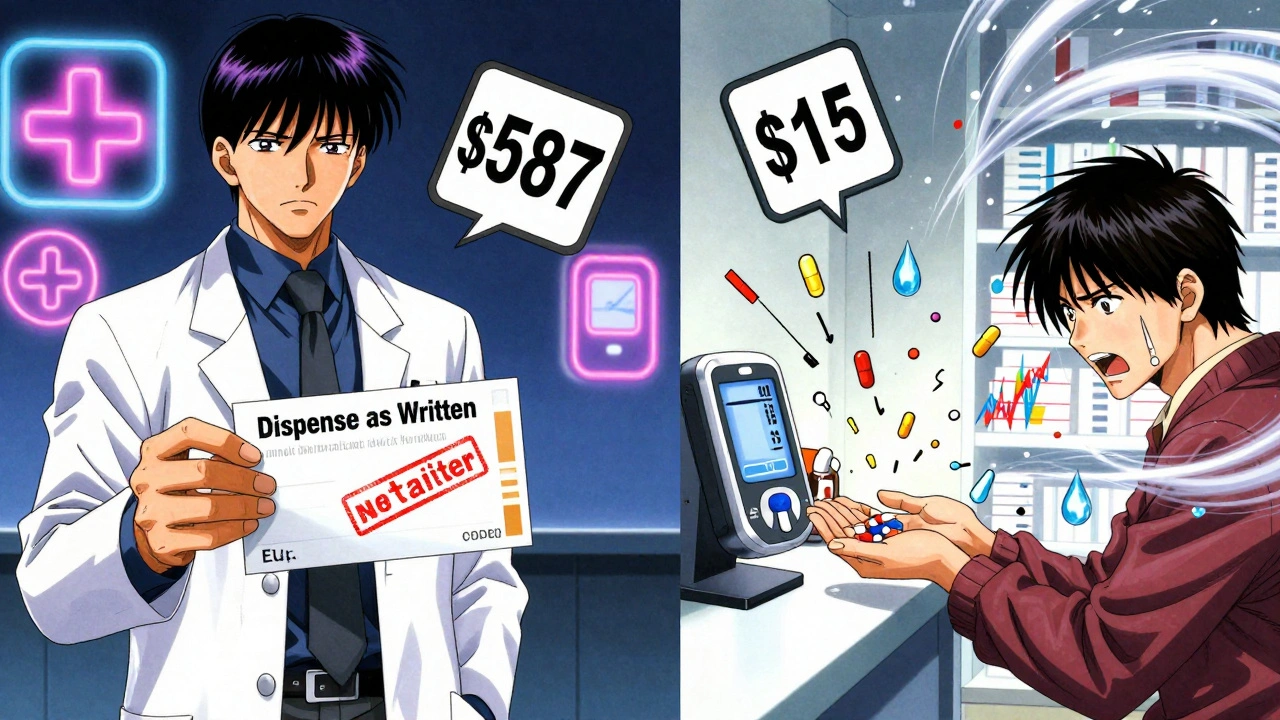
Also, check your prescription. Some pharmacies automatically substitute generics unless you say no. If you don’t want that, ask your doctor to write “Dispense as Written” or “Do Not Substitute” on the prescription.
Cost vs. Control: The Real Trade-Off
Yes, generics save money. But they’re not always the best choice for everyone.Here’s the math:
| Medication | Brand Price (30 tablets) | Generic Price (60 tablets) | Available? | Formulation |
|---|---|---|---|---|
| Metaglip (glipizide/metformin) | $345 (discontinued) | $18.75 | Yes | Immediate-release only |
| Glucovance (glyburide/metformin) | $320 (discontinued) | $15.20 | Yes | Immediate-release only |
| Janumet XR (sitagliptin/metformin) | $587 | None | No | Extended-release |
| Synjardy (empagliflozin/metformin) | $587 | None | No | Immediate-release |
Generics save you 85-95%-but you lose flexibility. No extended-release options. No custom dosing. If you need to adjust just one component-say, lower the metformin but keep the sitagliptin-you can’t. You’d have to switch to two separate pills.
For stable, long-term patients, that’s fine. For someone with fluctuating glucose or kidney changes, it’s not.
How to Get Help Paying for Brand Medications
If your doctor says you need the brand version, don’t give up. Many manufacturers offer patient assistance programs.Merck, Boehringer Ingelheim, and AstraZeneca all have copay cards that can reduce Janumet or Synjardy to $0-$10 per month for eligible patients. You’ll need to apply, provide income info, and sometimes show proof of insurance denial. But these programs exist for a reason: without them, people skip doses or stop taking meds altogether.
Pharmacies like CVS and Walgreens also have discount programs. GoodRx coupons can cut prices by 40-60% even on brand-name drugs. Always ask your pharmacist: “Is there a cheaper way to get this?”
What’s Coming Next
The next few years will see a wave of generic diabetes combinations hit the market. Janumet XR’s key patent expired in January 2024, and generics are expected by 2026. Jentadueto’s generic is finally entering the market in 2025. By 2027, most metformin-based combos with older drugs (DPP-4s, sulfonylureas) will have generics.But newer combos-those with GLP-1 agonists like semaglutide or tirzepatide-are still protected by patents. Those won’t go generic until 2030 or later. So for now, if you’re on a newer combo, you’re paying brand prices.
Industry analysts predict that by 2030, generic combinations could reduce annual diabetes drug costs for patients from $2,850 to just $420. That’s life-changing.
Final Advice: Know Your Options, Stay Involved
You don’t have to accept whatever your pharmacy gives you. You have the right to ask for the brand. You have the right to ask about generics. You have the right to monitor your own health.Here’s your action plan:
- Ask your doctor: “Is there a generic version of my combo med?”
- If yes: “Can I switch safely? What should I watch for?”
- If no: “Are there patient assistance programs I qualify for?”
- When switching: Test your blood sugar 4 times a day for 4 weeks.
- Keep a log. If something feels off, call your doctor-don’t wait.
Diabetes management is personal. What works for one person might not work for another. Generic meds aren’t better or worse-they’re just different. And when used right, they can be a powerful tool to help you live better, longer, and with less financial stress.
Can I switch from a brand diabetes combination pill to a generic without telling my doctor?
No. Even though pharmacies can automatically substitute generics, you should always inform your doctor before switching. Diabetes medications affect blood sugar in complex ways, and small changes in absorption can lead to highs or lows. Your doctor needs to monitor your response, especially during the first few weeks after switching. Automatic substitution without medical oversight has led to treatment failures in nearly 1 in 5 patients, according to the American Association of Clinical Endocrinology.
Why are some diabetes combination meds still brand-only after 10+ years?
It’s not about the drugs being new-it’s about patents. While the active ingredients (like metformin and sitagliptin) may be off-patent, pharmaceutical companies often patent specific formulations, dosages, or extended-release methods. For example, Janumet XR’s extended-release coating is still protected until 2026, even though sitagliptin and metformin themselves are generic. These formulation patents delay generic entry, even when the ingredients are old.
Are generic diabetes combination pills as effective as brand names?
For most people, yes-especially with older combinations like glipizide/metformin or glyburide/metformin. Studies show that 76% of patients transition smoothly to these generics. However, bioequivalence standards allow for a 20% variation in how much drug enters your bloodstream. For some, that’s enough to cause blood sugar swings. If you’ve had stable control on the brand and notice changes after switching-like more frequent highs or lows-it’s not just in your head. Talk to your doctor.
Why do generic pills look different and sometimes taste bad?
Generic manufacturers use different inactive ingredients-fillers, binders, coatings-to make the pill. These don’t affect the active drug, but they can change the size, color, texture, or even taste. Some people report the generic pills are harder to swallow or cause mild stomach upset because of these differences. It’s not a sign the drug isn’t working-it’s just a different formulation. If it’s a problem, ask your pharmacist for a different generic brand or ask your doctor to prescribe the brand.
What should I do if I experience low blood sugar after switching to a generic?
Stop the medication and contact your doctor immediately. Low blood sugar after switching could mean the generic version releases the drug faster or more completely than the brand-especially with sulfonylureas like glyburide or glipizide. Your doctor may need to adjust your dose, switch you back, or change your medication entirely. Never ignore hypoglycemia. Keep fast-acting sugar (like glucose tabs) on hand while you’re adjusting.
Can I split a generic diabetes combination pill to adjust the dose?
No. Combination pills are designed to be taken whole. Splitting them can change how the drugs are released, especially if they’re extended-release. Even if the pill looks scoreable, it’s not safe to split unless your doctor specifically says so. If you need a different dose, ask your doctor for a different strength or switch to taking the two drugs separately.
Next Steps: What to Do Today
If you’re on a diabetes combination medication:- Check your prescription bottle. Is it generic or brand?
- Look up the cost on GoodRx or your pharmacy’s price checker.
- Ask your pharmacist: “Is there a generic version of this?”
- If you’re paying more than $50 a month for a combo med, ask your doctor about switching-or about patient assistance programs.
- If you’ve switched recently, pull out your glucose log. Are your numbers stable?
Small actions now can save you thousands over time-and keep your blood sugar where it needs to be.
मनोज कुमार
December 3, 2025 AT 15:44Generic metformin combos work fine for most people but the glyburide ones are a minefield. Saw a guy in my clinic go hypo twice in one week after switch. Pharma’s bioequivalence standards are a joke for diabetes meds. No one checks real-world outcomes. Just sign the form and move on.
Zed theMartian
December 4, 2025 AT 09:24Oh wow. So we’re now treating diabetes like it’s a commodity to be optimized by bean counters? Let me guess-next they’ll replace insulin with a discount coupon and call it ‘value-based care.’ Meanwhile, my HbA1c is 6.2 and I’m paying $587 for Janumet XR because my kidneys can’t handle the metformin load from generics. You people are terrifying.
Ella van Rij
December 5, 2025 AT 21:48sooo… like… i switched to generic metaglip and now my pills taste like chalk and my stomach is mad? 🤷♀️ also why does it look like a tiny brick? also my doc didn’t warn me. oops.
ATUL BHARDWAJ
December 6, 2025 AT 11:13In India generics save lives. No choice. But yes, some pills cause nausea. We adapt. Doctor knows. Monitor. Adjust. Simple.
Steve World Shopping
December 7, 2025 AT 10:28Let me break this down for you. Bioequivalence ≠ clinical equivalence. You think 80-125% is acceptable for a drug that regulates your blood sugar? That’s like saying your airplane’s altimeter is fine if it’s off by 20%. You’re not managing diabetes-you’re playing Russian roulette with your pancreas.
Paul Keller
December 9, 2025 AT 09:55Look, I’ve been on Glucovance since 2018. Switched to generic in 2022. No issues. My A1c is 6.4. I test four times a day. I track everything. The key is consistency and awareness. If you’re lazy and expect the pill to fix everything without monitoring, that’s on you-not the generic. This isn’t magic. It’s medicine.
Shannara Jenkins
December 11, 2025 AT 04:47Hey-just wanted to say you’re not alone if you’re nervous about switching. I was terrified too. But my doc walked me through it, we set up weekly glucose checks, and now I’m saving $500/month. You’ve got this. And if something feels off? Call your team. No shame. We’re all learning.
Elizabeth Grace
December 12, 2025 AT 06:42I switched to generic and cried for three days because my pills were a different color. I swear I felt like I lost a friend. But then I remembered-I’m not the pill. The pill is just a tool. And I’m still here. Still fighting. Still alive. So… yeah. I’m okay now. 🥲
Steve Enck
December 13, 2025 AT 22:04The entire pharmaceutical-industrial complex is a neo-liberal fiction designed to extract surplus value from biological vulnerability. The FDA’s bioequivalence metrics are a capitalist smokescreen-masking the commodification of metabolic regulation. Your blood glucose is not a variable to be optimized by market forces. It is a sacred physiological equilibrium. And yet-we are all complicit in its reduction.
Jay Everett
December 14, 2025 AT 08:52Generics are the unsung heroes of diabetes care 🙌 I switched to generic Metaglip last year-saved $500/month, my A1c didn’t budge, and now I can afford my dog’s insulin. Yes, the pill is bigger. Yes, it tastes weird. But my bank account? Thank you, generic manufacturers. You’re literally saving lives. 🤝💊
Joel Deang
December 14, 2025 AT 23:16so i got the generic and it was like… purple? and i thought it was a different drug. then i checked the label. oh. its the same. but why does it look like a dragon egg? 🐉
Roger Leiton
December 15, 2025 AT 20:00Can someone explain why Janumet XR still doesn’t have a generic? The active ingredients are off-patent, right? Is it just the coating? If so, why can’t someone reverse-engineer it? This feels like corporate gatekeeping disguised as innovation. I’m not anti-pharma-I just want fair access.
Laura Baur
December 16, 2025 AT 07:12It’s fascinating how people treat diabetes as if it’s a one-size-fits-all condition. You mention bioequivalence thresholds, yet you ignore the fact that individual pharmacokinetics vary wildly-especially in older adults, those with renal impairment, or those on polypharmacy. Your ‘76% success rate’ is statistically meaningless when you’re the 24% who crash into hypoglycemia because your liver metabolizes glyburide differently. This isn’t a spreadsheet-it’s your life. And no algorithm can replace clinical judgment.
Jack Dao
December 16, 2025 AT 11:43Anyone who switches to generics without consulting their endocrinologist is either reckless or stupid. I’ve seen people end up in the ER because they thought ‘it’s just a pill.’ You don’t mess with insulin pathways like you’re swapping out laundry detergent. Wake up.
dave nevogt
December 16, 2025 AT 17:39I used to think generics were inferior. Then I watched my father, who lives on a fixed income, switch from Janumet to generic Glucovance. He was terrified. We monitored his sugars together. For six weeks, we logged everything. He didn’t lose control. He didn’t crash. He just… kept going. And he saved enough to buy new hearing aids. That’s not a compromise. That’s dignity.