
Decongestant Risk Checker
This tool helps you assess whether decongestant medications are safe for you based on your heart health. This information is for educational purposes only and should not replace professional medical advice. Always consult your doctor before taking any medication.
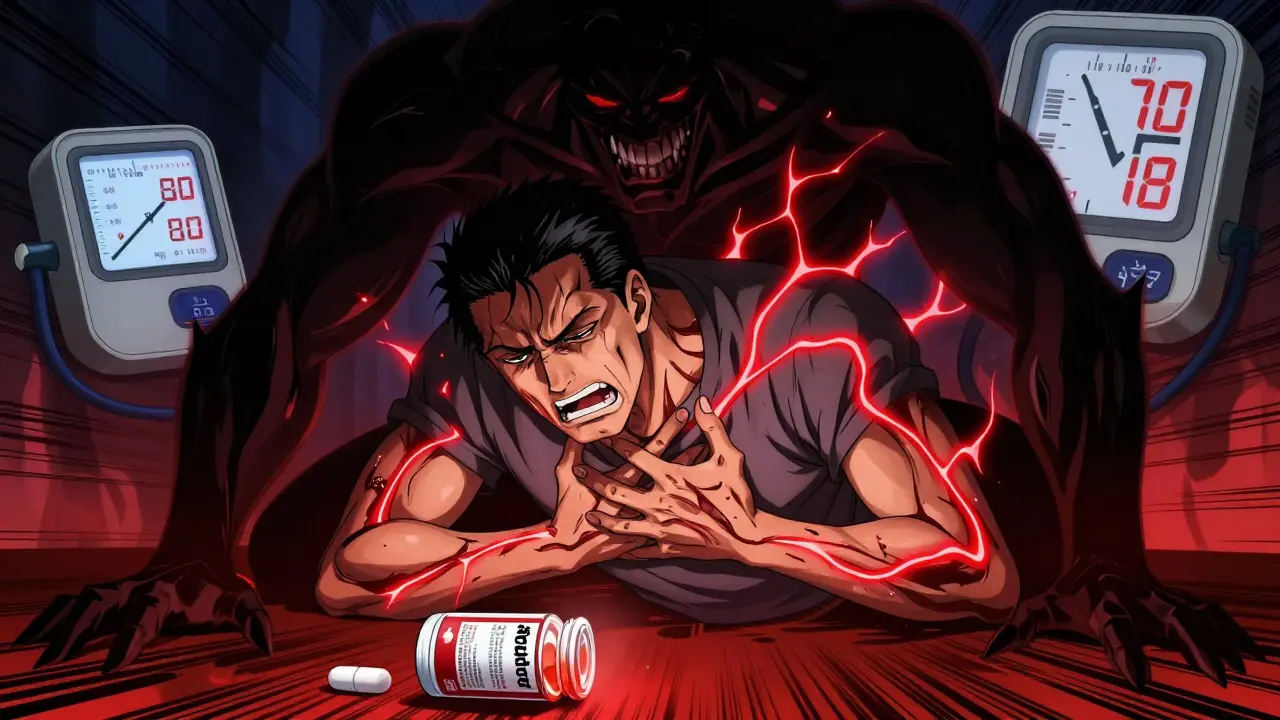
If you have heart disease or high blood pressure, taking a common cold medicine could be riskier than you think. Decongestants like pseudoephedrine and phenylephrine are in almost every over-the-counter cold and flu remedy. They promise quick relief from a stuffy nose. But for people with heart conditions, that relief can come at a dangerous cost.
How Decongestants Work - and Why That’s a Problem
Decongestants shrink swollen blood vessels in your nose to open up your airways. That’s the good part. The problem? They don’t just shrink vessels in your nose. They tighten blood vessels everywhere - including those around your heart and throughout your body.
This happens because decongestants are alpha-adrenergic agonists. They mimic the effects of adrenaline. That’s why they work so well for congestion. But it’s also why they can raise your blood pressure, speed up your heart rate, and make your heart work harder.
Even a small rise in blood pressure can be dangerous if you already have heart disease. A 2005 meta-analysis found that pseudoephedrine causes a small but measurable increase in systolic blood pressure - especially with higher doses or immediate-release forms. For someone with controlled hypertension, that might not be a big deal. But if your blood pressure is uncontrolled? That little bump can push you into danger.
The Real Risks: Heart Attack, Stroke, and Heart Failure
It’s not just about higher numbers on a blood pressure monitor. Decongestants can trigger serious events in vulnerable people.
According to the American Heart Association, people with uncontrolled high blood pressure, heart failure, or a history of heart attack or stroke should avoid oral decongestants entirely. Why? Because these medications can:
- Trigger irregular heart rhythms (arrhythmias)
- Worsen heart failure by increasing the heart’s workload
- Cause coronary artery spasms (Prinzmetal angina)
- Lead to heart attack or stroke, especially when combined with the stress of an infection
One documented case involved a 40-year-old man who developed a life-threatening hypertensive crisis after using too much nasal spray containing naphazoline. He ended up in the hospital with congestive heart failure - the first known case directly linked to topical decongestant use.
Even kids aren’t immune. A 5-year-old girl developed high blood pressure after taking standard doses of phenylephrine for four days. Her blood pressure only returned to normal after stopping the medication. No other cause was found.
Oral vs. Nasal: Which Is Worse?
Not all decongestants are the same. Oral ones - like Sudafed (pseudoephedrine) and phenylephrine - are absorbed into your bloodstream and affect your whole body. That’s why they carry stronger warnings.
Nasal sprays like Afrin (oxymetazoline) or naphazoline are meant to act locally. But they’re not harmless. A study of 100 patients showed a noticeable jump in heart rate after just seven days of use. And while blood pressure didn’t rise much in most, the case of the 40-year-old man proves that even nasal sprays can cause catastrophic events - especially if used too much or too long.
Here’s the catch: nasal sprays are often seen as safer. That’s a myth. Overuse leads to rebound congestion, and the drug still gets into your system. The FDA and medical guidelines warn against unsupervised use in people with hypertension - regardless of whether it’s a pill or a spray.
Why Pharmacists Ask So Many Questions
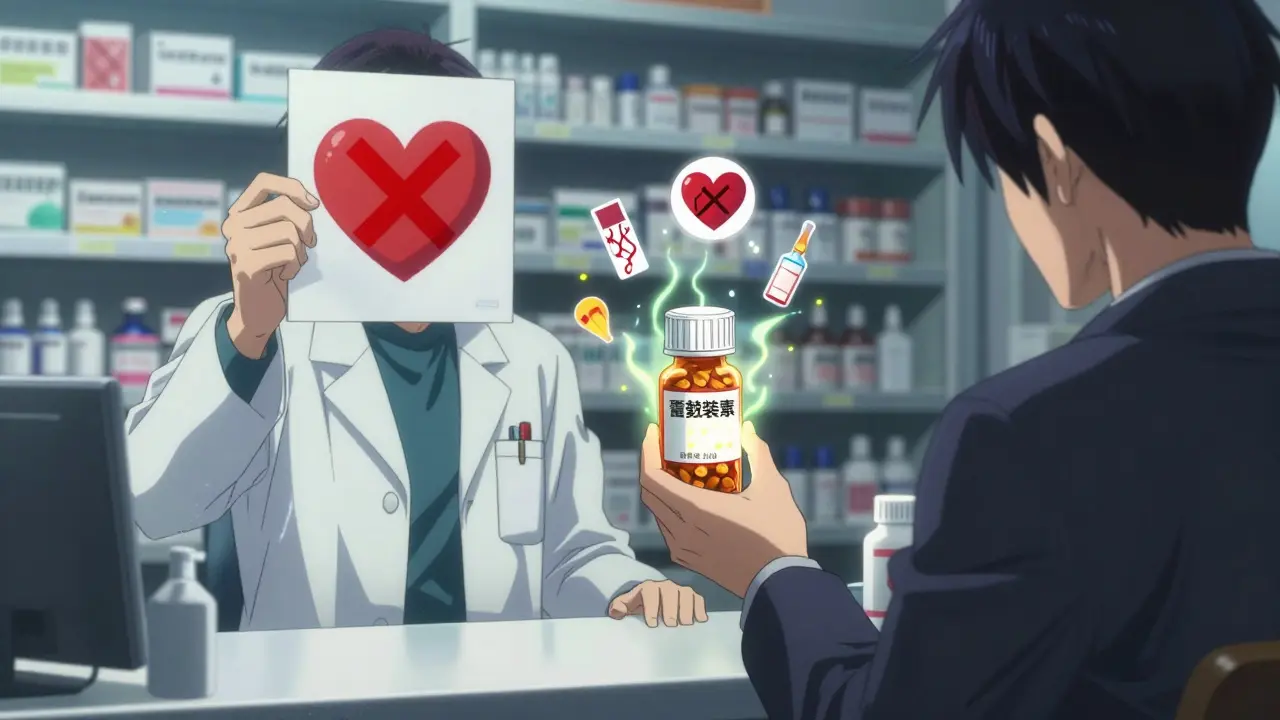
Ever wonder why you have to ask for Sudafed behind the counter? It’s not just because it’s used to make meth. It’s because pharmacists are your last line of defense.
Since the Combat Methamphetamine Epidemic Act of 2005, pseudoephedrine has been kept behind the counter. That means a pharmacist must check your ID, log the sale, and - critically - ask if you have heart disease, high blood pressure, or other conditions.
They’re trained to spot red flags. If you say you have heart disease, they’ll tell you not to take it. They’ll suggest alternatives. That’s not bureaucracy - that’s life-saving screening.
What to Use Instead
You don’t need decongestants to feel better. There are safer options.
- Saline nasal sprays - These just flush out mucus and irritants. No chemicals. No side effects.
- Humidifiers - Moist air helps loosen congestion naturally.
- Guaifenesin (Mucinex) - This thins mucus so you can cough it up. It doesn’t constrict blood vessels.
- Rest and hydration - Your body fights colds better when it’s not stressed. Drink water, sleep, and give yourself time.
The European Journal of General Medicine says it plainly: decongestants only treat symptoms. They don’t cure the cold or the flu. And if your symptoms are mild? Not using them at all is the wisest choice.
When to Talk to Your Doctor
If you have any of these conditions, never take a decongestant without checking with your doctor first:
- Uncontrolled high blood pressure
- Heart failure
- History of heart attack or stroke
- Irregular heartbeat (arrhythmia)
- Coronary artery disease
- Severe diabetes or thyroid disease
Even if your blood pressure is controlled, your doctor might still advise against decongestants. Why? Because when you’re sick, your body is already under stress. Your heart rate goes up. Inflammation rises. Adding a decongestant is like pouring gasoline on a fire.
A 2017 study of nearly 10,000 heart attack patients found that those who took NSAIDs while sick were more than three times as likely to have another heart attack within a week. Decongestants aren’t NSAIDs, but they add similar stress to the system.
Reading Labels Isn’t Optional
Check every cold medicine you buy. Look for these ingredients:
- Pseudoephedrine
- Phenylephrine
- Oxymetazoline
- Naphazoline
- Ephedrine
They’re often hidden in multi-symptom formulas. “Sinus relief,” “full spectrum cold,” “nighttime cold & flu” - all could contain decongestants. Always read the active ingredients list. Don’t rely on the front of the box.
And if you’re unsure? Ask your pharmacist. They’re paid to help you avoid harm - not just sell you something.
The Bottom Line
Decongestants aren’t evil. For healthy people with a stuffy nose, they’re fine. But if you have heart disease or high blood pressure, they’re a gamble you shouldn’t take.
The risks aren’t theoretical. They’re documented in medical journals, hospital case reports, and official warnings from the American Heart Association and Mayo Clinic. The side effects aren’t rare. They’re life-threatening.
There’s no magic pill that fixes congestion without risk. But there are safe, simple, and effective alternatives. Your heart will thank you for choosing them.
Aurelie L.
January 26, 2026 AT 06:53I took Sudafed last winter. Thought I was fine. Woke up with my heart pounding like a drum. Ended up in ER. Don't be me.
Joanna Domżalska
January 27, 2026 AT 07:30So let me get this straight. You're saying the same chemicals that help you breathe are also the ones that might kill you? That's not a medical warning. That's just capitalism with a side of irony. We sell you poison wrapped in a rainbow label and call it 'relief'.
And then we blame you for not reading the tiny print. Meanwhile, the company made a billion. Who's the real sick one here?
Josh josh
January 29, 2026 AT 03:19bro i just took a cold pill yesterday and now i feel like my chest is gonna explode
why do they even make this stuff if its so dangerous
also why is pseudoephedrine behind the counter like its a gun
im just trying to breathe not build a bomb
bella nash
January 30, 2026 AT 23:44It is imperative to underscore that the pharmacological mechanism of alpha-adrenergic agonism, while efficacious in nasal vasoconstriction, concurrently induces systemic sympathetic activation. This physiological perturbation may precipitate adverse cardiovascular events in individuals with preexisting cardiac pathology.
Therefore, the prudent clinical recommendation remains the avoidance of such agents in patients with documented hypertension, arrhythmia, or coronary artery disease. Alternative modalities, including saline irrigation and humidification, are not merely adjunctive-they are foundational.
Further, the regulatory framework governing pseudoephedrine sales is not punitive but protective. It is a model of harm reduction embedded in public health policy.
SWAPNIL SIDAM
February 1, 2026 AT 04:18My uncle had a heart attack after using nasal spray for a week. He thought it was safe because it was 'local'.
He didn't know the medicine travels. It doesn't stay in your nose. It goes everywhere.
Now he's on meds for life. Don't be like my uncle. Ask your pharmacist. They know more than the box.
Geoff Miskinis
February 2, 2026 AT 12:44It's amusing how the average consumer conflates symptom relief with therapeutic efficacy. The notion that a decongestant 'cures' a cold is not merely inaccurate-it is a product of pharmaceutical marketing masquerading as medical advice.
And yet, the AHA’s warnings are routinely ignored because convenience trumps caution. This isn't ignorance-it's a cultural pathology. We medicate discomfort instead of enduring it.
Also, phenylephrine is essentially a placebo in oral form. The FDA knew this. They just didn't have the guts to pull it. So we're all just paying for vapor.
Sally Dalton
February 4, 2026 AT 11:04i just read this and i feel so much better knowing what to avoid now
thank you for writing this in such a clear way
i used to grab any cold medicine off the shelf but now i check the ingredients like a detective
also my grandma uses saline spray and she says it works better than anything anyway
youre right about the pharmacist-they always ask me if i have high bp and i used to think it was annoying but now i get it
your post saved me from making a dumb mistake
Betty Bomber
February 6, 2026 AT 08:07So I just looked at my cold medicine. Yep. Pseudoephedrine. Right there. Big as life.
And I have high blood pressure.
Guess I'm not taking this one.
Saline spray it is.
Mohammed Rizvi
February 7, 2026 AT 07:15Decongestants are like that one friend who shows up to your party and starts yelling at everyone to calm down. They think they're helping, but they just make the whole thing worse.
My cousin took phenylephrine for a week. His BP spiked so high the doctor asked if he'd been fighting a bear.
Now he uses a humidifier, drinks tea, and sleeps like a log. No drama. No panic. Just healing.
Don't be that guy who thinks the medicine is the cure. Sometimes the cure is silence, steam, and sleep.